Showing posts with label vitamin B. Show all posts

Sunday, December 16, 2018

Gluten-Related Neurological Symptoms and Conditions

There's no question that gluten can affect your neurological system: people with both celiac disease and non-celiac gluten sensitivity report symptoms that range from headaches and brain fog to peripheral neuropathy (tingling in your extremities).
Neurological illnesses such as epilepsy, depression, and anxiety also are common in those who react to gluten. In addition, a serious autoimmune condition called gluten ataxia affects a small number of people.
Finally, there are some hints that conditions such as schizophrenia and bipolar disorder also may be affected by gluten intake in a few individuals. However, it's not yet clear from the research who might be affected, and whether a gluten-free diet can help some people.
Here's a rundown of the neurological conditions impacted by gluten.


Depression, Anxiety Lead the List
Research shows that people with celiac disease suffer from much higher-than-average rates of depression and anxiety. In fact, one study found that about one-third or more of celiacs suffer from depression, and 17% may have an anxiety disorder.
People who test negative for celiac disease but who have been diagnosed with gluten sensitivity also report higher levels of depression and anxiety, although the links between the conditions are less clear because they haven't been studied.
It's not clear why gluten ingestion leads to these two neurological conditions.
Researchers have speculated that gluten-related intestinal damage might lead to nutritional deficiencies that cause depression and anxiety in people with celiac disease (deficits in certain B vitamins can cause some symptoms). However, that wouldn't explain why people with non-celiac gluten sensitivity (who don't get intestinal damage from gluten) also suffer from those two mental conditions.
Some gluten sensitivity experts — notably, New Zealand pediatrician Dr. Rodney Ford — have hypothesized that gluten affects your brain directly to cause these conditions, but this theory hasn't been proven. Regardless, you're far from alone if you experience depression and anxiety from gluten.

Insomnia, Brain Fog, ADHD Are Also Commonplace

Many people with celiac disease and gluten sensitivity can tell quickly when they've accidentally been glutened: their brains cloud up and they feel less effective, even stupid and clumsy. This phenomenon, known as brain fog, hasn't been studied, but it's another extremely common symptom for both celiac and gluten sensitivity.
Attention deficit-hyperactivity disorder is another frequent complaint, in both adults and children — those of us who have kids with gluten problems can attest that school performance is much better when their diets are free of gluten!
Headaches? Yes, absolutely. In fact, migraines are commonly mentioned as both celiac disease symptoms and gluten sensitivity symptoms — up to one-third report experiencing this sometimes debilitating headache pain.
Finally, getting a good night's sleep may depend on whether you can steer clear of gluten-containing foods — insomnia and sleep problems seem to crop up in regularity in many of us.
You can learn more on brain fog, ADHD, migraine and sleep problems:

Peripheral Neuropathy Also Common; Epilepsy, Vertigo Reported

Gluten also may affect whether your nerves and balance system function properly.
People who have celiac disease or gluten sensitivity suffer from high levels of peripheral neuropathy, which causes a tingling or "pins-and-needles" sensation in your feet and fingers. The sensation stems from damage to the nerves in your extremities, and the condition may improve once you go gluten-free.
Epilepsy, meanwhile, results when your neurons fire incorrectly, leading to seizures and potentially even unconsciousness. Celiac disease also has been associated with a rare constellation of epilepsy and bilateral occipital calcifications.
Finally, vertigo — or a sensation of dizziness and spinning — occurs due to a malfunction in the balance system housed in your inner ear. There are only two studies potentially linking Meniere's disease (a form of vertigo) with celiac disease, but anecdotal complaints of vertigo are frequent among celiacs.

Serious Psychiatric Illnesses Such as Schizophrenia and Bipolar

There have been many reports suggesting gluten could be implicated in two very serious psychiatric conditions: bipolar disorder and schizophrenia.
In bipolar disorder, there are a few studies that indicate people with celiac or gluten sensitivity may suffer from higher rates of the mental condition. There's also an intriguing study that looked at levels of antibodies to gluten in the bloodstream of people with bipolar and found high levels in those in the midst of a manic episode.
In schizophrenia, meanwhile, there have been decades of speculation that eliminating bread from the diet of schizophrenics (which of course would eliminate gluten) can help. However, there's little solid evidence for this and no indication of which schizophrenia patients might benefit. Most psychiatrists believe the percentage of people who might see an improvement in their schizophrenia symptoms while eating gluten-free is very small.

Gluten Ataxia Is Autoimmune Brain Damage

When gluten consumption causes your body to attack its own tissues, you suffer from a gluten-induced autoimmune condition. There are three of these: celiac disease (damage to the small intestine), dermatitis herpetiformis (damage to the skin), and gluten ataxia (damage to the brain).
When you have gluten ataxia, your immune system attacks your cerebellum, the part of your brain responsible for coordination. In many cases, the damage is irreversible, although a strict gluten-free diet can halt the progression of the condition.
Gluten ataxia is a relatively newly-recognized condition, and not all physicians agree it exists. In addition, the number of people who have it is thought to be very small. However, many more people with celiac or gluten sensitivity suffer from symptoms similar to those seen in gluten ataxia.

The Gluten-Free Diet May Help Your Neurological Symptoms

There's no question that celiac disease and gluten sensitivity can lead to a wide array of neurological problems and conditions. However, in most cases, you can reduce or even resolve your gluten-related neurological symptoms by following a strict gluten-free diet.
______________________________________________________________
This article from Gluten-Related Neurological Symptoms and Conditions
By Jane Anderson | Reviewed by Emmy Ludwig, MD
Updated September 01, 2017
and published via VeryWell

Tuesday, January 9, 2018

Allergy and Candida Cooking

While reading Allergy and Candida Cooking: Understanding and Implementing Plans for Healing by Lewis and Fink (Canary Connect Publications 2009), I found some particularly good insight on proactively helping the body to heal through careful dietary measures. 


Probiotics - What They Do:
  • (some kinds) produce lactase for the lactose intolerant
  • facilitate healing from IBS (inflammatory bowel syndrome)
  • reduce diarrhea and constipation
  • increase nutrient bioavailability, esp aids the absorption of calcium, zinc and iron (important in the treatment of candida)
  • reduce acid reflux
  • lower cholesterol
  • contribute to the prevention of cancer, esp colon cancer
  • properly balance yeast growth (vital for people with candida)

Natural probiotic food sources that promote friendly bacteria and prevent the spread of bacterial infections -- these foods are high in chlorophyll:
  • alfalfa
  • barley green
  • chlorella
  • spirulina
  • green Kamut
  • blue green algae

Anti-fungals for treating candida include:
  • B-complex
  • bentonite
  • capryllic acid
  • citrus seed extract (grapeseed)
  • coenzyme Q
  • garlic
  • grape extracts (with caution)
  • oil of oregano
  • olive leaf extract
  • psyllium
  • tanalbit
  • pau d'arco
  • coconut oil
  • olive oil
  • foods rich in chlorophyll are also anti-fungal:
  • kelp
  • seaweed
  • dulse

Essential Fatty Oils (EFAs)

These oils have Omega-3s and Omega-6s and are essential for reducing inflammation and rebuilding cells. They also reduce cholesterol, regulate hormones and fight infections:
  • flax seed oil
  • evening primrose oil
  • GLA
  • borage oil
  • fish oils
  • saw palmetto is important for men with prostatitis associated with yeast infection

Treatment That May Buffer Food Reactions
  • drink 1/4 t. baking soda in 1/2 cup purified water. You may need to repeat the dose
  • drink buffered, corn-free, citrus-free vitamin C powder dissolved in purified water
  • drink purchased salt preparations such as a combination of sodium and potassium bicarbonates

Friday, April 22, 2016

White Flour as a Toxin: 5 Facts

5 Secrets about White Flour That Will Shock You

The standard American diet is a diet of chronic disease and death. Our food supply has been killing us slowly. White flour has been killing you! 

In 1910, the Federal District Court of Missouri declared bleached white flour unfit as human food. But, unfortunately, according to H.W. Wiley, first chief of the Food and Drug Administration, the enforcement of this law was “halted through the political influence of the flour millers” and “no notice of violations has since been made by the FDA.” Mr. Wiley’s book “The History of a Crime Against the Pure Food Law” discusses this case. (Reference here) Nowadays, flour is made from wheat that is being treated with fungicides, pesticides, and insecticides from seedling to storage. Since then approximately 60 different chemicals have been approved to bleach flour.

Grain Brain: The Surprising Truth about Wheat, Carbs, and Sugar – Your Brain’s Silent Killers

 1. Bleached Flour has no nutrients.

The manufacturers of white flour first remove the wheat seed’s bran, its 6 outer layers, and the germ which contains 76% of the vitamins and minerals. 97% of the dietary fiber is also lost.” It removes all Vitamin E, 50% of calcium, 70% phosphorus, iron, magnesium and B vitamins.


2.  Added Potassium Bromate

After removing all the layers and nutrients, flour is bleached, preserved, and aged with chlorine dioxide. It is further whitened by adding chalk, alum, and ammonium carbonate to make it look and feel more appealing to the consumer. An anti-salting agent called sorbitan mono-saturate is added in the final stage. Potassium bromate is also added to white flour. It is very powerful oxidizer that damages cells. Bromate is considered a category 2B carcinogen (= possibly carcinogenic to humans) by the International Agency for Research on Cancer (IARC). Potassium bromate has been banned in most of the developed countries in 1994 including all countries in European Union (chlorine, bromates, and peroxides in food is banned in the EU), UK, Canada.


3.  White flour is a natural insecticide

Did you know that if an insect gets into the bag of white flour and starts eating it, that insect will die from consuming it? White flour is a natural insecticide because it kills any insect that attempts to live off of it.


4.  Contains L-cysteine

This non essential amino acid is added to most conventional baked goods to speed industrial processing. L-cysteine is found in the majority of pizza doughs, cookies, pastas, pastries and fast food buns.

It can be synthesized in a laboratory but cheaper production methods include duck feathers and human hair. Besides human hair, other sources of L-cysteine include chicken feathers, cow horns and petroleum byproducts. Most of the L-cysteine comes from China where there’s a history of poor regulation. It is disgusting and scary.


5. White flour contains diabetes-causing contaminant alloxan

White flour contains alloxan. It is what makes your bread look fresh and clean. Studies show that alloxan destroys the beta cells of the pancreas. Alloxan’s harmful effects on the pancreas are so severe that the Textbook of Natural Medicine calls the chemical “a potent beta-cell toxin.” Unfortunately, knowing that alloxan is so toxic for your body, the FDA still allows companies to use it when processing foods we ingest. Fortunately, studies have found that the effects of alloxan can be reversed with vitamin E. According to Dr. Gary Null’s Clinicians Handbook of Natural Healing, vitamin E effectively protected lab rats from the harmful effects of administered alloxan.
References:

Friday, April 24, 2015

WARNING: Too Many Supplements May Up Cancer Risk

About three years ago I went to Hippocrates Health Institute. At HHI the lifestyle is 100% raw food and taking care of one's total dietary (includes supplements) health as well as total lifestyle changes, e.g. water, exercise, sunlight, sleep, etc. During the three week program, all participants were encouraged to sign a self-contract that toothpaste, shampoo, and cosmetics would even be the pure and natural kind. People, if they weren't on serious prescriptions, were even encouraged under doctor's guidance not to take their meds and especially to lay off their "health-supporting" supplements. Wow, Brian Clement, the program director and author of several books including Supplements Exposed, told about some people having such serious withdrawals from their supplements that they would have tremors and other disturbing side-effects. Unlike what marketing strategies suggest, these "healthy supplements" really aren't all that healthy!
 
A large-scale study has shown that over-supplementation could be very bad for our health.
Source
Could it be possible that too many vitamins and minerals can bring about various forms of cancer? Yes, according to a large-scale study delivered during the American Association for Cancer Research (AACR) Annual Meeting 2015.
The research presented at this conference dates back 20 years, when scientists discovered that a diet rich in fruits and vegetables was shown to keep cancer at bay. Then study experts shifted their focus to over-the-counter supplements, assuming that consuming extra vitamins and minerals would also produce anti-cancer benefits.
First came the testing on animals and the results were encouraging. Scientists then studied thousands of patients—over 300,000—who were given either dietary supplements or a placebo over a 10-year period. 
And their findings were alarming...
“We show that not only is supplementing your diet with vitamins that are found in a healthy diet unlikely to decrease your risk of developing cancer, but in some cases, taking more than the recommended daily allowance of these supplements can increase cancer risk,” lead investigator Tim Byers, MD, MPH from the University of Colorado Cancer Center tells Yahoo Health.  “More specifically, taking more than the recommended daily allowance of folic acid, Vitamin E and beta-carotene were all shown to increase cancer risk.”
One trial showed that taking more than the required amounts of beta-carotene — which is known for its ability to improve immunity and enhance vision — in supplement form increased the risk for developing both lung cancer and heart disease by 20 percent. Men who took an excess of vitamin E were at a higher risk of being diagnosed with prostate cancer. And while folic acid — a B vitamin — was considered a possible remedy for reducing the number of polyps in the colon, it increased the number in another trial.
"There really is no strong hypothesis explaining why these dietary supplements increase cancer risk," states Byers. "It may have to do with the body's overall nutrient balance, in this case 'imbalance', or it may have to do with specific effects of overall consumption of specific supplements."
So should we avoid the vitamin aisle altogether? "Unfortunately, few Americans eat a well-balanced diet and hope to make up for this by taking dietary supplements," says Byers. "My recommendation is to get your nutrients from a healthy diet. If you take vitamins or other dietary supplements, choose products that stay within the recommended daily allowance." 
________________________________________________________
My personal take on this article is every person who consumes vitamins should be aware that in almost all cases the vitamins and supplements are manufactured by pharmaceutical companies and the substance of the "supplementation" is actually chemical, which is not food and should not be treated as food or food supplements. For more on this read "Supplements Exposed" by Brian Clement, and there are many more books on the market exposing the fallacy that supplementation is beneficial for "supplementing" our poor diet choices.

Thursday, August 14, 2014

Veggie Juice Pulp Crackers

When making veggie juice with a juice extractor, the fiber of the plants has mostly been removed to expedite assimilation of vitamins and minerals of the straight juice, but there's no reason why the squeezed vegetable fibers, also rich in vitamins and minerals, need to be tossed. The bulky plant fibers can be added to other ingredients to make bread, crackers, crusts, pot pies, and to retain their full vitamin B count [heat kills vitamins B & C], they can remain in their raw state, so even raw foodists can utilize this veggie juice "waste".

I especially like making crackers with the juice pulp. Unfortunately, this time I didn't find any zesty sesame leaves in the market because they add a delightful zing to crackers, but the parsley works pretty well for added flavor. And btw, I juiced the cucumbers last to better flush out the juicer but, as I wasn't too sure about the cooked flavor of cucumbers, I refrained from using the cucumber pulp, not that there was much anyway as the cukes are high moisture.


After juicing all of the leafies and the cukes, I refrigerated the juice for the veggie juice cleanse. Throughout today and tomorrow I will alternate on a tall glass of water and a tall glass of fresh veggie juice. There are times when a person needs to clean out their intestinal tract, and I really need this as I've been bloating a lot, even after eating foods that I've previously eaten and digested really well. We'll see if this juice cleans flushes the GI tract some.
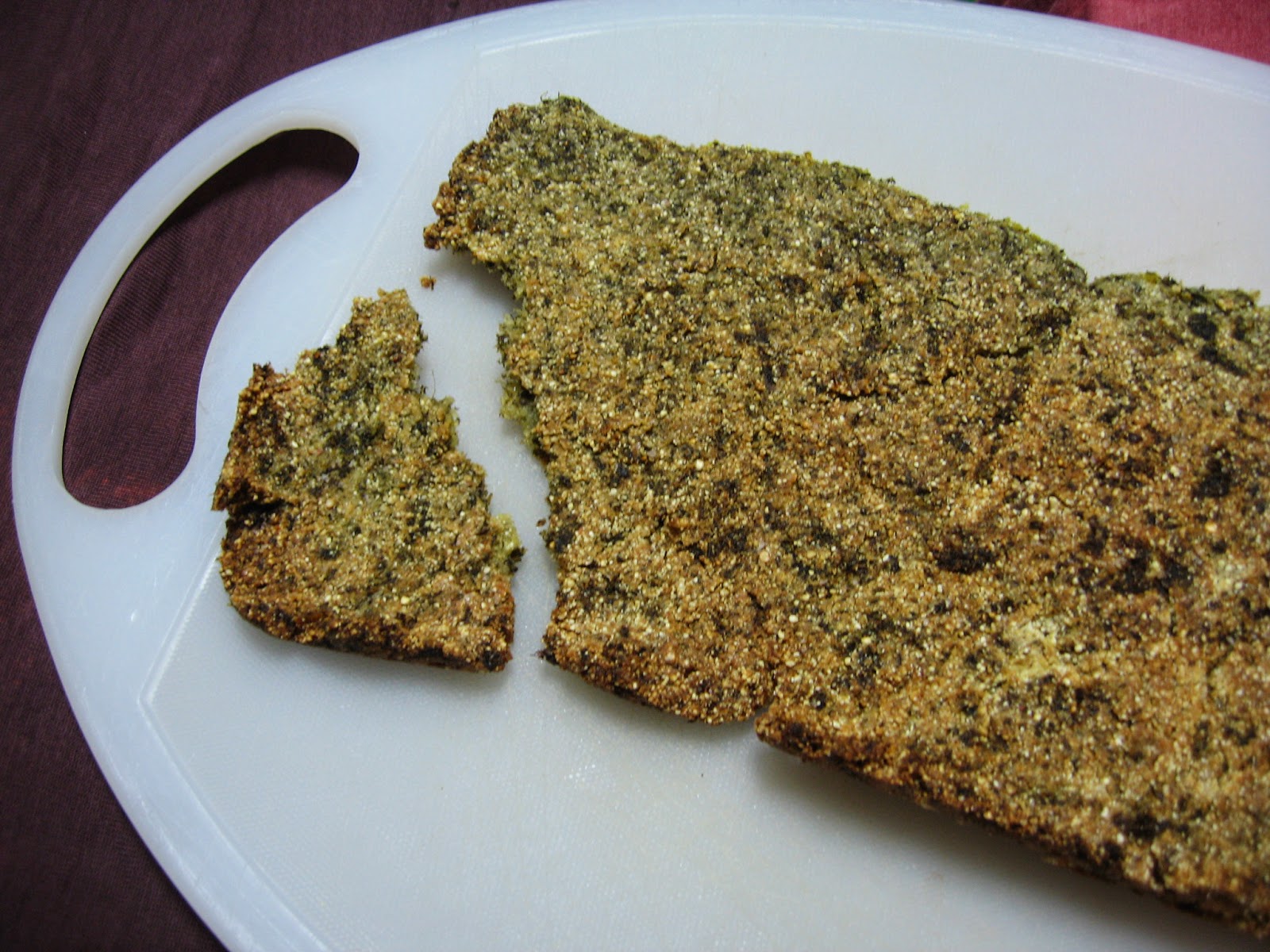
Veggie Juice Pulp Crackers 
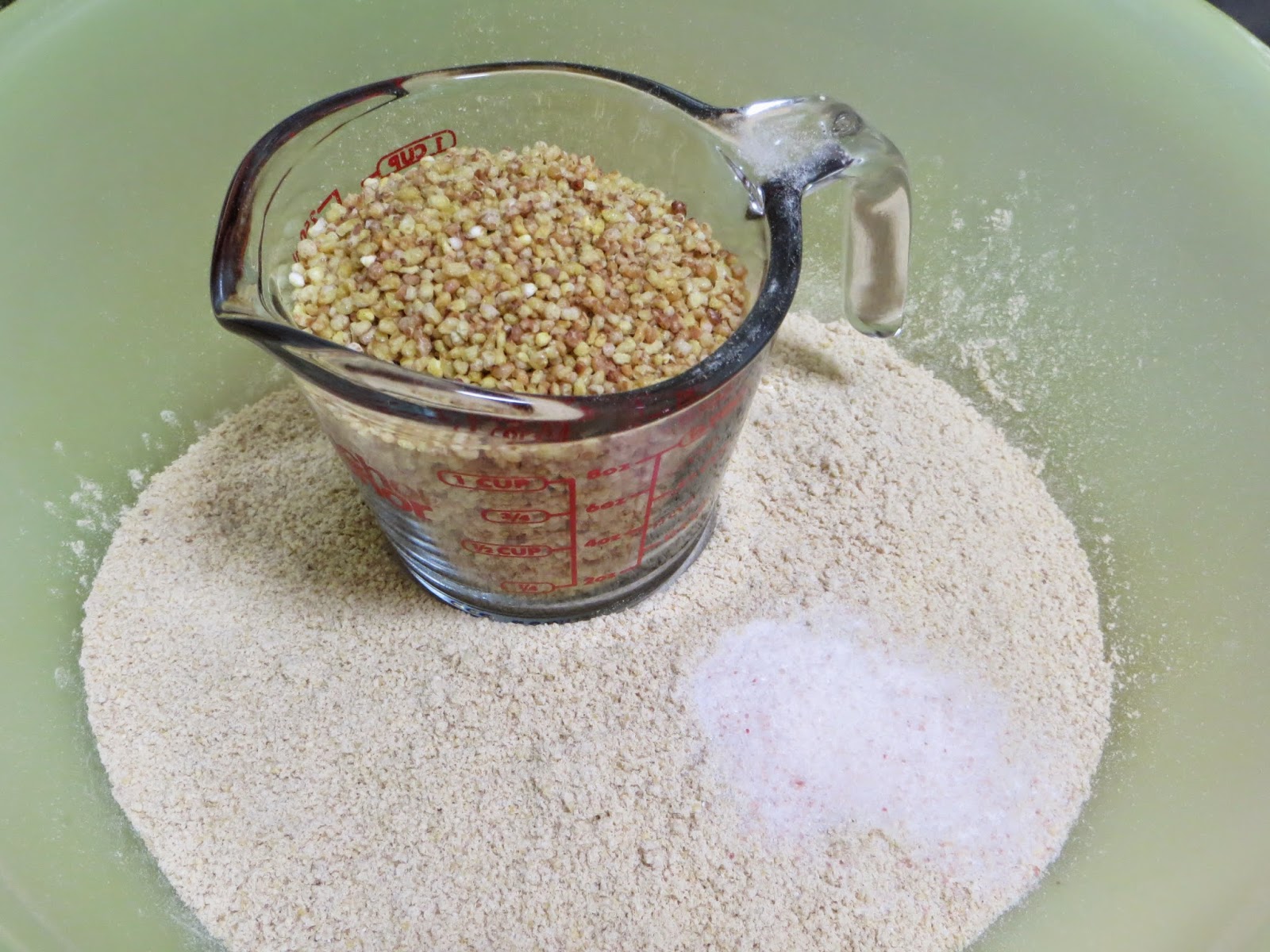
2 1/2 cups millet & quinoa & flours mixed (made in Blendtec)
1 1/2 - 2 cups vegetable pulp
1 cup roasted buckwheat
1/2 - 2/3 cup olive oil
1/2 cup water
2 t. garlic powder1 1/2 - 2 t. sea salt (use some for dusting the tops of the unbaked crackers)
After pressing the cracker dough into a greased and flour-dusted pan, lightly dust the top of the pressed down dough with flour. Bake at 250F for 30-35 minutes.


And here are some crackers I previously made with dark green leafies which included a lot of sesame leaf pulp. Wow, were these ever tasty! Wish I wrote this recipe down, but the flours used were quinoa, millet and flaxseed. It was very similar to the one above, but something besides the zesty sesame seed leaves made it much better. 


Here's another pulp cracker using pumpkin seeds, millet and quinoa for the flours. I skimped a bit on the added salt because the packaged pumpkin seeds were incredibly salty. These crackers turned out pretty good, especially because the veggie pulp was loaded with sesame seed leaf refuse. It's obvious I used quite a lot of the pumpkin seeds for this recipe, but actually it was a bit much. It needs more flaxseed to hold it together better and to add a deeper flavor. I think the flax flavor is very complimentary to the zestiness of the dark green leaves, which, because of a lot of sesame seed leaf pulp, can be rather bitter.


Wednesday, September 12, 2012

Thyroid and Diet

What to Eat for Thyroid Health?

As with virtually every bodily function, your diet plays a role in the health of your thyroid. The thyroid relies on you to feed, nourish and maintain it so it can return the favor and keep your metabolism, nervous state and even some hormone functions up to par.
    Iodine: Your thyroid contains the only cells in your body that absorb iodine, which it uses to make the T3 and T4 hormones. Without sufficient iodine, your thyroid cannot produce adequate hormones to help your body function on an optimal level.

    Iodine deficiency is typically not widespread in the United States because of the prevalent use of iodized salt. However, according to a nutrition evaluation conducted by the CDC, up to 36% of women of childbearing age may not get enough iodine from their diets, and it’s thought that iodine deficiency is on a slow but steady rise.

    Because iodized salt is heavily processed, some recommend avoiding iodized salt and instead getting iodine naturally from sea vegetables (seaweed), such as hijiki, wakame, arame, dulse, nori, and kombu. It should be noted, however, that too much iodine can actually trigger thyroid problems and worsen symptoms, so it’s important to have a healthy balance.

    Selenium: Selenium is indispensable to the thyroid. What it does is regulate thyroid hormone synthesis and metabolism. It converts T4 into the more accessible form of thyroid hormone T3; and maintains the right amount of thyroid hormones. Selenium can be found in foods such as shrimp, snapper, tuna, cod, halibut, beef, calf’s liver, button and shitake mushrooms, sunflower seeds and Brazil nuts.
    Zinc, Iron and Copper: These metals are needed in trace amounts for your healthy thyroid function. Low levels of zinc have been linked to low levels of TSH, whereas iron deficiency has been linked to decreased thyroid efficiency.  Zinc is found in oysters, sardines, beef, lamb, turkey, split peas, whole grains, pecans, almonds, and ginger.

    Iron deficiency is strongly linked to decreased thyroid efficiency. If you are both anemic and iodine-deficient you will have to get your iron levels up to resolve any thyroid imbalance. Iron is found in clams, oysters, organ meats, pumpkin seeds, blackstrap molasses, lentils, and spinach.

    Copper is needed in very small amounts by the thyroid so it can produce thyroid-stimulating hormone (TSH). Cooper is needed for oxidizing iodine to T4, when you are deficient in copper your rate of T4 production will slow down. Since T4 keeps your body’s cholesterol synthesis working, hypothyroidism puts you at risk for developing high cholesterol and heart problems. Foods such as calf’s liver, spinach, mushrooms, tomato paste, turnip greens and Swiss chard can help provide these trace metals in your diet.

    Omega-3 Fats: These essential fats, which are found in fish or fish oil, play an important role in thyroid function, and many help your cells become sensitive to thyroid hormone.

    Coconut Oil: Coconut oil is made up of mostly medium-chain fatty acids, which may help to increase metabolism and promote weight loss, along with providing other thyroid benefits. This is especially beneficial for those with hypothyroidism.

    Antioxidants and B Vitamins: The antioxidant vitamins A, C and E can help your body neutralize oxidative stress that may damage the thyroid. In addition, B vitamins help to manufacture thyroid hormone and play an important role in healthy thyroid function.

What Should You Avoid Eating for Thyroid Health?
    Aspartame: There is concern that the artificial sweetener aspartame, sold under the brand name Nutrasweet, may trigger Graves’ disease and other autoimmune disorders in some people. The chemical may trigger an immune reaction that causes thyroid inflammation and thyroid autoantibody production.

    Non-fermented Soy: Soy is high in isoflavones, which are goitrogens, or foods that interfere with the function of your thyroid gland. Soy, including soybean oil, soy milk, soy burgers, tofu and other processed soy foods, may lead to decreased thyroid function.

    Fermented soy products, including miso, natto, tempeh and traditionally brewed soy sauce, are safe to eat, as the fermentation process reduces the goitrogenic activity of the isoflavones.

    Gluten: Gluten is a potential goitrogen and can also trigger autoimmune responses (including Hashimoto’s thyroiditis) in people who are sensitive. Gluten is found in wheat, rye and barley, along with most processed foods.
How Some Foods Interact with the Body

Foods that May Speed Up a Slow Thyroid

        1. Sea Weed

Naturally rich in iodine as well as trace minerals, sea weed has long been considered a food that supports thyroid function.   Indeed, native peoples subsisting on their traditional diets often went to very great lengths to obtain sea vegetables in effort to avoid goiter.   Iodine is critical to thyroid health and function.   Without adequate dietary iodine, your body is unable to manufacture the thyroid hormones.   Of course, excess intake of iodine-rich foods is also implicated in thyroid disease.   Remember: moderation is the key, not excess.

2. Coconut Oil

Coconut oil also supports proper thyroid function as it slightly stimulates thyroid hormone production and the metabolism.   In this way, wise incorporation of coconut oil into the the diet is thought to support thyroid health and help sufferers of hypothyroidism to lose weight.   Coconut oil may also help to reduce cholesterol in hypothyroid patients as thyroid suppression in and of itself raises blood cholesterol levels.   Coconut oil is largely comprised of saturated fat and saturated fat promotes thyroid function.

        3. Shellfish

Shellfish, like sea vegetables, are naturally rich in iodine – the nutrient that is critically important to thyroid function as iodine molecules are used in the production of thyroid hormones.

4. Garlic, Onions, Ginger, Pepper
Garlic, onions, ginger, pepper are stimulating to the body and therefore have an effect on the metabolism. There might be some consideration on the effect of these and other stimulating foods in regard to thyroid function.

Foods that May Slow Down a Speedy Thyroid
1. Fermented Soy FoodsSoy is very goitrogenic. A strong suppressor of thyroid hormones, some research indicates that soy may even be more effective in thyroid suppression than anti-thyroid drugs. Don’t forget that soy is a potent food, and that while sufferers of hyperthyroidism might welcome soy’s thyroid-suppressing effects, take care to eat soy in its fermented state in foods like tempeh and miso as soy also contains antinutrients like phytic acid which impair the body’s overall ability to absorb many nutrients.

2. Raw Cruciferous VegetablesRaw cruciferous vegetables also suppress thyroid function. Cruciferous vegetables like kohlrabi, cabbage, cauliflower, rapini, turnips and brussels sprouts contain goitrogens that interfere with iodine uptake and, in that way, also interfere with production of thyroid hormones.

3. MilletMillet, like cruciferous vegetables, contains goitrogens and interferes with iodine uptake. Cooking millet, as well as goitrogen-rich cruciferous vegetables, may mitigate its antithyroid effects to some degree.
Foods Not Favoring the Thyroid
1. Gluten-containing GrainsRecent research into autoimmune diseases and autoimmune thyroid disease in particular indicates that there’s a strong connection between celiac disease and thyroid disease. Indeed, study published in Digestive Diseases & Science indicates that sufferers of autoimmune thyroid disease have roughly a 400% greater chance of also suffering from celiac disease than control groups. Moreover, some research indicates that after 3-6 months on a gluten-free diet, those pesky anti-thyroid antibodies virtually disappear. That’s a poweful case to remove wheat, barley and other gluten-containing grains from your diet if you suffer from any form of autoimmune thyroid disease.

2. Unfermented SoyUnfermented soy foods – particularly those rich in concentrated isoflavones and genistien – contribute to autoimmune thyroid disease. Research into soy formula and its effects on babies indicates that babies fed soy formula are more likely to develop autoimmune thyroid disease and large concentrations of unfermented soy may adversely thyroid function in adults. If you eat soy, keep to small amounts and always choose fermented forms. (Learn more about the nastiness of too much soy consumption in my post about the Soy and Illinois Prisoner Case.)

3. CoffeeCoffee is simultaneously stimulating and goitrogenic which spell trouble for both hypo- and hyperthyroid sufferers. As a strong stimulant, it can wreak havoc on those suffering from hyperthyroidism as that added stimulation is the very last thing they need. Moreover, for those suffering from hyperthyroidism, coffee also interferes with iodine uptake and thus may inhibit the formation of thyroid hormones. Bad news for everyone.
Other Considerations for Benefiting the Thyroid
1. Whole Grains - rich in B vitamins
Whole grains and whole-grain foods are natural sources of vitamins and minerals. B vitamins such as niacin, riboflavin and thiamine help support thyroid function, as well as selenium, iron and magnesium. According to the University of Maryland Medical Center or UMMC, a regular intake of whole grains is advisable for those with thyroid conditions unless there is an allergy to particular grains. Whole wheat, long-grain brown rice, popcorn, steel-cut oats, quinoa and bulgur are examples of whole grains rich in nutrients. Eating whole grains can only support optimal thyroid function. This doesn't "speed up" your thyroid unless you have a nutritional deficiency.

2. Fruits and Vegetables - antioxidants and immune system buildersFruits and vegetables are great sources of vitamins, minerals and antioxidants. They help build a strong immune system and shield the body from diseases and viruses. According to the UMMC, fruits and vegetables rich in antioxidants such as squash, bell peppers, raspberries, tomatoes and cherries are effective in managing hyperthyroidism and hypothyroidism. Thyroid function is also supported by B vitamins abundantly found in watermelon, avocados, sweet potatoes, dates, oranges, grapes, pineapple, mangoes and sea vegetables.

3. Foods with L-TyrosineThe amino acid L-tyrosine supports optimal thyroid function. Your thyroid combines with tyrosine to make thyroid hormone. The Franklin Institute reports that almonds, avocados, lima beans, pumpkin seeds, bananas, dairy products and sesame seeds are abundant sources of L-tyrosine.

4. Fish, Seeds and Nuts - omega-3 rich foods
According to the UMMC, omega-3 fatty acids can help support optimal thyroid function and ease inflammation that may be present from thyroid dysfunction. Coldwater fish, seeds and nuts are sources rich in omega-3 fatty acids. These foods also contain zinc, iron and magnesium to help support thyroid health. Tufts University reports that coldwater fish such as salmon, sardines and mackerel are among the best sources of omega-3. Walnuts and flaxseed also have among the highest concentrations in omega-3 fatty acids.


Friday, June 1, 2012

Cats and Systemic Candida

My girls! Cafe (tan) and Aulait (white)


It's been almost 3 years since I got sick with systemic candida, or actually I should say, since both of my cats and I got so very sick. All of us had been sick with something before. For me, I was just diagnosed with hyperthyroidism (September 2006) and had low-to-no energy and looked like a skeleton. And it was because I needed to relax more and stay at home to eat better and sleep better that I got my first cat, my beautiful white Aulait. She was 4 months old and was everything I wanted in a cat - a female, not long or short hair, not afraid of dogs (she played with the leash of my neighbor's dog that I was walking when I stumbled across the new pet shop!), and from a loving environment (the owners at the pet shop allowed the 5 four-month old kittens to just walk around the entire pet shop - how awesome!) Well, within a month of getting Aulait, I realized she had food allergies to the canned food "EVO" or was it "EVOLVE". She farted hugely when she ate the wet food so I changed to another brand, but I still gave her the dry EVO(LVE). Another month later, she bloated and stopped playing. When I took her off of the dry food, within three days she was her joyful self! As she was growing up, I did notice that over time, she got pickier and pickier about the foods she would eat.

First day for Cafe to play after getting the cat killing disease - panleukopenia
And then after a year, Aulait so loudly and over and over again demanded companionship, so one day I spontaneously went to the "meat market". Well, it is the street where teeny kitties and puppies are the products of a thriving business and the poor babies are known to also be the products of overbreeding. I bought Cafe from a tiny boutique that seemed to give better care to its animals. And within four days, Cafe had the cat killing disease panleukopenia, a very contagious white blood cell disease. I didn't know anything about the disease or maybe I would have taken her back to the shop, but for the next 3 weeks, she was pretty darn sick and only survived because we barely caught the disease in time. She luckily pulled through but her GI track was very compromised ... I wasn't aware how badly but was told to keep her on a strict diet for six months to let it heal.

So three years ago, all three of us suddenly got sick ... and the source of our sickness I traced to our tap water which I stupidly was drinking and stupidly was giving to the cats. What made me finally figure out the prob was my cheeks inside my mouth felt like they were being pinched whenever I drank the water. And then I started noticing how much white sediment or deposits were around my faucet and in my dish drip tray, more than that at my friends' houses and other places around the city. Chlorine? Likely but not sure. But that whiteness had been ever increasing since the river directly beside my house had been, and was still being, excavated.

Cafe was the sickest at first. Her very weakened GI track from before resulted in kidney problems and at age 2 she painfully started passing sandy crystals. The vet put her on a low protein diet and for 6 months she was OK, and then she relapsed. The vet was surprised she relapsed so soon, and it was pretty bad, so I had to put her to sleep. 2 1/2 years only .... so very young and so very sweet.

Well, by this time Aulait and I were very sick, and very weirdly we shared some symptoms although I was having horrible bone problems and she seemed less affected in that department. We've both had neuropathies, hers much worse than mine, we've had inflammation in our eyes and elsewhere (I can tell by how she held herself that she was having arthritis and other flexibility issues). But while we both felt badly, I could treat myself more specifically. I could do liver and gall bladder detoxes, eat onions and garlic for cleansing the blood (cats are allergic to both), and go regularly in for vitamin A and D tests. Aulait wasn't doing so well after I put Cafe to sleep so I took her in to the vet and had her tested. Outcome - thrombocytopenia, a white blood cell problem and an autoimmune disease. Her full diagnosis was:
thrombocytopenia: utilization - destruction -  lack of production
lymphocytosis/monocystosis: excitement - antigen stimulation - neoplasia
borderline polycythemia (erythrocytosis)
borderline low MCHC
suspected nucleated red blood cells

Her bloodwork:

HCT ......... 36.2% ........... 24.0 - 25.0 ▲
HGB ........ 13.3 g/dL ....... 8.0 - 15.0
MCHC ..... 28.8 g/dL ...... 30.0 - 36.9 ▼
GRANS ... 4.7 x10³/µו .… 2.5 – 12.5
……. %Grans …. 28%
L/M ….… 12.1  x103/µו ... 1.5 – 7.8
……. %L/M …... 72%
PLT …….. 21 x103/µו ….. 175 – 500
Retics …... 0.7%
NRBCs … likely
And the vet told me I would have to bring her in regularly (every 4 months) for life to get testing and treatment. Well, I did take her in every four months when her energy was depleted, and Aulait got expensive testing, and then pharmaceutical treatment for 10 days or so and then retesting to see if the therapy worked. After the 3rd time of taking her in, I decided to try diet control in a different way than I had with Cafe. I had syringe-fed Cafe for 6 months a special kidney support low calcium mush-food that helped, so I started syringe-feeding Aulait nutrients, mostly barley green which is very high in vitamin Bs, which I knew would benefit her nerves and maybe help with the neuropathies she was having.  Well, she stopped having energy-loss relapses! And for the next two years she didn't go to the vet's except for her annual inoculations.

Spirulina - she never could eat spirulina neatly like the other supplemental powders.
That didn't stop her ongoing increase in food allergies though. She expressed more and more dislike at foods she had happily eaten before, AND she started having water allergies AT THE SAME TIME I WAS HAVING THEM with seemingly similar reactions!!!! (See Reaction to Bottled Water - headaches and numbness) From this time onward, she stopped going to her water bowl until she was really thirsty and then she would do a little foot scrape dance before she would lap just a few times and then scurry away, with her fur crawling horribly on her back.

Over the past several months I'd really upped her nutritional supplements that I syringed into her mouth. Such a sweet trusting baby. She would just open her mouth and half lap, half back-tongue-action the liquid down quickly. She got barley green, barley green and bee pollen (the latter which is extremely high in vitamin Bs but also with natural sugar so I can't take this for candida - I've suspected Aulait as having the exact same problems as myself since almost the beginnings so I didn't use this in the beginning; later, I used it to see if it's help since I was running out of options. It did a bit. Anyway, both Aulait's neuropathies and candida mess with vitamin Bs and Aulait definitely needed vitamin B to help with her nervous disorder, so I would mix a little bee pollen with the barley green. She loved the taste and if I kept the bee pollen percentage small, her neuropathies temporarily disappeared). Over the past months via syringe I've given her spirulina (she's not particularly fond of this), mullen leaf powder (she likes it), catnip tea (she hates it), and of course also syringed in anti-inflammatory oils like flax seed oil (yuk from her!), cod liver oil (yuk!), evening primrose oil (a bit yukky) and olive oil (sometimes yuk). Although she hated the ickiness of the oils, she was calmer afterwards and her neuropathies were less!

She still got worse though. The last few months I've been syringing three times a day for her. I even syringed dextrose based on the vet's recommendation. It helped her sudden bouts of hypoglycemia, but I had to be careful to not give her too much dextrose ... or she would have horrendous neuropathies that made her madly lick her four paws, her back, her tail, and to "escape" the creepiness she would race all over the apartment in madness. So terrible to watch. Whenever I saw her having one of these bouts (caused by food, wrong supplements, too much dextrose, or even hunger), I would quickly mix barley green with a little bee pollen and syringe it in her mouth and then feed her a wet food that was made from meat and not processed filler "meat" like in the canned Fancy Feast (that brand gave Aulait the worst neuropathies!). She got so she would come and "tell" me when the problems started, because we both figured out that if we could address the problem early, it would be easy to "fix". She had these strange hypoglycemic-neuropathy attacks at least 2-3 times a day in the end.

On May 30 I couldn't stand watching her struggle with her problems anymore. She also seemed to be starting to have pain as her eyelids were usually heavy and she looked dull. She had long since stopped playing much ... and the day I dreaded came when I knew her quality of life was too poor to go on. So I had her put to sleep. Tough decision but she no longer suffers, so in that respect, we are both at peace.

The vitamin loaded powders for Aulait: barley green, bee pollen, alfalfa powder, mugwort powder

Mixing nutritional supplements for syringing

Left to right (back): dextrose, spirulina, barley green, bee pollen; (front) spirulina mixture, bee pollen and barley green mixture
Barley green for Aulait
I don't really know what happened with Cafe, but I think we were all exposed to a horrendous bacteria that attacked our weakest areas - for Cafe, it was her already compromised GI track. [But then as I read somewhere, 70% of diseases start in the GI track!] Even though the vet that diagnosed her with renal sand said she was eventually going to suffer kidney failure, I think the bigger cause of her death was of a bacteria, aka systemic candida. She had a lot of the tell-tale symptoms: very bad breath, extremely waxy ears, and intolerance to foods (but not as bad as Aulait).

Aulait certainly was suffering from a bacteria. We shared so many symptoms it was crazy - food sensitivities, odor sensitivities (Aulait was extremely sensitive), neuropathies, inability to make decisions when at our worst, extreme tiredness, and so many more. Poor baby, to be so sick from food ... But baby, we so understood each other and for seven years we were always there for each other! Now rest and be at peace.