Showing posts with label inflammation. Show all posts

Friday, October 18, 2019

Top 10 Bible Foods that Heal + the Biblical Diet

Dr. Josh Axe, DNM, DC, CNS, (born 1981) is a doctor of natural medicine and is a chiropractic physician and clinical nutritionist with a passion to help people get healthy. He operates one of the world's largest natural health websites at www.DrAxe.com, and he has published extensively - for blogs, health articles and even several books:


The following article, Top 10 Bible Foods that Heal + Biblical Diet, was also written by him.

November 4, 2017

Whether you eat, drink or whatever you do, do all for the glory of God. ~ 1 Corinthians 10:31
All throughout the Bible, references are made to the medicinal properties of foods and herbs. Representing health and longevity from Almighty God, the importance of diet and of preparing and eating food was oftentimes seen as a spiritual act. If you want to consume some of the most common foods mentioned for their health properties in the Bible, then you’ll want to try these top 10 healing Bible foods.

But first, let’s look at what foods the Bible considers clean vs. unclean. Of course, all of the healing foods land in the clean category.

What Are Clean and Unclean Foods?

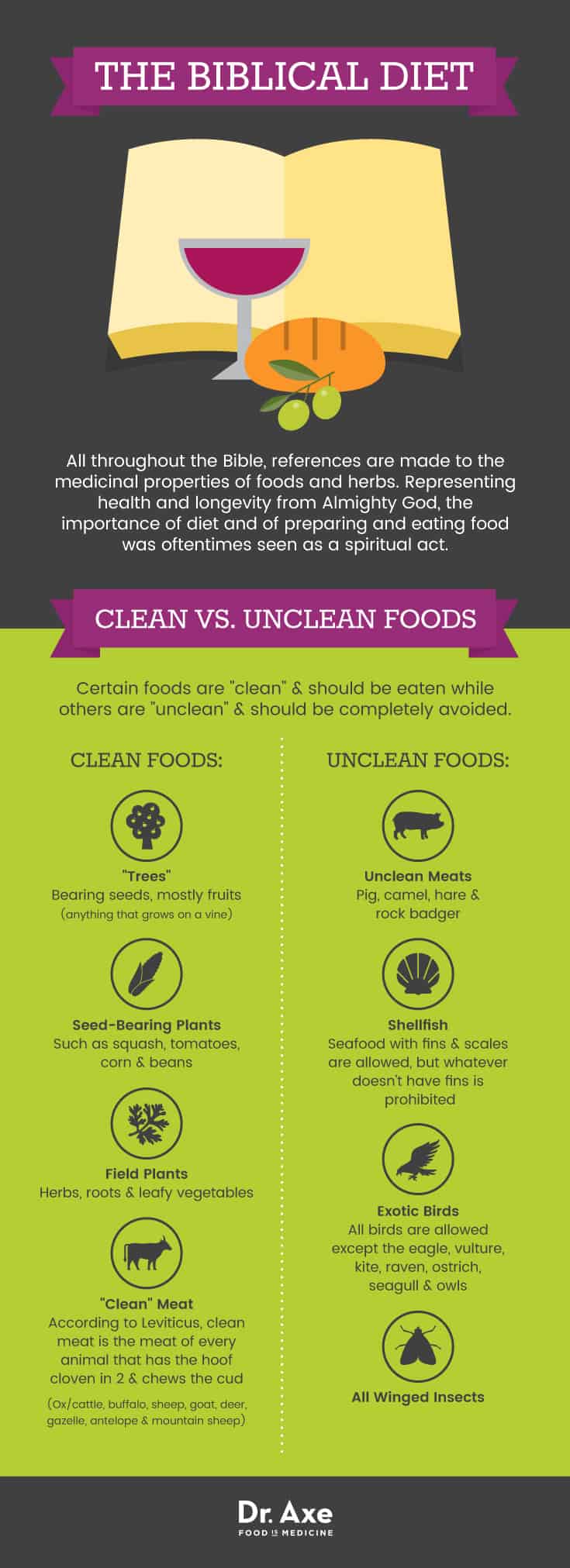
When you go on the Bible diet, there are only certain kinds of food that you can eat. Certain foods are “clean” and should be eaten while others are “unclean” and should be completely avoided.

Acceptable Biblical foods:
Trees whose edible yield is bearing seeds or is seed — To put it simply, this kind of food is mostly fruits. All fruits are acceptable in the Biblical diet, just as long as they come from seeds. Fruits from fruit trees are okay to eat, as well as anything that grows on a vine, a shrub or anything with a woody bark tissue. (1
Plants whose edible yield is bearing seeds or is seeds — This classification refers to anything that may grow on plants that are not necessarily trees. Examples of seed-bearing plants include squash, tomatoes, corn and beans. (2
Field plants — Field plants or “plants of the field” are the next thing on the list, which can consist of herbs, roots and green, leafy vegetables. (3
Clean meat — Now this one’s a little detailed because the definition of clean meat is pretty complex. According to Leviticus, clean meat is defined as the meat of every animal that has the hoof cloven in two and chews the cud. (4) Examples of clean meat include the ox (cattle), buffalo, sheep, goat, deer, gazelle, antelope and mountain sheep, just to name a few. Examples of unclean meat include pig, camel, hare and rock badger. The Bible also instructs us not to eat the blood of animals or to eat any meat that has been sacrificed to idols. (5)
As for seafood, everything with fins and scales are allowed, but whatever doesn’t have fins such as shellfish is prohibited. For birds, everything is allowed except eagles, vultures, kites, ravens, ostriches, seagulls and owls. It is also noted that all winged insects are considered unclean. (6)
Top 10 Bible Foods with Healing Properties

1. Olives and Olive Oil — Then it shall come about when the Lord your God brings you into the land which He swore to your fathers, Abraham, Isaac and Jacob, to give you, great and splendid cities which you did not build, and houses full of all good things which you did not fill, and hewn cisterns which you did not dig, vineyards and olive trees which you did not plant, and you eat and are satisfied. (Deuteronomy 6:10-11)

The Jews were the elite olive merchants of their day. During antiquity, this precious commodity was used for its healing capabilities, for cooking, to light lamps, for soaps, for cosmetics and even for currency. Olive oil was considered so sacred to ancient culture that it was even used to anoint kings and priests. Hence, the Hebrew for Messiah, Moshiach, meaning “anointed one!”

Research has been conducted that proves regular consumption of olives and olive oil contributes to heart, brain, skin and joint health. They have even been linked to cancer and diabetes prevention. (7) Needless to say, this sacred foodstuff has lived up to its ancient reputation!

2. Pomegranate — For the Lord your God is bringing you into a good land, a land of brooks of water, of fountains and springs, flowing forth in valleys and hills; a land of wheat and barley, of vines and fig trees and pomegranates, a land of olive oil and honey. (Deuteronomy 8:7-8)

Tasty, messy and just recently gaining ground in the American market these past few years, several research studies have shown that pomegranates contain strong anti-inflammatory, anti-oxidant, anti-obesity and anti-tumor properties. According to researchers, “Many beneficial effects are related to the presence of ellagic acid, flavonoids, anthocyanins, and flavones, which seem to be its most therapeutically beneficial components.” Subsequently, pomegranates are being considered valid treatment options for chronic diseases such as cancer, insulin resistance, intestinal inflammation and obesity. (8)

3. Fermented Grapes — May he kiss me with the kisses of his mouth! For your love is better than wine. (Song of Solomon 1:2)

I can’t make a list of top Bible foods without including grapes. Several epidemiological studies have shown that moderate alcohol intake, particularly drinking red wine, may lower the risk of cardiac mortality due to atherosclerosis. (9) The general recommendation is no more than one (five ounces) of red wine per day except for men under the age of 65 who may be able to have two drinks per day. (10)

When grape juice is fermented, natural anti-oxidant and flavonoid properties are exemplified through a substance called resveratrol. Consequently, researchers have focused much of their attention on evaluating the health benefits of resveratrol in recent years, which has been linked to chronic disease prevention and treatment including diabetes and obesity. (11)

4. Flax — An excellent wife, who can find? For her worth is far above jewels … She looks for wool and flax and works with her hands in delight. (Proverbs 31:10,13)

One of the most important plant fibers in the Bible, flax has been used to make linen for as long as recorded history. Although it has been widely replaced by cotton in recent years, flax remains one of the most important fiber plants in the world and one of the top Bible foods.

Having a rich history of medicinal use dating back to Babylon in 3000 B.C., flax seeds have been wholeheartedly embraced by natural health and medical circles alike because it provides a natural, vegan source of omega-3 essential fatty acids, lignans and fiber. Subsequently, research show that flax seeds may be able to help fight against cancer, lung disease and heart disease. (12)

5. Sprouted Grain Bread — Take wheat and barley, beans and lentils, millet and spelt; put them in a storage jar and use them to make bread for yourself. (Ezekiel 4:9).

In the Book of Ezekiel, God gave the prophet Ezekiel a recipe for what has proven to be the perfect bread as science has recently shown us that it creates the “complete protein,” one that contains all essential amino acids. The main reason that Ezekiel bread is healthier than other breads is because the grains and legumes are soaked and sprouted, which makes them easier to digest — and as a result, is the only bread to make this list of top Bible foods.

Harvesting “sprouted grains” happens right after the seed has started to sprout, but before it has developed into a full-grown plant. During this critical growth state, the young shoot digests a portion of the starch to fuel its growth. Subsequently, because the grain’s starch has been utilized, the level of vital nutrients — including proteins, vitamins and minerals — are enhanced. Additionally, research studies have suggested that iron and zinc actually become more “bioavailable,” (i.e. more easily absorbed) after sprouting. (13)


6. Raw Goat Milk — The lambs will be for your clothing and the goats will bring the price of a field. There will be goats’ milk enough for your food, for the food of your household, and sustenance for your maidens. (Proverbs 27:26-27)

Raw milk is filled with the vitamins and minerals that contribute to a healthy dental fluid flow and help maintain strong teeth. Loaded with calcium, vitamin K2, magnesium, phosphorus and fat-soluble vitamins, researchers have carried out a comparative study on the properties of cows’ milk compared to those of goats’ milk and have discovered that goats’ milk may be even more beneficial.

Unlike cows’ milk, scientists from the University of Granada has revealed that data concerning goats’ milk suggests that it could prevent diseases such as anemia and bone demineralization. Additionally, goats’ milk has properties that help with the digestive and metabolic utilization of minerals such as iron, calcium, phosphorus and magnesium. (14)

7. Lamb — Now you shall eat it [the unblemished lamb] in this manner: with your loins girded, your sandals on your feet, and your staff in your hand; and you shall eat it in haste — it is the Lord’s Passover. (Exodus 12:11)

Due to the significance of the Passover Lamb and equating that role to Christ, lambs are the most revered animal in history, and the most honored food in the Bible (and the only meat earning a spot in the top 10 Bible foods). Lamb is the meat of young sheep that are generally one year old or younger. Due to slaughtering the animal at such a young age, the marble fat content is considerably lower than older varieties of meat, which contributes to heart health and helps prevent again obesity. Rich in protein, vitamin B12, vitamin B6, niacin, zinc and other vital nutrients, it is arguably the healthiest red meat on the planet. (15)

On a side note, make sure to purchase local, organic, grass-fed varieties when possible. Grain-fed factory farmed animals are loaded with genetically modified corn feed, countless additives and are simply not worth the risk.

8. Bitter Herbs* (coriander and parsley) — They shall eat the flesh that same night, roasted with fire, and they shall eat it with unleavened bread and bitter herbs. (Exodus 12:8)

Scholars are not in complete agreement which plants the authors of Bible were referring to when writing about “bitter herbs,” but coriander and parsley generally make the list.

Coriander is the seed of the powerful anti-oxidant and natural cleansing agent cilantro. Traditional medicine has long used and labeled coriander as an anti-diabetic plant and scientific research confirms its helpful effects on blood sugar. Coriander also appears to be helpful for high blood pressure and heavy metal detoxification amongst other positive health effects. (16)

Parsley is another health-promoting herb and a rich source of several crucial vitamins, including vitamin A, vitamin C and potassium. (17)

9. Vegetables — Please test your servants for ten days, and let us be given some vegetables to eat and water to drink. (Daniel 1:12)

Instead of eating the tasty dainties of the Babylonians, Daniel and his friends requested to live on a vegetarian diet. When it was time for them to be presented to the king, Nebuchadnezzar and all of the leaders were astounded to see that the four young Jewish friends were more fit and looked better than the other young men who ate the Babylonian fare. Often referred to as the Daniel diet or the Daniel fast, history and biblical text actually support that Daniel continued his vegetarian lifestyle throughout his entire life.

Of all the food groups, vegetables are arguably the most nutrient-dense and safest to eat. There’s relatively no risk in consuming too many of them; whereas, if you eat fruit all day, you run the risk of spiking your blood sugar or developing dental caries because of the excess sugar.

Vegetables are so effective at healing that, according to the National Cancer Institute, cruciferous veggies (broccoli, cabbage, collards, kale, radish etc.) can help prevent cancer because they are rich in glucosinolates – a large group of sulfur-containing glucosides. Known to break down during chewing and digestion, these powerhouse chemicals can slow down and even reverse cancer cells growth. Additionally, it has also been reported that glucosinolates can treat the following health concerns: (18)
  • Inflammation
  • Bacterial and viral infections
  • Carcinogenic toxicity
  • Tumor angiogenesis (blood vessel formation)
  • Tumor metastasis (tumor migration)
10. Raw Honey — Have you found honey? Eat only what you need that you not have it in excess and vomit it. (Proverbs 25:16)

It’s no wonder raw honey is referred to as “liquid gold.” The medicinal applications to the skin and internal body seem limitless. First of all, raw honey is loaded with key nutrients. Research has also shown that honey contains the disease-fighting antioxidant flavonoids like pinostrobin, pinocembrin and chrysin. (19)

In addition to being a fantastic replacement to energy drinks for athletes and people needing a little boost, raw honey also supports the growth of probiotics in gastrointestinal tract including (Bifidobacteria). (20) Another fascinating quality of honey is its ability to improve allergy symptoms. (21) However, be sure to purchase the local variety, as it will contain indigenous pollen species unlike generic store-bought brands.

Recommendations and Benefits of a Biblical Diet

Is it possible to lose weight by following the Bible’s teachings on food and eating? Founder of the Bible Diet, author of The Maker’s Diet and motivational speaker Jordan S. Rubin believes so! According to him, the Bible Diet is heavily influenced based on the teachings from the books of Leviticus and Deuteronomy and the only food considered acceptable or clean is the only kind that should be eaten.

Recommendations from The Makers Diet

The four classifications of food (trees that yield seed, plants that yield seed, field plants, clean meat) is the foundation of a Biblical diet. There are also other important things you should consider when starting or following a Biblical diet:
Water, sunshine and exercise. These three are absolutely key to good health. You should always remember to drink lots of water, get lots of exercise and go outside. I recommend one quart water daily for every 50 pounds of weight. Also, it’s important to drink high quality water
Eat safe, clean meat. This means abstaining from certain kinds of meat and seafood such as pork, lobster, clams and mussels, shrimp and catfish. 
Eat foods that are in season. The Bible states that everything has a season. This should also be our attitude when it comes to picking out the things we eat. Lean towards eating fruits, vegetables and herbs that are in season, as they’re fresher and better for your health. 
Eating raw. Eating uncooked raw food is very much encouraged. Some vegetables may need to be cooked, but a majority of them can be enjoyed raw. 
Unprocessed real whole foods. What you eat should ideally be consumed in the way that it was found in nature. This means that we should stay away from preservatives, processed foods, or those produced with lots of contact with hormones, fertilizers and pesticides.
Benefits of Following a Biblical Diet

All these food restrictions may seem like a whole lot of sacrifice, but what about the rewards. According to Rubin, those who go on the Biblical diets and eat Bible foods can look forward to the following benefits:

Weight loss

A diet high in unprocessed food, fruit and vegetables is ideal for weight loss. Natural and raw fruits and vegetables carry fewer calories and are easier to digest then other processed foods.

A longer lifespan 

Rubin claims that some of our ancestors that went on the Biblical diet went on to live for 120+ years. Although we may not reach that age, studies show that a diet high in fruits and vegetables lead to little or no health complications, thus indicating a longer lifespan.

Energy and improved mood 

When our bodies are in a state of imbalance due to poor dietary habits, we immediately feel it. We can feel sickly, sluggish and depressed. Eating right can increase energy, balance hormones and improve our mood.

Final Thoughts

Who would have thought that you could get nutritional advice in the Bible, huh? At the end of the day, if it were good enough for people back then to eat, I think it’s probably good for us today. So much of what the Bible lays out so clearly for how we should eat also makes a lot of sense when you look at scientific research. A Biblical diet is filled with healing foods that promote a well-rounded diet and so many awesome health benefits.


_____________________________________________________________________________

*Hyssop, not commonly used today, is also referred to in the Bible as a bitter herb. [It's very, very bitter, and when my brothers and I were babies, my mom had extreme ulcerative colitis, something doctors said was incurable at the time. We were babies, and she knew she had to overcome her problem for our sake, so she went to a health food store (Harvest Health in Grand Rapids, MI) and someone there recommended she drink hyssop tea. She did, every day and throughout the day, and ate the blandest diet, e.g. boiled green beans, boiled potatoes with no butter or salt. After a year she was able to gradually add foods, and eventually because of the tea and her bland diet, she could overcome her problem! A careful, thoughtful diet does cure! Praise God!] - CM

Friday, August 23, 2019

The Denaturing Effect of Cooked Food

The following article is taken from Hippocrates Health Institute, home education (Dec 13, 2018): 

Cooked Food What’s In It?

Well, after years of being a pyrofoodiac, I discovered raw food. No, I’m not talking raw meat or even sushi, but rather fruits, veggies and their juices and raw nuts seeds. In their natural, unadulterated, untouched by man, UNcooked and certainly UN-burned state, these foods really can heal all that ails you. It turns out, it’s that cooked food, especially the burnt stuff, that WILL kill you! 

Yes, I know exactly what you’re thinking, “EVERYONE eats cooked food!” But not everyone knows what the cooking of food actually does to the food, and even more importantly, what that cooked food does to your body when you regularly consume it. 


So, what could possibly be so bad about cooking your food? Does something in the food change when you heat it? 


What exactly is IN cooked food? 

Whenever you cook food, whether it’s on a stove top, in an oven, on a grill, in a microwave, or in a fryer, not only does the molecular structure of the food become denatured, deranged, and/or degraded, but those molecules are changed into new chemical configurations (this is a bad thing) and carcinogenic and mutagenic byproducts are formed. The degree to which this happens is dependent on the cooking temperature, time cooked and method of cooking. 

Grilling, barbecuing, smoking and frying are the worst offenders; they are literally the fires of death, but steaming also affects the food. You know that old saying that there are more nutrients in the water of steamed veggies than are actually left in the veggies when they are done steaming? That’s because heat destroys nutrients, especially the water soluble vitamins like vitamin C and all the B vitamins. The heating of food also destroys the food’s enzymes. In fact, 100% of the food’s enzymes are destroyed at temperatures as low as 118 degrees Fahrenheit. In addition, the oxygen and water content of the food is drastically decreased, fats are carcinogenized, carbs are caramelized and proteins are coagulated and become virtually unusable by the body. Even the fiber in food loses that sweeping-like action in the colon

The heating of food also creates toxic byproducts. Here is a list of some of the dangerous byproducts you are most likely unknowingly consuming every time you eat cooked food, whether it’s a carb, a fat or a protein: 

Acrylamides: These are the cancer· causing byproducts of cooking carbohydrate foods such as breads, potatoes, pastries or any kind of starch. Even the FDA (Food and Drug Administration) acknowledges the perils of acrylamides. In fact, on their website (www.fda.com) they have a list of the amount of acrylamides found in various common cooked foods, but you better believe the processed/fast food industry doesn’t want you to know about this! 

Ally aldehyde, butyric acid, nitrobenzene and nitropyrene: The book, Diet, Nutrition and Cancer, published by the U.S. FDA’s Office of Toxicological Sciences and the Nutritional Research Council and the American Academy of Sciences lists these toxins as being formed from heating the fats and oils in food. 

Epoxides, Hydroperoxides, unsaturated aldehydes: These are generated when heating fat from meat, milk, eggs, and fish. 

Furfural / furans: These toxins are spawned when sugars are heated. 

Heterocyclic Arnines (HCA’s): Add heat to amino acids (proteins) such as meat, fish or chicken and these poisons will be served up. 

Indole, skatole, nitropyrene, ptomatropine, ptomaines, leukomaines, ammonia, hydrogen sulfide, cadaverine, muscarine, putecine, nervine, mercaptins: These toxic by-products have been found in cooked cheeses. 

Methylglyoxal and chlorogenic atractyosides: Heating the coffee bean produces these chemicals. 

Nitrosamines: As nitrogen oxides in the gas flame from gas ovens or barbecues interact with fats, these toxins are created. 

Polycyclic hydrocarbons: These carcinogens are generated from the charring of meat. 

Hydrogenated oils/Trans fats: These man-made fats, also called hydrogenated or partially hydrogenated fats, were specifically developed so a processed food could sit on a shelf for a long period of time without going rancid. Many of today’s common foods are also cooked in these trans fats. Consuming trans fats can lead to obesity, heart disease, increases in the bad (LDL) cholesterol and lowering of the good (HDL) cholesterol and it contributes to a host of other debilitating health problems. 

Keep in mind, when heating even the most common cooking oils, such as olive oil, the heat denatures the oil molecules and causes the oil to turn rancid. 


What happens to the body when we eat cooked food? 

We have became a “Pyrofoodiac Nation,” consuming excessive amounts of cooked and overcooked food at each and every meal,· including snacks, to the point of great disease and utter destruction! Here is what happens to the body every time we eat cooked food: 

Digestive leukocytosis: The term leukocytosis refers to an increase in white blood cells, indicating the body is in attack mode. This commonly occurs when you are sick; your white blood cells come out to protect you. It may surprise you to know this immune response also occurs when you consume cooked food. lt is referred to as digestive leukocytes, but it’s interesting to note, this reaction does not occur after eating raw/uncooked food. 

Accelerated aging, lowered pH and free radical formation: Also called, lipofuscin, a build-up of toxic, acidic waste material often referred to as “free radicals” accumulates in the skin (and reveals itself as age spots), liver, nervous system and brain when consuming large amounts of cooked food. Your pH becomes acidic and you are literally rusting from the inside out. 

Weakened immune system, disease production and overworked and enlarged pancreas and other organs: When you are not getting the proper nutrients, your white blood cells are always out in attack mode and toxic wastes are in full circulation, your weak and overworked body breeds common ailments such as allergies, headaches, sinusitis, diabetes, heart disease, erectile dysfunction, depression, arthritis, osteoporosis, and various cancers thrive. 

Intestinal toxemia, unfriendly flora build-up and more difficult digestion: Colonies of unfriendly bacteria take over the colon as they feed on the thick tarlike, undigested and uneliminated cooked food putrefying in the intestines. There is also a significant decrease in the quantity of healthy intestinal flora in the colon, often leading to digestion difficulties. A plant-based uncooked diet decreases the toxic load in the colon and decreases the unfriendly bacteria and other dangerous byproducts that contribute to colon cancer. 

Toxic waste accumulation and mucoid plaque build-up in the blood and colon: A congested bowel full of putrefied cooked food can lead to backup and reabsorption of toxins back into the bloodstream. This accumulation of wastes in the blood vessels can contribute to many of today’s common circulatory problems such as heart disease, high cholesterol, high blood pressure and even erectile dysfunction, and may also contribute to many other common health challenges such as gout, arthritis and various cancers. In addition, common ailments such as runny noses, headaches, asthma and even diarrhea can be signs of a “healing crisis” where the body is overwhelmed and is trying to rid itself of unwanted mucus and toxins. 

Malnutrition & deficiency of important nutrients: Many of those who regularly eat cooked food find themselves always hungry and always eating but totally malnourished, for the nutrient make-up of cooked food is diminished significantly, so the body is always craving more and more. 

Depletion of the food’s life force: As shown in kirlian photography, cooking literally kills food; its bioelectrical energy is destroyed. After cooking, the food is considered “dead.” 

Increased risk of diseases of all types: The cooking of food, especially at high temperatures, literally burns away the anti-disease and anti-cancer properties of food. A diet lacking in raw veggies has been implicated in everything from breast and colon cancer to heart disease, diabetes and even arthritis. 

Baby Steps 

Even if you are not ready to become a 100% raw foodie, you can still do your body good by making some positive food changes and eating less cooked food. Begin slowly by increasing your raw food intake; choose fresh salads over fried onions rings when eating out and avoid all the obviously unhealthy cooking methods with your entree, such as deep frying, barbecuing and charring. Replace your acidic morning cup-o-joe or pasteurized orange juice with a fresh, unpasteurized alkaline green veggie juice and even pick one day a week to eat only raw/uncooked food. Over time, you will start to feel the difference, your skin will glow and your body will thank you with great health. 

©www.doctorginger.com 2007 Dr. Ginger Southall is a consumer health advocate, 
investigative journalist, and a health instructor. She can be reached at ginger@doctorginger.com 


Saturday, May 18, 2019

Sensitive Stomach

What’s a sensitive stomach?

The term “sensitive stomach” is a non-medical way to describe a stomach that’s easily upset. People with a sensitive stomach may experience recurring gas, bloating, nausea, vomiting, constipation, or diarrhea.

Someone who has a sensitive stomach might connect their sensitivity to certain foods or situations. Others might experience discomfort or digestive disruptions without being sure of the cause.

At some point, everyone experiences stomach upset. But if you regularly deal with discomfort, indigestion, or changing bowel habits, you may have a sensitive stomach.


What causes a sensitive stomach?

Some people with chronic stomach discomfort are more sensitive to certain foods — like dairy, spicy foods, alcohol, or fried foods. Others may find that they have food intolerances which, unlike food allergies, are not life-threatening sensitivities.

Unlike those with food allergies, people with food intolerances may be able to tolerate small amounts of the foods in question. People with a dairy sensitivity can take enzymes that help them digest lactose.


Irritable bowel syndrome

Sometimes, people who experience frequent stomach issues have something more going on than just sensitivity. Irritable bowel syndrome (IBS) is one common culprit behind ongoing stomach trouble.

While its signature symptoms are similar to those of a sensitive stomach, chronic bowel pain is usually involved with IBS. This is due to inflammation in the intestines that tends to be made worse by certain foods.

IBS prevents your stomach and intestines from functioning optimally. Some people with IBS have chronic constipation, while others experience ongoing diarrhea. IBS affects the mobility of the contents of your intestines. This causes:
  • changes in bowel habits
  • trapped gas
  • abdominal pain
Women tend to be diagnosed with IBS more often than men. Women who have had surgeries like C-sections or hysterectomies may be more prone to IBS than others.


Inflammatory bowel disease

If your symptoms are severe, your doctor may perform tests to diagnose you with an inflammatory bowel disease (IBD) like ulcerative colitis or Crohn’s disease, severe conditions that require prescription anti-inflammatory and immunosuppressive drugs.

These therapies may also be supplemented with medications to regulate bowel movements, stop diarrhea, prevent infection, and manage pain. Iron supplements might also be prescribed if you have chronic intestinal bleeding.


Further reading: "If Digestion Takes So Long, Why Does Diarrhea Travel So Quickly Through The Body?"


What are the symptoms of a sensitive stomach?

Most symptoms of a sensitive stomach can easily be treated at home. These include:
  • intestinal gas
  • bloating
  • indigestion
  • heartburn
  • acid reflux
  • nausea
  • vomiting
  • occasional abdominal pain
  • constipation
  • diarrhea
But if you have the following severe symptoms, contact your doctor immediately:
  • chronic or severe abdominal pain that makes it difficult for you to do your normal activities
  • blood or pus in your stool
  • severe, ongoing diarrhea that lasts for more than two days
  • nighttime diarrhea that keeps you from sleeping
  • unexplained fever
  • allergic reaction (hives, swelling, itching, etc.)
These symptoms may signal a serious condition. Your doctor will perform testing to determine the cause of your symptoms and diagnose the issue.


How to treat a sensitive stomach

Because there are many things that can upset a sensitive stomach, it can take time to pinpoint and solve the problem. Here are some remedies you can try at home to alleviate your discomfort.

Eat smaller portions
  • Filling your stomach too much can make you gassy and give you indigestion. Try reducing the amount of food you put on your plate at each meal.
  • Eating five or six small meals per day may also be more comfortable for your stomach than eating three large meals.
Eat more slowly
  • Eating too quickly can also give you unpleasant trapped gas and indigestion. Make sure your food is well-chewed before you swallow, since digestion starts long before the food reaches your stomach.
Eliminate potentially irritating foods
Foods that can irritate a sensitive stomach include:
  • dairy
  • spicy foods
  • processed foods
  • oily or fried foods
  • alcohol
  • gluten
It might take a little trial and error, but identifying and eliminating foods you’re sensitive to will go a long way. If you already suspect what foods might be triggers for your sensitivity, it can be helpful to find substitute foods or foods that are similar in texture or taste. 
And if your stomach is especially sensitive, you might decide to eliminate all possible triggers to begin with to relieve your symptoms. If you choose to reintroduce these triggers one at a time later, you’ll be able to identify the problematic food.
Drink more water
If you don’t drink enough water every day, you might be chronically dehydrated without realizing it. Inadequate water intake can cause problems with digestion and elimination. 
If you don’t have enough water in your body, your colon can’t pull enough water in for proper bowel movements. In other words, if you don’t drink enough, you could end up constipated.
Lower your caffeine intake
Caffeine can be a stomach irritant. If you consume high amounts every day, lowering your caffeine intake could soothe your stomach. 
You might also consider changing the time of day when you drink caffeine to see if that helps. If caffeine is the main culprit, you may want to gradually eliminate it from your diet.
Reduce your stress
Chronic stress can lead to an upset stomach. If you aren’t able to pinpoint irritating foods, it might be that stress is triggering your discomfort. Consider adding a stress-relieving practice to your routine, like meditation or yoga.

Tips and Treatments 

Foods that tend to be soothing to people with sensitive stomachs include:
  • cooked fruits and vegetables
  • lean protein
  • easily digestible grains
  • fat-free or low-fat dairy
Your doctor may also recommend a short-term, low-fiber diet to ease your discomfort.
If you’re diagnosed with one or more food intolerances, your doctor will recommend you eliminate the food or foods in question. If you are diagnosed with an autoimmune condition like celiac disease, you’ll have to go on a gluten-free diet to manage your symptoms. 
If your doctor diagnoses you with a food allergy, you may be prescribed an epinephrine auto-injector. You’ll need to strictly avoid your allergens, as even a small exposure could cause you to have a life-threatening anaphylactic reaction
Even if you’ve only had small allergic reactions in the past, the next one could be severe or deadly.

What’s the outlook for a sensitive stomach?

Most people with sensitive stomachs can successfully manage their symptoms at home through dietary and lifestyle adjustments.

Sometimes, though, stomach discomfort can indicate a more serious condition like IBS, IBD, celiac disease, Crohn’s disease, or ulcerative colitis.

If you are concerned about any of the symptoms you’re experiencing, contact your doctor.


Friday, March 15, 2019

Herbal Tea Guide

If you are like most people, reaching for that hot cup to sip in the morning is a top priority to getting the day started. While most drinks like coffee and black teas are popular for the morning jumpstart, switching out the caffeinated beverages with an herbal tea can be soothing and comforting, while also providing your body with antioxidants and other medicinal properties that promote health. The simple aroma from a freshly brewed cup of herbal tea invokes in us a calm and warmth, and helps provide a feeling of peace and relaxation. Aside from the pleasure herbal teas provide, they also offer healing properties, and because they are naturally caffeine-free, they are suitable for drinking any time of the day. 

One of the easiest and most nutritious ways to drink herbal teas is by infusing the herbs in hot water for at least 10 minutes, and up to 8 hours maximum. Studies have shown that it takes at least four hours for a significant amount of minerals to extract into the water, releasing the medicinal constituents. These long herbal infusions draw out the most significant amounts of vitamins, enzymes and essential oils. Depending on how much time and preparation needed, at least 10 minutes of steeping is necessary to extract any medicinal properties, and allowing the herb to steep at least 8 hours will extract the most nutrients.
Picture borrowed from Everyday Health, The Best Teas for Your Health
There are many beneficial herbs that provide medicinal properties for different ailments and different herbs are better suited for steeping for longer periods of time. 

If you are looking for a quick and easy herbal tea, the following herbs are simple and effective with at least 10 minutes of steeping time: 
  • Peppermint: improves digestion, prevents nausea and vomiting, boosts immunity 
  • Ginger: supports digestions, eases pain, increases weight loss, enhances immunity 
  • Echinacea: boosts the immune system, reduces redness and swelling, promotes cell health 
  • Rooibos: lowers blood pressure, improves bone & heart health, balances blood sugar 
  • Chamomile: induces sleep, antispasmodic & anti-inflammatory, relieves stress & anxiety 
When you start steeping the herbs for four hours or longer, the medicinal constituents (phytochemicals) become primarily nutritive rather than stimulating/sedating. This also gives these nourishing long infusions their characteristic tastes: bland, sweet or earthy. These types of herbal infusions can be used on a regular basis. The following herbs are popular to use for long herbal infusions: 
  • Oatstraw: relieves insomnia, anxiety and ADHD; helps combat obesity, varicose veins and irritations to the digestive tract 
  • Nettle: treats arthritis and joint pain, antihistamine and anti-inflammatory qualities, used to treat bladder infections 
  • Comfrey: strengthens and heals bones, reduces pain, anti-inflammatory, boosts immune system 
  • Red Clover: eases anxiety, relieves muscle and joint pain, prevents osteoporosis and strokes 
These are just a few of the more popular herbs that are used to make herbal teas and infusions and by experimenting and trying new ones, you are sure to find a few favorites that you enjoy. Tea drinking has been around for thousands of years and is not only used for its medicinal properties, but is valued for everyday pleasure and refreshment. Incorporating a time in your day to savor a cup of herbal tea is a great way to improve your overall health and wellbeing. This daily ritual will help you feel rooted in mindfulness, respect and living in the moment while also reducing stress. 

Article by Andrea Nison


Wednesday, October 17, 2018

Naturopathic Medicine (Seoul, S Korea)

A few hours ago I came across a file that a Naturopathic Medical physician sent to me four or five years ago. I had gone to him for a discounted initial visit because my systemic candida just adamantly refused to get better despite all the strict diet I was implementing. I liked how knowledgeable Dr Sunjae Lee was, but my biggest problems centered around food. My body was so picky and would react to so many things, and Dr Lee listened but when he offered dietary suggestions, I was already doing them (note my super strict systemic candida diet), and so I didn't do follow-up. However, Dr Lee did share with me follow-up suggestions and this very informative PowerPoint on Homeopathic Medicine. It's very good and he would want others to have the information, and to give him a call if they had questions, so I share his info:


Friday, June 15, 2018

The Nutrition of Sprouts

Sprouts are truly a miracle food! They have 10 - 30 times more concentrated nutrients than even the best vegetables. Imagine the plant in its youth before the ravages of age have caused it to age and decrease in nutritional value. In its youth, in fact, in its first seven or so days of its sprouting, the seed has all the nutrients it needs to survive for those few days. All it needs is water and the right temperature with sunlight to help it grow. Otherwise, the plant is self-sustained. Now imagine yourself eating this powerful load of nutrients rather than the fruit of the plant in its older age or eating the food that has its nutrition steamed, fried or baked out of it. This perspective really makes one realize the power of sprouts! Those small sprouts have more nutrition than their harvested fruit or veggie parents! 
an entry from WHATINSPIRESU blog
Following are a few sprouts and their nutritional benefits:

Adzuki 
  • lowers LDL cholesterol
  • regulates insulin
  • fights breast and colon cancer

Broccoli
  • fights colon, prostate, rectum, esophagus, lung, bladder, and stomach cancer
  • effective for inflammations and hot swellings
  • effective for hangovers
  • best among the sprouts for treating breast cancer: 1 - 2 T a day 

Clover
  • relaxes the nervous system
  • settles the stomach and treats throat and stomach cancer
  • as an excellent expectorant, treats whooping cough
  • promotes fertility

Fenugreek
  • treats blood poisoning, failing eyesight, fevers, palpitations, liver and kidney troubles
  • treats anemia
  • increases mother's milk production (therefore people with breast cancer should avoid)
  • notable as a treatment for diabetes

Lentils
  • lowers LDL cholesterol
  • regulates insulin
  • fights breast and colon cancer

Mung Beans
  • prevents prostate problems, glandular dysfunction
  • breast cancer
  • treats premature balding and graying

Radish
  • cleans the blood
  • as an excellent expectorant, treats whooping cough
  • facilitates digestion

Sunflower
  • excellent source of balanced amino acids for building protein
  • activates every cell in the immune system
  • builds skeletal, muscular and neurological systems

This information was presented at Hippocrates Health Institute. For further studies, the health benefits of 44 different types of sprouts are very well articulated in chapter 11 of the book Lifeforce by Dr. Brian Clement of Hippocrates Health Institute, a raw food lifestyle center. Scientific data about nutritional value in sprouts is published by the USDA in the National Agricultural Library at http://ndb.nal.usda.gov/ndb/foods/list, the USDA Food Composition Database.

Home Sprouting: All You Need to Know

Tuesday, January 9, 2018

Allergy and Candida Cooking

While reading Allergy and Candida Cooking: Understanding and Implementing Plans for Healing by Lewis and Fink (Canary Connect Publications 2009), I found some particularly good insight on proactively helping the body to heal through careful dietary measures. 


Probiotics - What They Do:
  • (some kinds) produce lactase for the lactose intolerant
  • facilitate healing from IBS (inflammatory bowel syndrome)
  • reduce diarrhea and constipation
  • increase nutrient bioavailability, esp aids the absorption of calcium, zinc and iron (important in the treatment of candida)
  • reduce acid reflux
  • lower cholesterol
  • contribute to the prevention of cancer, esp colon cancer
  • properly balance yeast growth (vital for people with candida)

Natural probiotic food sources that promote friendly bacteria and prevent the spread of bacterial infections -- these foods are high in chlorophyll:
  • alfalfa
  • barley green
  • chlorella
  • spirulina
  • green Kamut
  • blue green algae

Anti-fungals for treating candida include:
  • B-complex
  • bentonite
  • capryllic acid
  • citrus seed extract (grapeseed)
  • coenzyme Q
  • garlic
  • grape extracts (with caution)
  • oil of oregano
  • olive leaf extract
  • psyllium
  • tanalbit
  • pau d'arco
  • coconut oil
  • olive oil
  • foods rich in chlorophyll are also anti-fungal:
  • kelp
  • seaweed
  • dulse

Essential Fatty Oils (EFAs)

These oils have Omega-3s and Omega-6s and are essential for reducing inflammation and rebuilding cells. They also reduce cholesterol, regulate hormones and fight infections:
  • flax seed oil
  • evening primrose oil
  • GLA
  • borage oil
  • fish oils
  • saw palmetto is important for men with prostatitis associated with yeast infection

Treatment That May Buffer Food Reactions
  • drink 1/4 t. baking soda in 1/2 cup purified water. You may need to repeat the dose
  • drink buffered, corn-free, citrus-free vitamin C powder dissolved in purified water
  • drink purchased salt preparations such as a combination of sodium and potassium bicarbonates

Wednesday, September 13, 2017

10 of the Most Powerful Herbs and Spices

Nature is filled with herbs and spices, and after reading about some of various herbs and spices healing qualities, I incorporated them into my diet to help me fight against the evil systemic candida. All of the 10 items on this list, except for fenugreek, were frequently used, and they sure did make my simple all-natural diet tasty. 
______________________________________________________________

Ten of the Most Powerful Healing Herbs and Spices

Some of the most powerful healers can be found in the kitchen - herbs and spices. These wonderfully fragrant and flavor-enhancing additions to food also contain a wealth of natural healing properties that have a number of diverse benefits, from aiding digestion to reducing the risk of cancer.

All herbs and spices contain substances that promote healing, and here are just ten of the most powerful ones, and some reasons why you should be using them in cooking and as health-enhancers:
  • 1. Cinnamon - cinnamon bark contains an oil-like substance that kills a variety of illness causing bacteria, including E.coli and Salmonella, and research shows that cinnamon is able to stop the growth of the Asian flu virus. Cinnamon has a surprisingly strong effect on the brain and mood; its distinctive smell helps to reduce anxiety and stress, increase alertness, and prevent mood swings caused by fluctuating blood-sugar levels.
  • 2. Turmeric - turmeric contains curcumin, a powerful antioxidant chemical that detoxifies carcinogens and calms inflammation, making it useful for easing auto-immune conditions such as rheumatoid arthritis and allergies. It appears to work just like non-steroidal anti-inflammatory drugs, without the side effects. Turmeric is such as strong anti-inflammatory that only a small amount is enough to reduce the risk of illness. Curcumin, which gives this spice its vivid golden color, also helps to prevent the build up of fatty deposits in the arteries, and so may protect against conditions such as Alzheimer's and heart disease.
  • 3. Basil - basil contains volatile oils, which account for the medicinal properties of this herb. It relieves flatulence, is an aid to digestion and its antiseptic properties are said to benefit acne. This fragrant oil also has antimicrobial effects. Recent tests have found that basil oils can counteract the growth of antibiotic-resistant superbugs, including those that cause food poisoning and others that infect wounds.
  • 4. Cloves - clove oil is 60 to 90 percent eugenol, a potent pain-relieving compound, effective for numbing the pain toothache, headaches, and other areas of pain, such as the joints. As well as their anesthetic effects, cloves combat the bacterial infection and inflammation that can lead to gum disease and the risk of further damage to teeth.
  • 5. Cumin - cumin seeds are valued for their digestive benefits. Cumin relieves wind and can prevent digestive upsets such as diarrhea. This is thought to be because these small seeds stimulate the production of pancreatic enzymes that help the body break down foods and absorb the nutrients. This fragrant spice is a source of iron and is rich in essential oils. Regularly eating cumin is associated with blood glucose-lowering effects.
    Chewing a few seeds of cumin sweetens the breath after eating a meal. End a meal by chewing a blend of cuminseedsfennelcloves and cardamom to enhance digestion.
  • 6. Fennel - Rich in volatile oils, fennel is a carminative herb, meaning that it can ease bloating, flatulence, and digestive spasms. As well as digestion, scientific research has demonstrated fennel's anti-cancer, intestinal health and eye health benefits. Fennel seeds can also reduce bad breath and body odor. The fennel bulb contains a significant amount of Vitamin C, and is a source of fiberfolate and potassium, making it a powerful antioxidant herb.
  • 7. Mint - mint is widely used as a highly effective digestive aid, and to counteract nausea and vomiting. Mint improves fat digestion and is an effective antacid, due to its essential oils. Peppermint oil is still the basis for many indigestion remedies, because it is extremely soothing to the stomach lining. Mint tea is not only beneficial for digestion; it is a simple treatment for stress-induced headaches. Chewing the leaves or drinking the tea stimulates the cortex of the brain to improve concentration and induce relaxation.
  • 8. Oregano - One tablespoon of oregano has about the same antioxidant capacity as one banana or a cup of string beans. Its antioxidant qualities combat the conditions of aging, especially heart disease and cancers. Oregano contains at least four compounds that soothe coughs and 19 chemicals with antibacterial action, which are associated with offering protection against food-borne diseases. Freshly-picked oregano leaves are the most effective.
  • 9. Parsley - parsley is rich in essential oils, and contains Vitamin A, C, and some iron and calcium. It is a diuretic and digestive herb, helping to prevent problems such as kidney stones and bladder infections, and keeping the body's plumbing running smoothly by causing it to produce more urine. It also aids in the elimination of uric acid - useful for arthritis, rheumatism or gout, and it is an effective breath freshener because it contains high levels of chlorophyll.
  • 10. Fenugreek - fenugreek is rich in vitamins A and C, and iron and phosphorus. Studies have shown that fenugreek is a potent stimulator of breast milk production in nursing mothers. Fenugreek seeds have also been found to protect against cancers of the colon and breast, and have anti-diabetic effects. The regular intake of fenugreek seeds helps to purify the blood, flush out harmful toxins and lowers the risk of a heart attack.