Showing posts with label (HHI). Show all posts

Friday, June 15, 2018

The Nutrition of Sprouts

Sprouts are truly a miracle food! They have 10 - 30 times more concentrated nutrients than even the best vegetables. Imagine the plant in its youth before the ravages of age have caused it to age and decrease in nutritional value. In its youth, in fact, in its first seven or so days of its sprouting, the seed has all the nutrients it needs to survive for those few days. All it needs is water and the right temperature with sunlight to help it grow. Otherwise, the plant is self-sustained. Now imagine yourself eating this powerful load of nutrients rather than the fruit of the plant in its older age or eating the food that has its nutrition steamed, fried or baked out of it. This perspective really makes one realize the power of sprouts! Those small sprouts have more nutrition than their harvested fruit or veggie parents! 
an entry from WHATINSPIRESU blog
Following are a few sprouts and their nutritional benefits:

Adzuki 
  • lowers LDL cholesterol
  • regulates insulin
  • fights breast and colon cancer

Broccoli
  • fights colon, prostate, rectum, esophagus, lung, bladder, and stomach cancer
  • effective for inflammations and hot swellings
  • effective for hangovers
  • best among the sprouts for treating breast cancer: 1 - 2 T a day 

Clover
  • relaxes the nervous system
  • settles the stomach and treats throat and stomach cancer
  • as an excellent expectorant, treats whooping cough
  • promotes fertility

Fenugreek
  • treats blood poisoning, failing eyesight, fevers, palpitations, liver and kidney troubles
  • treats anemia
  • increases mother's milk production (therefore people with breast cancer should avoid)
  • notable as a treatment for diabetes

Lentils
  • lowers LDL cholesterol
  • regulates insulin
  • fights breast and colon cancer

Mung Beans
  • prevents prostate problems, glandular dysfunction
  • breast cancer
  • treats premature balding and graying

Radish
  • cleans the blood
  • as an excellent expectorant, treats whooping cough
  • facilitates digestion

Sunflower
  • excellent source of balanced amino acids for building protein
  • activates every cell in the immune system
  • builds skeletal, muscular and neurological systems

This information was presented at Hippocrates Health Institute. For further studies, the health benefits of 44 different types of sprouts are very well articulated in chapter 11 of the book Lifeforce by Dr. Brian Clement of Hippocrates Health Institute, a raw food lifestyle center. Scientific data about nutritional value in sprouts is published by the USDA in the National Agricultural Library at http://ndb.nal.usda.gov/ndb/foods/list, the USDA Food Composition Database.

Home Sprouting: All You Need to Know

Tuesday, February 13, 2018

80% Alkaline + 20% Acid = Balance

The Rule of 80/20: The body needs a balance of alkaline-forming and acid-forming natural vegetarian food. The following rule has evolved as a consequence of many years of research and clinical findings vis-a-vis the use of nutrition to heal disease.

To replenish and sustain your proper alkaline and acid reserves, eat 80% of your foods from the alkaline-forming list and 20% from the acid-forming list.

The following is an outline of the major vegetarian food groups and their chemical reaction tendencies in the body. All of the food items should be raw and organically grown (this collection of data from Hippocrates Health Institute).


source
ALKALINE-FORMING
  • sprouts of small seeds, beans and most grains
  • leafy and root vegetables
  • vine-ripened fruits/vegetables (cucumbers, squash, tomatoes, bell peppers, etc)
  • sea vegetables (dulse, nori, wakame)
  • fresh food herbs
  • cayenne pepper
  • garlic and onions
  • tree-ripened fruits
  • small grains (amaranth, millet, quinoa, teff, etc)
  • fresh beans
  • fresh sweet corn
  • sesame seeds (soaked 3 hours)
  • nuts (soaked 12-24 hours) (most are acid-forming but exception to the rule -- almonds, fresh coconut with jelly, pine nuts
  • freshly-squeezed green vegetable juices, consumed on an empty stomach
ACID-FORMING (recommended)
  • fruits (most are alkaline-forming, exception to the rule) -- blueberries, cranberries, plums, prunes
  • grains (soaked 8-12 hours) most are not recommended, but buckwheat (slightly acid) and rye ok
  • dry beans (soaked 12-16 hours)
  • nuts (soaked 12-16 hours) filberts/hazelnuts, pecans, walnuts
  • seeds (soaked 5-8 hours) pumpkin, sunflower
Not recommended (listed for reference)
  • large grains -- barley, rice (basmati, brown, white), oats, wheat (slightly acid)
  • refined sugar
  • salt (all types)
  • alcoholic beverages
  • coffee
  • tobacco
  • vinegar
  • refined condiments (ketchup, mustard, mayonnaise, etc)
BEWARE -- the following are not only acid-forming in the cell but also cause excessive mucous in the body:
  • meat
  • dairy products
  • wheat flour
  • eggs
  • salt
  •  refined sugars
  • alcohol
  • tobacco
ALKALINE-FORMING ACTIVITES

Physical:
  • moderate sunshine
  • proper food combining
  • rest--sleep
  • deep breathing of fresh air
  • fasting and eating less
  • relaxation
  • soothing music
  • moderate exercise
  • adequate water intake
Emotional and Mental
  • laughter
  • releasing processes
  • self-esteem
ACID-FORMING ACTIVITIES

Physical:
  • cooking and processing food
  • improper food combining
  • lack of rest -- lack of sleep
  • lack of oxygen
  • overeating (too much or too often)
  • stress
  • noise
  • excessive or no excercise
  • dehydration
Emotional and Mental
  • anger
  • denial
  • confusion
  • fear

Sunday, January 31, 2016

Milk Is Good Food? Think Again!

No other animal in the wild drinks the milk of another species. No other animal in the wild drinks its’ own mother’s milk past the age of weaning. There are a number of reasons why drinking cow’s milk is not the best choice for humans. Here are just a few:
  • Cow’s milk protein is 85% casein which is potentially carcinogenic to humans. It is therefore a potential contributing cause of eczema, acne, kidney disease, arthritis, tooth decay, asthma, irritable bowels, sinus problems, Crohn's, colitis, MS, breast cancer, and prostate cancer.
  • Cow’s milk is rich in a simple sugar called lactose, or “milk sugar.” However, after infancy, many people lose their ability to digest lactose. The result is that undigested lactose travels to the large intestine where bacteria break this sugar down, producing anything from gas, to cramps, to diarrhea. Cow’s milk is either a contributing cause or the sole cause for many people’s intestinal problems.
  • Cow’s milk and other products (eggs, cheese, and yogurt) create an acid-ash in the body. This causes mucus in the nasal cavity and mucoid plaque in the digestive system. This also forces the body to leach calcium from bones and teeth to neutralize the acid which leads to osteoporosis and tooth decay.
  • Dairy cows at conventional factory farms are subjected to horrific living conditions and as a result their immune systems are greatly weakened. To compensate for their ill health they are injected with antibiotics, which contaminates the milk we drink.
  • To increase milk production dairy cows are injected with steroids and hormones which put them in a perpetual state of pregnancy. This also contaminates the milk we drink, reduces the nutrient content and creates pus in the milk.
  • Legally, 135 million pus cells are allowed in one glass of milk.
  • Infants especially need mother’s milk because it boosts their immune system. Studies show that infants fed formula or cow’s milk are 80 percent more likely to develop diarrhea and 70 percent more likely to develop ear infections when compared with infants who are exclusively fed their mother’s breast.
  • Cow’s milk can cause colic in babies.
  • Cow’s milk may cause allergies and asthma.
  • Store bought milk is pasteurized which destroys most of the nutritional content.
  • Humans have a difficult time absorbing the calcium in cow’s milk.
The age which children lose their ability to digest lactose varies. Well over half the world’s population is lactose-intolerant. Some races tend to lose the lactase enzyme earlier in life than others. Human breast milk provides a child with the mother’s antibodies, and those antibodies are very protective when it comes to infectious illnesses. Conversely, cow’s milk or infant formula is devoid of these protective agents. White blood cells called macrophages can be passed from mother to child through breast milk. These macrophages provide useful immune functions while in the child’s intestinal system. Human breast milk also contains a compound called lactoferrin. This agent tends to block the growth of E. Coli in the intestine. For these reasons and others many people choose to breast feed until their child is two years of age.
Cow's Milk Alternative
A great alternative to cow’s milk is milk made from raw nuts such as almonds, brazil nuts or sprouted buckwheat groats. These nut milks taste great and are high in protein, calcium and many other high quality nutrients without the risks associated with consuming casein.
It is easy to make almond milk at home. In a blender add 1 cup of raw almonds to four cups of filtered water. Blend at high speed for one minute. Pour the mixture into a nut milk bag and strain into a bowl. You can use more or less water to make your milk thicker like whole milk or thinner like skim milk. You can also save the pulp for use in other recipes such as making dehydrated cookies or flax crackers.

by Brian Hetrich, featured article on the Hippocrates Health Institute webpage, Dec 16, 2015

Tuesday, July 2, 2013

Iodine Protocol

Iodine deficiency is a widespread problem in the US, and I grew up in the "goiter belt" which includes Michigan as Michigan along with a large swath of territory does not have iodine in the soil. As a result, the lack of iodine in this area makes locals particularly prone to getting goiters, a result of thyroid nutrition deficiency. And especially since I've had Graves Disease, I'm particularly susceptible to iodine insufficiency even now with the disease in "remission". So here's an alternative and natural treatment to help keep more thyroid problems at bay.


TEST

Apply two (2) drops of tinctured Thy-Well (brand used at Hippocrates Health Institute) iodine to the inside of the upper arm. After 24 hours, if the spot is no longer visible (or even if only slightly visible), it is an indication that the body is iodine deficient.

TREATMENT

Mix four (4) drops of castor oil and one (1) drop of non-tinctured iodine in the palm of your hand and apply to thyroid (mid-line of the neck) each night for ten (10) days then retest on upper arm.

If gone in 24 hours or still slightly visible, in addition to the application to the thyroid, start drinking one (1) drop of iodine in 4-8-oz of water three (3) times a day. (Do not use metal utensils to stir.) Do these treatments for ten (10) days, then retest again.

Iodine Supplements: The Three Best Kinds to Use offers more info on the practical use, purpose and efficacy of the treatment.

It needs to be said that some people have very acute reactions to iodine. Just an FYI.

Friday, May 31, 2013

Allopathic Cancer Blood Test

While at HHI, I met a lady who had breast cancer and in the long process of getting diagnosis and looking for a natural way to treat her cancer, she was introduced to a CNP / RNCP (community nurse practitioner / registered nutritional consulting practitioner). 

The practitioner did not and does not give diagnosis. What she gives is an understanding of an individual's blood pathology so that with diet and lifestyle change, alternative approaches to healing, the individual can follow and hopefully manage the pathology outcome with alternative lifestyle rather than invasive medical procedures and therapies. 

Candida will show up in the blood, so my friend shared her blood pathology write-up with me. She pointed out that different kinds of organisms have different shapes, and the pathology form has a simple drawing of each organism. Of the 25 possible organisms that her blood test was concerned with, 8 organisms showed up in larger quantities than desirable. The quantities are generally categorized on a scale of 1 to 5 with 5 recorded as having severely high numbers. Her outcome was one "5", two "4s", four "3s", and one "2". The "5" outcome read:
"RBC Bottle Caps - Membrane damage. Free radical damage from environmental toxicity. Poor fat digestion, low EFA's, minerals. Low energy, poor circulation."
Because my candida is now over a five-year-long issue and because I've read tons and tons on the Internet and tried tons and tons of natural therapies and made huge lifestyle changes but my candida yet remains, my friend recommended that I find a specialist who could give me this kind of pathology. With the pathology and specialist to see areas of focus I as yet don't know about, I could have a 6-month follow up for another analysis to monitor progress or lack of progress. Not a bad idea! Now I just have to find someone who can do such an intensive blood analysis. It's kind of hard in Korea finding a nutrition specialist, and absolutely no one I have asked knows of anyone who does blood testing even remotely related. 

click on the paper for a larger view

Wednesday, May 8, 2013

Wheat Grass, the Complete Food

What is wheat grass?
  • One of the richest natural resources of vitamins A, C, D, K and B-complex ... also a natural source of Laetril (B-17)
  • The richest source of chlorophyll, which is the "blood" of plants, with a molecular structure that is almost identical to the hemoglobin molecule of the human blood.
  • Contains beta-carotene, which is found in red, green, and yellow pigmented fruits and vegetables. Beta-carotene acts as a scavenger against harmful molecules flowing naturally through toxins inhaled from cigarette smoke, air pollution, or other environmental toxins.

What it will do for you:
  • Drinking wheat grass and green juices helps your body to build red blood cells which carry oxygen to every single cell.
  • Chlorophyll helps wash drug deposits from the body, purifies the blood and organs, and counteracts toxins. Wheat grass helps remove toxic heavy metals (lead, mercury, aluminum) that have become stored in the tissues.
  • Wheat grass juice helps to increase the enzyme level in our cells, which aids in the rejuvenation of the body.
  • Wheat grass is one of the most direct and highly concentrated forms of the sun's energy, and is the optimal energizer when it is juiced. Just 2 ounces of wheat grass juice is nutritionally equivalent to 4-5 pounds of fresh vegetables and contains 103 vitamins and minerals.
  • The juice made from wheat grass is 70% chlorophyll and oxygenates the white blood cells of the body, in turn boosting the immune system.
  • Wheat grass is also very beneficial for people who wish to lose weight. Just 2 ounces of wheat grass juice a day can increase your metabolism and make you feel great in every way.

30+ other facts about wheat grass:
  • Wheat grass juice is one of the best sources of living chlorophyll available and is the basis of all plant life.
  • Chlorophyll is the first product of light and therefore contains more light energy than any other element.
  • Wheat grass juice is crude chlorophyll and can be taken orally and as a colon implant.
  • Wheat grass is high in oxygen, like all green plants that contain chlorophyll. The brain and all body tissues function at an optimal level in a highly-oxygenated environment. Disease cannot exist in an alkaline and oxygenated body.
  • Chlorophyll is anti-bacterial and can be used inside and outside the body as a healer.
  • Dr. Bernard Jensen says that it only takes minutes to digest wheat grass juice and uses up very little body energy.
  • Science has proven that chlorophyll arrests growth and development of unfriendly bacteria.
  • Chlorophyll (wheat grass) rebuilds the bloodstream. Studies of various animals have shown chlorophyll to be free of any toxic reaction. The red cell count was returned to normal within 4-5 days of the administration of chlorophyll, even in those animals which were known to be extremely anemic or low in red cell count.
  • Chlorophyll can be extracted from many plants, but wheat grass is superior because it has been found to have over 100 elements needed by man. If grown in organic soil, it absorbs 92 of the known 102 minerals from the soil.
  • Wheat grass has what is called the grass-juice factor, which has been shown to keep herbivorous animals alive for a longer period of time.  
  • Dr. Ann Wigmore and institutes based on her teachings have been helping people get well from chronic disorders of more than six decades using wheat grass.
  • Liquid chlorophyll gets into the tissues, refines them, makes them over.
  • Wheat grass juice is a superior detoxification agent compared to carrot juice and other fruits and vegetables. Dr. Earp-Thomas, associate of Ann Wigmore, says that 15 pounds of wheat grass is equivalent to 350 pounds of carrot, lettuce, celery, and other nutritious vegetables.
  • Liquid chlorophyll washes drug deposits from the body.
  • Chlorophyll neutralizes toxins in the body.
  • Chlorophyll helps purify the liver.
  • Chlorophyll improves blood sugar problems.
  • Wheat grass juice acts as a detergent in the body and is used as a body deodorant.
  • A small amount of wheat grass juice in the human diet helps prevent tooth decay.
  • Wheat grass juice held in the mouth for 5 minutes will help eliminate toothaches. It pulls poisons from the gums.
  • Gargle with wheat grass juice for a sore throat.
  • Drink wheat grass juice for skin problems such as eczema or psoriasis.
  • Wheat grass juice keeps the hair from graying.
  • By taking wheat grass juice, one may feel a difference in strength, endurance, health, and spirituality, and experience a sense of well-being.
  • Wheat grass juice improves the digestion. Wheat grass juice is high in enzymes.
  • Wheat grass juice is an excellent skin cleanser and can be absorbed through the skin for nutrition. Pour green juice over your body in a tub of warm water and soak for 15-20 minutes. Rinse off with cold water.
  • Wheat grass implants (enemas) are great for healing and detoxifying the colon walls. The implants also heal and cleanse the internal organs. After an enema, implant 4 ounces of wheat grass juice. Try to retain for 20 minutes or longer.
  • Wheat grass juice is great for constipation and keeping the bowels regular.
  • Dr. Birscher, a research scientist, called chlorophyll "concentrated sun power". He said, "Chlorophyll increases the function of the heart, affects the vascular system, the intestines, the uterus, and the lungs."
  • Wheat grass juice can dissolve the scars that are formed in the lungs from breathing acid gasses. The effect of carbon monoxide is minimized since chlorophyll increases hemoglobin production.
  • Wheat grass juice reduces high blood pressure and enhances the capillaries.
  • Wheat grass juice can remove heavy metals from the body.

When drinking wheat grass, drink slowly, allowing the juices to mix with saliva. Drink the fresh juice within 15 minutes for maximum benefit to the body as the juice becomes oxygenated which reduces the juice's effectiveness and nutritional benefits.  

If storing wheat grass in a refrigerator because of time inconveniences in making fresh wheat grass juice both morning and evening, it is best to store the wheat grass in a glass container. Dark glass also minimizes light exposure which may also help extend the nutritional life of the juice.


Wednesday, May 1, 2013

Toxic Metals Affecting the Body

A large reason for eating raw food—organic, organic, organic—is to not only nourish the body but to also boost the immune system. By eating as pesticide and chemical free as possible with all the high doses of fiber for scouring the body and vitamins and minerals for nourishing it, heavy metals can gradually be “washed” away. Unfortunately, even organic food has pesticides in it. We share one planet, and rain and dust don’t bother with passports and visas when entering other countries or “restricted” spaces. Therefore, all humans are exposed to pollutants, heavy metals being just one of the large categories, but it’s the high exposure of heavy metals—not typical to the raw food diet—that causes the most havoc on the body.

Lead is contained in paints, insecticides, pottery, toothpaste, plastic, gasoline, batteries, newspaper, canned foods, chocolate, etc. It accumulates in the brain, liver, bones, kidneys and spleen. It can alter behavior and intelligence.

Nickel can be found in stainless steel cutlery, pots and pans, and dental fillings. It accumulates in bones, kidneys, sinuses, the brain and the immune system. Chronic nickel toxicity can lead to skin conditions.

Arsenic is in cigarette smoke, laundry detergents, beer, seafood, drinking water, wine, clothes, and wallpaper. It accumulates in the liver, kidneys and lungs.

Cadmium is found in soft drinks, pesticides, fungicides, plastics, rust-proofing, rubber, cigarette smoke and water softeners. It accumulates in the kidneys, prostate and eyes.

Uranium can cause cancer and birth defects. Since Hiroshima, Chernobyl and now recently Japan, this toxic radioactive dust ends up in all of us since we all share one atmosphere. As the number of x-rays and CT scans performed on people has soared, these imaging tests now are responsible for about 50% of the radiation North Americans are exposed to—up from 15% in 1980. (The New York Times)

Aluminum is used in water filtering, flocculation (to remove dirt), which it also does to our blood, causing stroke and heart attack as it tries to remove our white and red blood cells. It accumulates in our bones, kidneys and breasts and causes anemia. It is found in deodorants that glue our sweat glands so toxins cannot get out, which in turn leads to breast cancer. Aluminum in pots, pans and foil can cause Alzheimer’s.

Toxic man-mined debris:

Toxic man-made elements are very difficult to get rid of because they become part of our body at a cellular level. They look like familiar minerals, so the body tries to use them like a nutritional element, for instance:

Mercury ------->  Selenium
Lead  ------->  Calcium
Cadmium  ------->  Zinc
Aluminum, Nickel, Uranium  ------>  Magnesium


Also and so very ironic because medical science is aware of the havoc that heavy metals have on the body, a large majority of "immunizations" have toxic metals in them, mercury being the most common. And the link to serious health concerns is seriously raised by the presence of these heavy metals.

(notes from a lecture at Hippocrates Health Institute)


Saturday, April 20, 2013

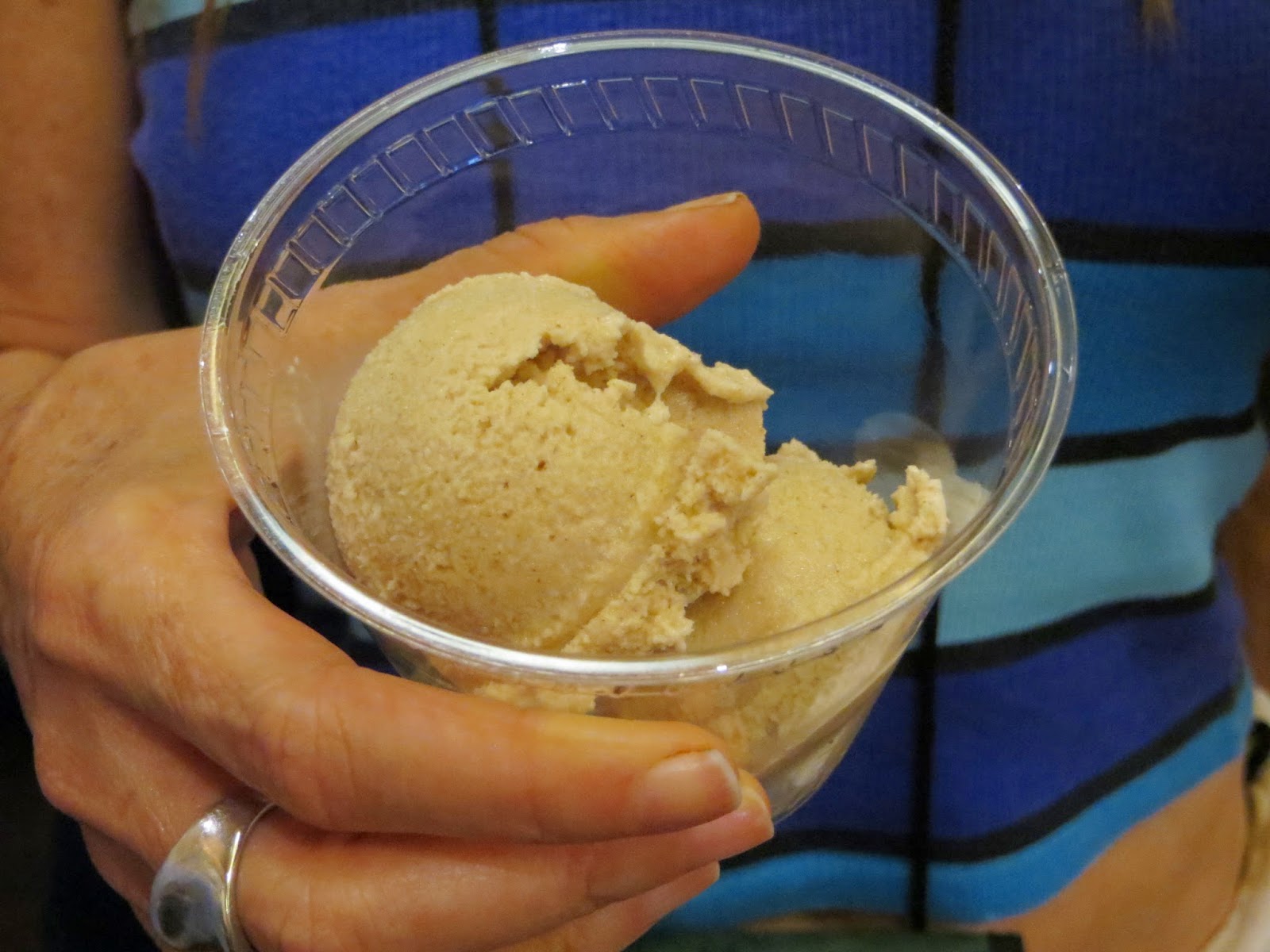
Dairy-free Nut "Ice-cream"

Start the "ice cream" making process by making 3 quarts of nut milk. The nuts used are walnuts for rich flavor and pine nuts for creaminess. Use nuts in equal parts.

To make the nut milk "cream", soak nuts overnight and rinse (discard overnight water).
  • Blend 2 cups walnuts with 2 cups water
  • Squeeze nut milk through sprout bag
  • Blend 2 cups pine nuts with 2 cups water
  • Squeeze nut milk through sprout bag
  • Alternate this process between walnuts and pine nuts until there is 3 quarts of nut milk, the nut "cream". (Save the nut "meat" for crackers, cookies or "parmesan" sprinkles for salads.)

Add to nut milk:
1 4-oz bottle vanilla, alcohol-free
4 T. cinnamon
1 2-oz bottle maple flavor
2 capfuls stevia (start with 1 capful)
(to adjust sweetness, add either more vanilla or stevia)
Then follow the directions on your ice cream maker.


Hint: Taste your flavors when they are cold as flavors are more subdued then.

Caution: While I really enjoyed this treat which tasted a zillion times better than real ice cream, I knew that I shouldn't eat it very often. It gave me a sore throat, which I attribute to the vanilla and maple flavor (maybe the stevia too). The flavorings were the brand Frontier and are made with glycerin, which is a derivative of soy, which my throat reacts to. The "ice cream" sure was a treat though!


This was the Saturday night treat every week at Hippocrates Health Institute, and it sure was popular! For those guests who didn't have cancer, candida or other health concern where sugar had to be so carefully watched, there was even a hot carob sauce for their ice cream. They also had the choice between frozen bananas put through a food processor for their banana "ice cream". It was popular too.
Date Carob Sauce 
1/2 cup dates, pitted and roughly chopped
1/2 t. ground cinnamon
1 T. carob powder
1/2 t. Frontier Vanilla Extract (no alcohol)
water as needed
  1. Soak dates in the blender with water covering dates with 1-2 inches of water
  2. Blend all ingredients after soaking a while
  3. Adjust flavorings as needed
  4. Add more water to adjust consistency if needed

Thursday, April 11, 2013

Raw Food Restaurant Menu II

Another restaurant that caters to raw foodists in West Palm Beach is Christopher's Kitchen. The menu has cooked items on it, but with its interesting and appetizing raw food selection on the menu with clear description of the ingredients, it is not so surprisingly that it is frequented by people working at and guests from Hippocrates Health Institute. Although I didn't go there, menus were passed out to all guests at HHI to let them know that in reality there are some places that do in fact cater to people choosing the raw food diet. 


(click on the pictures for a larger view)

Christopher's Kitchen : The Lunch Menu
Christopher's Kitchen : The Dinner Menu

An aside:  Christopher's Kitchen also has a whole page of wines to be served with the raw (or otherwise) food dishes, but as wines aren't raw food and, because of the sugars and fermentation processes, they certainly aren't for people with candida  (or cancer or a bunch of other autoimmune diseases needing to be controlled). So I didn't include the listing.

While the average concept of a raw foodist is someone who eats more than 50% of their food raw (like myself), people at HHI don't regard someone as a raw foodist unless they are 80% or more. That is their recommendation for people who can't manage the full raw food diet. 

raw tacos at Christopher's Kitchen
For the people who are at HHI for 2-3 weeks, there is a counseling session which individuals can sign up for and one counselor-lecturer-assistant will do a detailed web search on where the guest lives and the types of restaurants and stores back in the home area where the raw food lifestyle can be portmanteau-ed out of HHI. 

HHI is all about lifestyle change, and so in addition to the one-on-one counseling session, we were given menus for Christopher's Kitchen in order to get menu planning ideas for ourselves once we're away from the HHI lifestyle center. Although we might not live near a raw food restaurant like Christopher's Kitchen, we can still get a very varied listing of food ideas to package for work, take on picnics, for hosting parties, etc. and not feel so overwhelmed by suddenly not having 'anything' to eat. 

Here are some menu items from Christopher's Kitchen that I found on Yelp:


and of course a dessert item ... if you can have it!
Even for people on the healthy raw food diet, not everything is "healthy" for each individual. Food selection is still based on one's own health concerns. For instance, people with rheumatoid arthritis or chronic inflammation should avoid veggies in the nightshade family (tomatoes, potatoes, peppers and eggplants are the most common ones). When I was so sick at first,  I avoided these. Finally after 6-9 months when my inflammation was pretty much under control I started carefully adding a couple of cherry tomatoes to my salad. Wow! They tasted soooo sweet! As for eggplants, well, I like eggplant with soy sauce, and since I can't have soy sauce I don't often eat the veggie. Peppers I just recently added but I fix them in moderation, but there's nothing like a stuffed raw pepper for as a "sandwich" for lunch or when traveling!

Anyway, just because the food is raw and raw food is healthy it doesn't mean that everyone can eat everything. The people at HHI were taught what foods to avoid for their specific problem(s). People with candida and cancer (roughly the same diet) had some of the biggest restrictions. I have a ridiculous time eating out, but I could easily find something at Christopher's Kitchen. The biggest limitations there, I'm sure, would be the dressings as most have agave (a sweetener), sesame seed oil (a bit bothersome on the throat), soy sauce or liquid amino acids (fermented), or a vegetable oil (I use only olive and coconut). It's definitely the (candida-naughty) sauces on the tacos or the sushi rolls that make the food so amazing.

Sunday, April 7, 2013

Raw Food Restaurant Menu

Every week while at Hippocrates Health Institute guests have the opportunity to have an outing to a local raw food restaurant (sorry, forgot the name and it's not printed on the main menu page). Anyway, the food was very good. The restaurant did not serve 100% raw, but perhaps it's 70-80%! The food was rather simple, and I have to say, after eating my flax tomato "sandwich" I was starving. At HHI most people don't have breakfast although some like myself who don't want to lose weight get a large nut milk -- alternating almond and Brazil nuts, so lunchtime is my big meal. My little "sandwich" was a taste of food; I needed more! I had to slip around the corner and get a can of almonds to tide me over to the evening meal as we were heading for an afternoon at the beach and I knew I couldn't stand a combination of hunger and heat. Ah, but the almonds did the trick! 

The menu -- the majority of items are raw!
(click on for a large view)


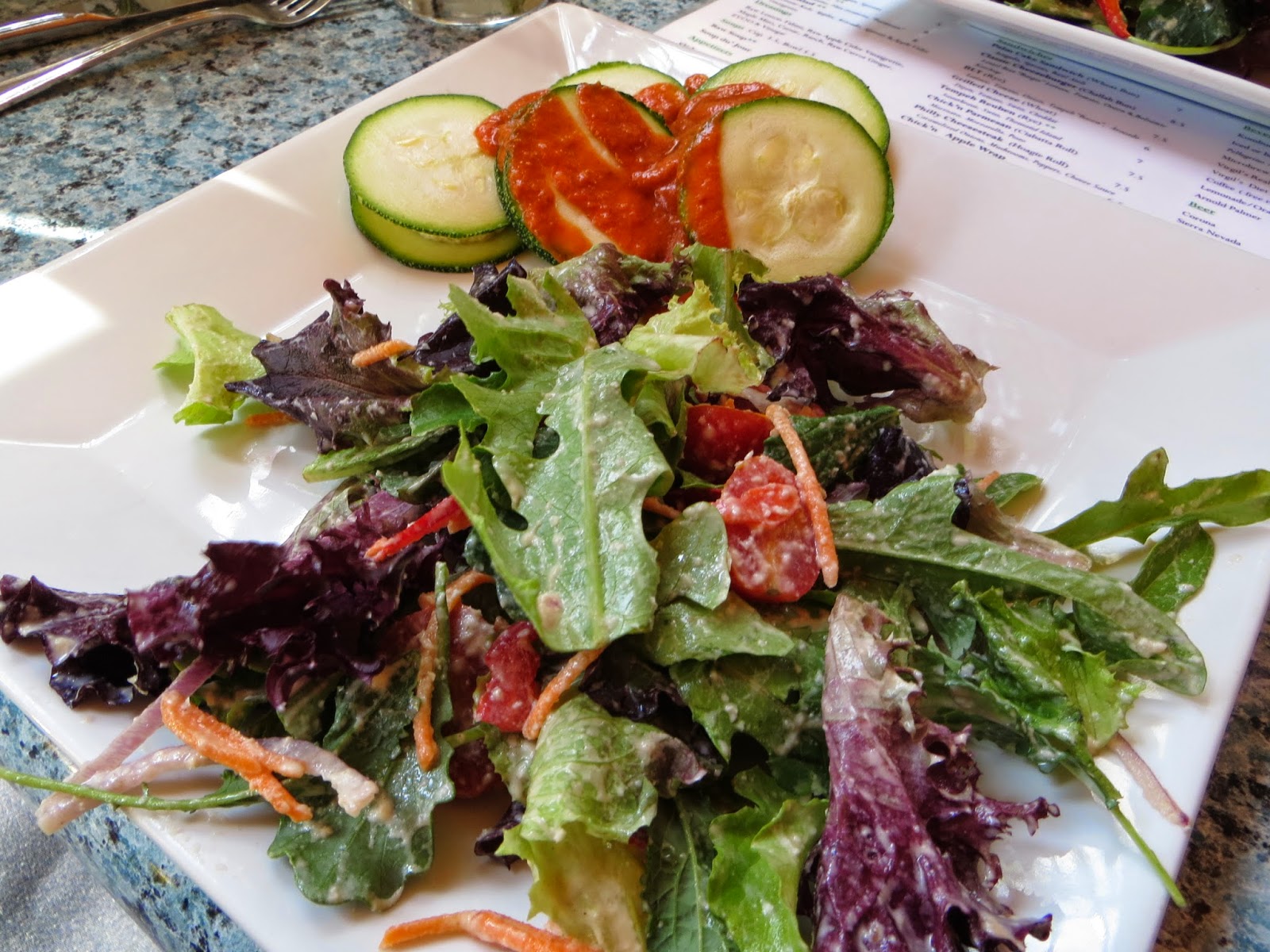
Some kind of salad with aoli sauce. The "pasta" pieces are filled with a cashew-herb cream "cheese".

Menu: Flax Tomato "Sandwich"

Menu: Tostadas with walnut "meat" pate 

Menu: probably this is the BLT on rye. The "bacon" is some kind of tempeh.

Menu: raw "brownie" ... and when it was served all eyes in the restaurant-cafe followed the decadent dessert to the table where a older couple sat. They said it was so rich they have a hard time eating it between them ... oh it looked GOOD!

Thursday, April 4, 2013

Raw Food Centerpieces

During my three-week stay at Hippocrates Health Institute, two or three times a week a beautiful raw food centerpiece was added to the food line. These usually appeared on the two days a week when nuts were included in the menu. The idea of not eating nuts every day is that they can be rich and many people have GI track difficulties and therefore have trouble evacuating, and because nuts can get caught in old fecal matter or in pockets, it's best to initially detox without eating them. This is a large reason for limited nuts to only two to three times a week during the initial detox but it's also  recommended by HHI as a lifestyle choice even after leaving HHI. If more reasoning is needed for limiting nuts, I once heard a health lecturer say that eating more than 40 grams of nuts a day is rough on the kidneys. Hmm, there seems to be some sense in that so I try to control myself ... but I have to say, nuts are one thing that I really enjoy eating, probably because they give me a lot of energy.

Not sure of the ingredients, but I'd guess broccoli and sunflower seeds as a base.
Whatever it was, no one was complaining!


Pepper Pecan Pate
Just an aside:  For people with candida, eating only certain kinds of nuts are recommended - walnuts and almonds are best. Cashews are very moldy, and HHI absolutely does not serve them, not to mention that there are almost no sources where cashews are truly raw as they are almost always irradiated when coming into the states. I read that pistachios are as moldy as cashews, but they do appear occasionally in a salad here at HHI. When I asked Ken Blue, the executive chef, if they were considered a moldy nut too, he had never heard that. Anyway, everyone does there own specific research, but it's nice to be aware that there pistachios might not be such a good choice for people with candida.


Tuesday, April 2, 2013

Hippocrates Health Institute Food Spread

For people going to Hippocrates Health Institute for jump-starting their immune system and cleansing  their bodies, HHI really puts on a great raw food spread for doing just that. Executive Chef Ken Blue, pictured below, is in charge of ordering quality food - organic, as chemical-free as possible in this day and age, and foods known particularly known to be beneficial to the body. The point of the 100% raw food diet at HHI is to utilize all of the enzymes, vitamins and minerals in plant-based foods that get destroyed with heat. Also, while eating food in the freshest form as possible, the enzymes, vitamins and minerals are giving the greatest benefit to the body.
Executive Chef Ken Blue in front of a sprout and fresh veggie spread.
The picture was borrowed from HHI's Facebook profile.
The one-week, two-week or full three-week program is to not only make food available to the visitors but also to educate them so they can take the raw-food lifestyle home with them and continue benefiting on the maintenance or recovery diet of nutritious and wholesome food.
A large kale-leaf "taco" stuffed with sprouts, a light nut "meat" with seasonings and some other veggies.
The "meat" and veggie stuffing for my kale-leaf "taco".
I was satisfied after eating one taco!
Once a week on a particular day something in the food line has a "cooked" item. Today it was a fiber-rich
whole-food prepared taco shell. I tried one but found the kale-leaf taco tastier. This hit my stomach too hard
and I tossed most of it (sorry to waste).
When looking at the "limited" food display in regard to calories, people often fail to see how they can power their bodies on such low-calorie and simple fare. What they don't realize is that the body fed with heavy fats and cooked carbs is not digesting the intake properly, and food undigested bogs down in the intestines, over time creating problems like flatulence, gall stones, ulcers, diverticular diseases, leaky gut syndrome, to name a very few. 

Yum! Raw kelp (I think) noodles and a light raw something-or-other sauce. Nice!!!
The idea of raw food eating at HHI is to have 50% of the plate with a variety of sprouts and the other 50% can be veggies like peppers, carrots, celery, olives, cabbage slaw and a small amount of raw dressing, or the raw noodles with sauce.


 For the people who come as three-week guests, after the first week they smile when the newbies go through the food line piling their plates super-high as if they haven't eaten already that day ... and end up eating it all and sometimes going back for more! The first three days the guests are eating, they feel starved on the low-calorie fare, but then they start tapering off on the amounts, and by the end of the week they take a decent plate of food and feel very satisfied. Their bodies have adjusted and they feel satisfied.


It is the undernourished body that has food cravings!


On average by the time the guests are ready to leave at the end of three weeks, they are eating and being quite satisfied with about 1,500 calories a day. This seems like very little, but the concept of counting calories is a modern concept based on easy access to high-fat and high-carb foods, which is making people grossly overweight and demanding that they count calories. 

For people on the raw food diet who are sports players or have high metabolisms, they can eat more avocados, coconuts and the rich variety of nuts and seeds available that people already eating high-fat diets are told to avoid. These plant fats are unsaturated and therefore can be easily assimilated in the body. 

And a BTW, people are warned off of coconuts because they are said to have long-chained fatty acids like meat. For people doing their research, they will quickly realize that coconuts are medium-chained fatty acids and therefore so very unlike the long-chained fatty acids of meat aka saturated fats. Coconuts are good for people. Unfortunately, since I have candida I react to the sugar in the coconut meat and milk (a young coconut sugar breakdown is approximately 50% glucose, 35% sucrose, and 15% fructose) so they're off my diet. However, coconut oil doesn't contain that sugar and is utilized differently by the body. So, strangely it benefits the GI tract by actually fighting harmful bacteria and over time repairs pinpoint holes in the GI tract that were created by the candida (fungus) that has attached to its walls and penetrated beyond to leak food particles into the body. 

THIS IS WHERE THE RICH ENZYMES, VITAMINS AND MINERALS ARE!!!
Fresh young sprouts - loaded with energy and extremely high in plant protein!

Unlike common belief that calories matter for being healthy, it's NOT the calories but the nutrition. With the raw food diet if done properly (and usually properly means a high amount of young sprouts which are absolutely packed with mega-nutrition), the person would eat a full-nutrition diet and his/her cravings, because the body is well nourished, would virtually disappear. 

When the head administrator was asked how many calories should a raw foodist eat, he furrowed his brow and said, "It's not the amount of calories that needs to be counted but the amount of nutrition." After saying that and the calorie-question kept coming up, he finally said that on average the raw foodists eats about 1,500 calories a day, but he was quick to add that counting calories is not something raw foodists typically do. With their lifestyle change from heavy fatty diets to raw foods, calorie-counting gets thrown out the window, and a pursuing a diet of various nutrition-rich food becomes the focus.

Monday, February 4, 2013

"The Hundred-Year Lie" - A Book of Truth

Randall Fitzgerald compiled a powerhouse of information of what governments/individuals are doing to alter our food supply in some monetarily beneficial way to them but at the loss and suffering of the majority. Fitzgerald labeled his book The Hundred-Year Lie because the lie began in earnest in 1906, the year the US Congress enacted the Pure Foods and Drugs Act, the first law of its kind giving the public a false sense of security about the safety of its foods and medicines. He goes on to expose what "natural flavors" really mean, the harm in vaccines, the ludicrousness of supplements as being beneficial rather than the chemical harming substances they really are. He discusses in detail about how fluoride got dumped into our water supply, which resulted in the company getting paid by the government for preventing tooth decay in people rather than paying $8,000 a truckload to haul off and dump their toxic waste somewhere (p. 130-1).

Fitzgerald gave data from a variety of valuable sources that I want to follow up on for my own and further knowledge. Some books he cited that are valuable about teaching about man's inharmonious relationship to the environment are Marla Cone's 2005 book, The Slow Poisoning of the Arctic, Schlink's 100 Million Guinea Pigs: Dangers in Everyday Foods, Drugs, and Cosmetics, and the ethnobotanist Plotkin's Medicine Quest. Other books he introduced relate to health, for example, Fitzgerald introduced the The Saccharine Disease by Cleave a British physician, Revolution at the Table by Levenstein who presented a history of food including the complex wizardry of food chemists, and Blaylock's Excitotoxins which exposes the dangers of MSG, aspartame and other chemical concoctions. 
However, the nine-hundred-page book, Diagnoses in Assyrian and Babylonian Medicine (2005), which demonstrated a wise and in-depth knowledge of anatomy and physiology and complementary, holistic medical treatment caught my attention. The author deduces that the following revelations of an advanced society existed 4,000 years ago.
  • "Ancient physicians were trained as specialists in dentistry, neurology, gynecology, pediatrics, and other areas of medicine, and they utilized the medicinal properties of more than three hundred Mesopotamian plants in their treatments.
  • Careful observation and experimentation produced treatments that evolved over hundreds of years. Some of these ancient treatments are still in common use today within Western medicine, one being the practice of surgically draining fluid from between the lungs and chest of pneumonia patients by making an opening in the fourth rib and inserting a drainage tube.
  • These ancient doctors were able to measure pulse rates and used metal hammers to tap below the knee to test reflexes, just as we do today.
  • They cleaned surgical wounds using bandages treated with ginger and cedar, both antiseptics; they treated blindness with raw liver, which we now know corrects the vitamin A deficiencies that cause night blindness; they used marijuana to treat pain and nausea, just as we do for cancer patients today; they treated women with irregular monthly cycles using a medicine made from date pits, which we now know contains estrogen."
The ancients had great understanding of healing, and Fitzgerald showed that the Bible's New Testament in "The Gift of the Magi", and that the gifts of gold, frankincense, and myrrh given to Joseph and Mary 2,000 years ago was in total the gift of life, and that these items were the most essential medicines of the ancient world! Myrrh is a tree resin and prized as an antibiotic, which was used by physician healers in Persia, Egypt, Greece, and Rome to clean and dress wounds. Frankincense, another resin, is both an anti-inflammatory and antifungal, and like myrrh, it is also a powerful pain-reliever.
At the end of his journey to discover and write about the chemicals used in our world so blindly today, Fitzgerald ended up at the Hippocrates Health Institute in Florida where he went through their full three-week detox program. Before going to HHI to detox, he had his blood drawn and sent off to Accu-Chem in Dallas for a reading of the chemicals in his body. The test cannot test the occurrence of all the drugs in the world as there are just too many, with thousands more added to the list every year, but the tests Fitzgerald underwent tested a few hundred, and many of them were present in his body, some at alarming levels.
For three weeks, Fitzgerald did multiple therapies - magnetic, hydro, colon cleansing, etc - used no deodorant, shampoos, make up (haha), cologne (perfume, body lotions, etc), and he drank highly purified and then remineralized water, toxin removing wheatgrass, raw fruits and vegies (heat kills enzymes and HHI is a totally raw food lifestyle center). At the end of three weeks, Fitzgerald retested with Accu-Chem and discovered a drastic drop in his toxicity levels in his body.  
He pretty much concludes his book promoting prevention of diseases through lifestyle change and living in harmony with the planet we humans seem so determined to destroy. If we truly want to prevent illness and speeded aging, we shouldn't wait to fix our rooves in the rain ... his astute conclusion.