Showing posts with label detox. Show all posts

Friday, October 18, 2019

Top 10 Bible Foods that Heal + the Biblical Diet

Dr. Josh Axe, DNM, DC, CNS, (born 1981) is a doctor of natural medicine and is a chiropractic physician and clinical nutritionist with a passion to help people get healthy. He operates one of the world's largest natural health websites at www.DrAxe.com, and he has published extensively - for blogs, health articles and even several books:


The following article, Top 10 Bible Foods that Heal + Biblical Diet, was also written by him.

November 4, 2017
Whether you eat, drink or whatever you do, do all for the glory of God. ~ 1 Corinthians 10:31
All throughout the Bible, references are made to the medicinal properties of foods and herbs. Representing health and longevity from Almighty God, the importance of diet and of preparing and eating food was oftentimes seen as a spiritual act. If you want to consume some of the most common foods mentioned for their health properties in the Bible, then you’ll want to try these top 10 healing Bible foods.

But first, let’s look at what foods the Bible considers clean vs. unclean. Of course, all of the healing foods land in the clean category.

What Are Clean and Unclean Foods?

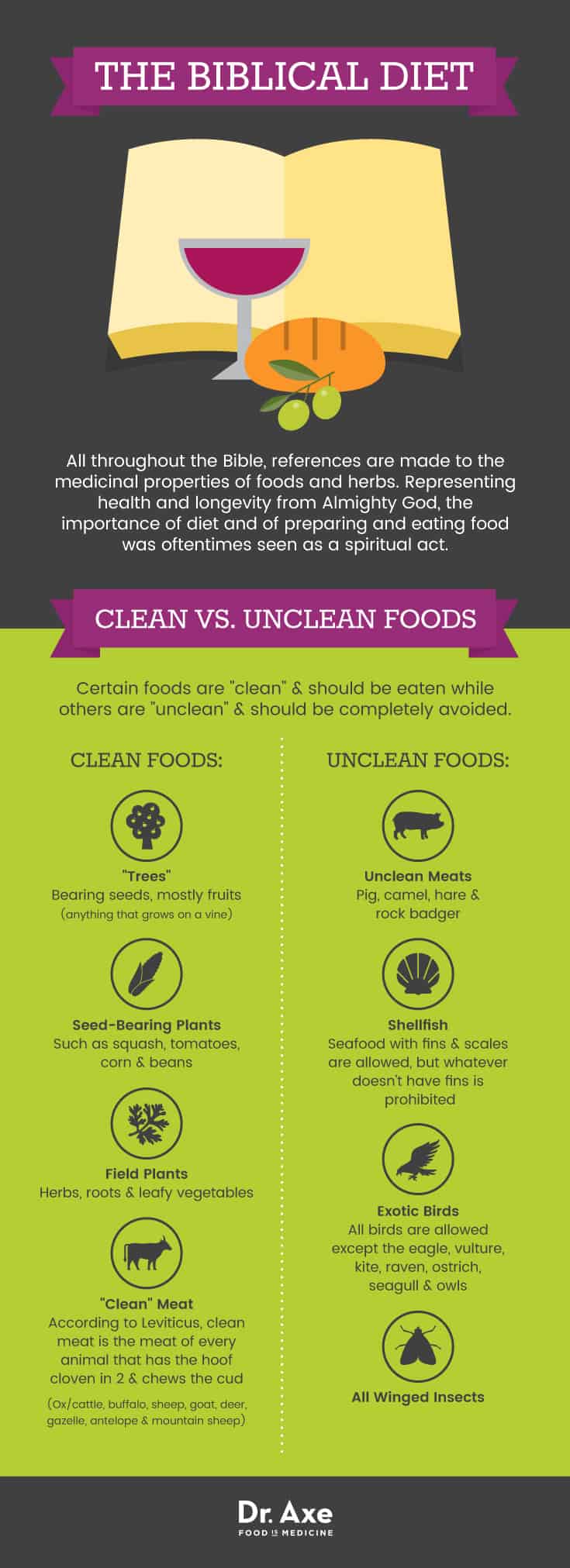
When you go on the Bible diet, there are only certain kinds of food that you can eat. Certain foods are “clean” and should be eaten while others are “unclean” and should be completely avoided.

Acceptable Biblical foods:
Trees whose edible yield is bearing seeds or is seed — To put it simply, this kind of food is mostly fruits. All fruits are acceptable in the Biblical diet, just as long as they come from seeds. Fruits from fruit trees are okay to eat, as well as anything that grows on a vine, a shrub or anything with a woody bark tissue. (1
Plants whose edible yield is bearing seeds or is seeds — This classification refers to anything that may grow on plants that are not necessarily trees. Examples of seed-bearing plants include squash, tomatoes, corn and beans. (2
Field plants — Field plants or “plants of the field” are the next thing on the list, which can consist of herbs, roots and green, leafy vegetables. (3
Clean meat — Now this one’s a little detailed because the definition of clean meat is pretty complex. According to Leviticus, clean meat is defined as the meat of every animal that has the hoof cloven in two and chews the cud. (4) Examples of clean meat include the ox (cattle), buffalo, sheep, goat, deer, gazelle, antelope and mountain sheep, just to name a few. Examples of unclean meat include pig, camel, hare and rock badger. The Bible also instructs us not to eat the blood of animals or to eat any meat that has been sacrificed to idols. (5)
As for seafood, everything with fins and scales are allowed, but whatever doesn’t have fins such as shellfish is prohibited. For birds, everything is allowed except eagles, vultures, kites, ravens, ostriches, seagulls and owls. It is also noted that all winged insects are considered unclean. (6)
Top 10 Bible Foods with Healing Properties

1. Olives and Olive Oil — Then it shall come about when the Lord your God brings you into the land which He swore to your fathers, Abraham, Isaac and Jacob, to give you, great and splendid cities which you did not build, and houses full of all good things which you did not fill, and hewn cisterns which you did not dig, vineyards and olive trees which you did not plant, and you eat and are satisfied. (Deuteronomy 6:10-11)

The Jews were the elite olive merchants of their day. During antiquity, this precious commodity was used for its healing capabilities, for cooking, to light lamps, for soaps, for cosmetics and even for currency. Olive oil was considered so sacred to ancient culture that it was even used to anoint kings and priests. Hence, the Hebrew for Messiah, Moshiach, meaning “anointed one!”

Research has been conducted that proves regular consumption of olives and olive oil contributes to heart, brain, skin and joint health. They have even been linked to cancer and diabetes prevention. (7) Needless to say, this sacred foodstuff has lived up to its ancient reputation!

2. Pomegranate — For the Lord your God is bringing you into a good land, a land of brooks of water, of fountains and springs, flowing forth in valleys and hills; a land of wheat and barley, of vines and fig trees and pomegranates, a land of olive oil and honey. (Deuteronomy 8:7-8)

Tasty, messy and just recently gaining ground in the American market these past few years, several research studies have shown that pomegranates contain strong anti-inflammatory, anti-oxidant, anti-obesity and anti-tumor properties. According to researchers, “Many beneficial effects are related to the presence of ellagic acid, flavonoids, anthocyanins, and flavones, which seem to be its most therapeutically beneficial components.” Subsequently, pomegranates are being considered valid treatment options for chronic diseases such as cancer, insulin resistance, intestinal inflammation and obesity. (8)

3. Fermented Grapes — May he kiss me with the kisses of his mouth! For your love is better than wine. (Song of Solomon 1:2)

I can’t make a list of top Bible foods without including grapes. Several epidemiological studies have shown that moderate alcohol intake, particularly drinking red wine, may lower the risk of cardiac mortality due to atherosclerosis. (9) The general recommendation is no more than one (five ounces) of red wine per day except for men under the age of 65 who may be able to have two drinks per day. (10)

When grape juice is fermented, natural anti-oxidant and flavonoid properties are exemplified through a substance called resveratrol. Consequently, researchers have focused much of their attention on evaluating the health benefits of resveratrol in recent years, which has been linked to chronic disease prevention and treatment including diabetes and obesity. (11)

4. Flax — An excellent wife, who can find? For her worth is far above jewels … She looks for wool and flax and works with her hands in delight. (Proverbs 31:10,13)

One of the most important plant fibers in the Bible, flax has been used to make linen for as long as recorded history. Although it has been widely replaced by cotton in recent years, flax remains one of the most important fiber plants in the world and one of the top Bible foods.

Having a rich history of medicinal use dating back to Babylon in 3000 B.C., flax seeds have been wholeheartedly embraced by natural health and medical circles alike because it provides a natural, vegan source of omega-3 essential fatty acids, lignans and fiber. Subsequently, research show that flax seeds may be able to help fight against cancer, lung disease and heart disease. (12)

5. Sprouted Grain Bread — Take wheat and barley, beans and lentils, millet and spelt; put them in a storage jar and use them to make bread for yourself. (Ezekiel 4:9).

In the Book of Ezekiel, God gave the prophet Ezekiel a recipe for what has proven to be the perfect bread as science has recently shown us that it creates the “complete protein,” one that contains all essential amino acids. The main reason that Ezekiel bread is healthier than other breads is because the grains and legumes are soaked and sprouted, which makes them easier to digest — and as a result, is the only bread to make this list of top Bible foods.

Harvesting “sprouted grains” happens right after the seed has started to sprout, but before it has developed into a full-grown plant. During this critical growth state, the young shoot digests a portion of the starch to fuel its growth. Subsequently, because the grain’s starch has been utilized, the level of vital nutrients — including proteins, vitamins and minerals — are enhanced. Additionally, research studies have suggested that iron and zinc actually become more “bioavailable,” (i.e. more easily absorbed) after sprouting. (13)


6. Raw Goat Milk — The lambs will be for your clothing and the goats will bring the price of a field. There will be goats’ milk enough for your food, for the food of your household, and sustenance for your maidens. (Proverbs 27:26-27)

Raw milk is filled with the vitamins and minerals that contribute to a healthy dental fluid flow and help maintain strong teeth. Loaded with calcium, vitamin K2, magnesium, phosphorus and fat-soluble vitamins, researchers have carried out a comparative study on the properties of cows’ milk compared to those of goats’ milk and have discovered that goats’ milk may be even more beneficial.

Unlike cows’ milk, scientists from the University of Granada has revealed that data concerning goats’ milk suggests that it could prevent diseases such as anemia and bone demineralization. Additionally, goats’ milk has properties that help with the digestive and metabolic utilization of minerals such as iron, calcium, phosphorus and magnesium. (14)

7. Lamb — Now you shall eat it [the unblemished lamb] in this manner: with your loins girded, your sandals on your feet, and your staff in your hand; and you shall eat it in haste — it is the Lord’s Passover. (Exodus 12:11)

Due to the significance of the Passover Lamb and equating that role to Christ, lambs are the most revered animal in history, and the most honored food in the Bible (and the only meat earning a spot in the top 10 Bible foods). Lamb is the meat of young sheep that are generally one year old or younger. Due to slaughtering the animal at such a young age, the marble fat content is considerably lower than older varieties of meat, which contributes to heart health and helps prevent again obesity. Rich in protein, vitamin B12, vitamin B6, niacin, zinc and other vital nutrients, it is arguably the healthiest red meat on the planet. (15)

On a side note, make sure to purchase local, organic, grass-fed varieties when possible. Grain-fed factory farmed animals are loaded with genetically modified corn feed, countless additives and are simply not worth the risk.

8. Bitter Herbs* (coriander and parsley) — They shall eat the flesh that same night, roasted with fire, and they shall eat it with unleavened bread and bitter herbs. (Exodus 12:8)

Scholars are not in complete agreement which plants the authors of Bible were referring to when writing about “bitter herbs,” but coriander and parsley generally make the list.

Coriander is the seed of the powerful anti-oxidant and natural cleansing agent cilantro. Traditional medicine has long used and labeled coriander as an anti-diabetic plant and scientific research confirms its helpful effects on blood sugar. Coriander also appears to be helpful for high blood pressure and heavy metal detoxification amongst other positive health effects. (16)

Parsley is another health-promoting herb and a rich source of several crucial vitamins, including vitamin A, vitamin C and potassium. (17)

9. Vegetables — Please test your servants for ten days, and let us be given some vegetables to eat and water to drink. (Daniel 1:12)

Instead of eating the tasty dainties of the Babylonians, Daniel and his friends requested to live on a vegetarian diet. When it was time for them to be presented to the king, Nebuchadnezzar and all of the leaders were astounded to see that the four young Jewish friends were more fit and looked better than the other young men who ate the Babylonian fare. Often referred to as the Daniel diet or the Daniel fast, history and biblical text actually support that Daniel continued his vegetarian lifestyle throughout his entire life.

Of all the food groups, vegetables are arguably the most nutrient-dense and safest to eat. There’s relatively no risk in consuming too many of them; whereas, if you eat fruit all day, you run the risk of spiking your blood sugar or developing dental caries because of the excess sugar.

Vegetables are so effective at healing that, according to the National Cancer Institute, cruciferous veggies (broccoli, cabbage, collards, kale, radish etc.) can help prevent cancer because they are rich in glucosinolates – a large group of sulfur-containing glucosides. Known to break down during chewing and digestion, these powerhouse chemicals can slow down and even reverse cancer cells growth. Additionally, it has also been reported that glucosinolates can treat the following health concerns: (18)
  • Inflammation
  • Bacterial and viral infections
  • Carcinogenic toxicity
  • Tumor angiogenesis (blood vessel formation)
  • Tumor metastasis (tumor migration)
10. Raw Honey — Have you found honey? Eat only what you need that you not have it in excess and vomit it. (Proverbs 25:16)

It’s no wonder raw honey is referred to as “liquid gold.” The medicinal applications to the skin and internal body seem limitless. First of all, raw honey is loaded with key nutrients. Research has also shown that honey contains the disease-fighting antioxidant flavonoids like pinostrobin, pinocembrin and chrysin. (19)

In addition to being a fantastic replacement to energy drinks for athletes and people needing a little boost, raw honey also supports the growth of probiotics in gastrointestinal tract including (Bifidobacteria). (20) Another fascinating quality of honey is its ability to improve allergy symptoms. (21) However, be sure to purchase the local variety, as it will contain indigenous pollen species unlike generic store-bought brands.

Recommendations and Benefits of a Biblical Diet

Is it possible to lose weight by following the Bible’s teachings on food and eating? Founder of the Bible Diet, author of The Maker’s Diet and motivational speaker Jordan S. Rubin believes so! According to him, the Bible Diet is heavily influenced based on the teachings from the books of Leviticus and Deuteronomy and the only food considered acceptable or clean is the only kind that should be eaten.

Recommendations from The Makers Diet

The four classifications of food (trees that yield seed, plants that yield seed, field plants, clean meat) is the foundation of a Biblical diet. There are also other important things you should consider when starting or following a Biblical diet:
Water, sunshine and exercise. These three are absolutely key to good health. You should always remember to drink lots of water, get lots of exercise and go outside. I recommend one quart water daily for every 50 pounds of weight. Also, it’s important to drink high quality water
Eat safe, clean meat. This means abstaining from certain kinds of meat and seafood such as pork, lobster, clams and mussels, shrimp and catfish. 
Eat foods that are in season. The Bible states that everything has a season. This should also be our attitude when it comes to picking out the things we eat. Lean towards eating fruits, vegetables and herbs that are in season, as they’re fresher and better for your health. 
Eating raw. Eating uncooked raw food is very much encouraged. Some vegetables may need to be cooked, but a majority of them can be enjoyed raw. 
Unprocessed real whole foods. What you eat should ideally be consumed in the way that it was found in nature. This means that we should stay away from preservatives, processed foods, or those produced with lots of contact with hormones, fertilizers and pesticides.
Benefits of Following a Biblical Diet

All these food restrictions may seem like a whole lot of sacrifice, but what about the rewards. According to Rubin, those who go on the Biblical diets and eat Bible foods can look forward to the following benefits:

Weight loss

A diet high in unprocessed food, fruit and vegetables is ideal for weight loss. Natural and raw fruits and vegetables carry fewer calories and are easier to digest then other processed foods.

A longer lifespan 

Rubin claims that some of our ancestors that went on the Biblical diet went on to live for 120+ years. Although we may not reach that age, studies show that a diet high in fruits and vegetables lead to little or no health complications, thus indicating a longer lifespan.

Energy and improved mood 

When our bodies are in a state of imbalance due to poor dietary habits, we immediately feel it. We can feel sickly, sluggish and depressed. Eating right can increase energy, balance hormones and improve our mood.

Final Thoughts

Who would have thought that you could get nutritional advice in the Bible, huh? At the end of the day, if it were good enough for people back then to eat, I think it’s probably good for us today. So much of what the Bible lays out so clearly for how we should eat also makes a lot of sense when you look at scientific research. A Biblical diet is filled with healing foods that promote a well-rounded diet and so many awesome health benefits.


_____________________________________________________________________________

*Hyssop, not commonly used today, is also referred to in the Bible as a bitter herb. [It's very, very bitter, and when my brothers and I were babies, my mom had extreme ulcerative colitis, something doctors said was incurable at the time. We were babies, and she knew she had to overcome her problem for our sake, so she went to a health food store (Harvest Health in Grand Rapids, MI) and someone there recommended she drink hyssop tea. She did, every day and throughout the day, and ate the blandest diet, e.g. boiled green beans, boiled potatoes with no butter or salt. After a year she was able to gradually add foods, and eventually because of the tea and her bland diet, she could overcome her problem! A careful, thoughtful diet does cure! Praise God!] - CM

Friday, August 23, 2019

The Denaturing Effect of Cooked Food

The following article is taken from Hippocrates Health Institute, home education (Dec 13, 2018): 

Cooked Food What’s In It?

Well, after years of being a pyrofoodiac, I discovered raw food. No, I’m not talking raw meat or even sushi, but rather fruits, veggies and their juices and raw nuts seeds. In their natural, unadulterated, untouched by man, UNcooked and certainly UN-burned state, these foods really can heal all that ails you. It turns out, it’s that cooked food, especially the burnt stuff, that WILL kill you! 

Yes, I know exactly what you’re thinking, “EVERYONE eats cooked food!” But not everyone knows what the cooking of food actually does to the food, and even more importantly, what that cooked food does to your body when you regularly consume it. 


So, what could possibly be so bad about cooking your food? Does something in the food change when you heat it? 


What exactly is IN cooked food? 

Whenever you cook food, whether it’s on a stove top, in an oven, on a grill, in a microwave, or in a fryer, not only does the molecular structure of the food become denatured, deranged, and/or degraded, but those molecules are changed into new chemical configurations (this is a bad thing) and carcinogenic and mutagenic byproducts are formed. The degree to which this happens is dependent on the cooking temperature, time cooked and method of cooking. 

Grilling, barbecuing, smoking and frying are the worst offenders; they are literally the fires of death, but steaming also affects the food. You know that old saying that there are more nutrients in the water of steamed veggies than are actually left in the veggies when they are done steaming? That’s because heat destroys nutrients, especially the water soluble vitamins like vitamin C and all the B vitamins. The heating of food also destroys the food’s enzymes. In fact, 100% of the food’s enzymes are destroyed at temperatures as low as 118 degrees Fahrenheit. In addition, the oxygen and water content of the food is drastically decreased, fats are carcinogenized, carbs are caramelized and proteins are coagulated and become virtually unusable by the body. Even the fiber in food loses that sweeping-like action in the colon

The heating of food also creates toxic byproducts. Here is a list of some of the dangerous byproducts you are most likely unknowingly consuming every time you eat cooked food, whether it’s a carb, a fat or a protein: 

Acrylamides: These are the cancer· causing byproducts of cooking carbohydrate foods such as breads, potatoes, pastries or any kind of starch. Even the FDA (Food and Drug Administration) acknowledges the perils of acrylamides. In fact, on their website (www.fda.com) they have a list of the amount of acrylamides found in various common cooked foods, but you better believe the processed/fast food industry doesn’t want you to know about this! 

Ally aldehyde, butyric acid, nitrobenzene and nitropyrene: The book, Diet, Nutrition and Cancer, published by the U.S. FDA’s Office of Toxicological Sciences and the Nutritional Research Council and the American Academy of Sciences lists these toxins as being formed from heating the fats and oils in food. 

Epoxides, Hydroperoxides, unsaturated aldehydes: These are generated when heating fat from meat, milk, eggs, and fish. 

Furfural / furans: These toxins are spawned when sugars are heated. 

Heterocyclic Arnines (HCA’s): Add heat to amino acids (proteins) such as meat, fish or chicken and these poisons will be served up. 

Indole, skatole, nitropyrene, ptomatropine, ptomaines, leukomaines, ammonia, hydrogen sulfide, cadaverine, muscarine, putecine, nervine, mercaptins: These toxic by-products have been found in cooked cheeses. 

Methylglyoxal and chlorogenic atractyosides: Heating the coffee bean produces these chemicals. 

Nitrosamines: As nitrogen oxides in the gas flame from gas ovens or barbecues interact with fats, these toxins are created. 

Polycyclic hydrocarbons: These carcinogens are generated from the charring of meat. 

Hydrogenated oils/Trans fats: These man-made fats, also called hydrogenated or partially hydrogenated fats, were specifically developed so a processed food could sit on a shelf for a long period of time without going rancid. Many of today’s common foods are also cooked in these trans fats. Consuming trans fats can lead to obesity, heart disease, increases in the bad (LDL) cholesterol and lowering of the good (HDL) cholesterol and it contributes to a host of other debilitating health problems. 

Keep in mind, when heating even the most common cooking oils, such as olive oil, the heat denatures the oil molecules and causes the oil to turn rancid. 


What happens to the body when we eat cooked food? 

We have became a “Pyrofoodiac Nation,” consuming excessive amounts of cooked and overcooked food at each and every meal,· including snacks, to the point of great disease and utter destruction! Here is what happens to the body every time we eat cooked food: 

Digestive leukocytosis: The term leukocytosis refers to an increase in white blood cells, indicating the body is in attack mode. This commonly occurs when you are sick; your white blood cells come out to protect you. It may surprise you to know this immune response also occurs when you consume cooked food. lt is referred to as digestive leukocytes, but it’s interesting to note, this reaction does not occur after eating raw/uncooked food. 

Accelerated aging, lowered pH and free radical formation: Also called, lipofuscin, a build-up of toxic, acidic waste material often referred to as “free radicals” accumulates in the skin (and reveals itself as age spots), liver, nervous system and brain when consuming large amounts of cooked food. Your pH becomes acidic and you are literally rusting from the inside out. 

Weakened immune system, disease production and overworked and enlarged pancreas and other organs: When you are not getting the proper nutrients, your white blood cells are always out in attack mode and toxic wastes are in full circulation, your weak and overworked body breeds common ailments such as allergies, headaches, sinusitis, diabetes, heart disease, erectile dysfunction, depression, arthritis, osteoporosis, and various cancers thrive. 

Intestinal toxemia, unfriendly flora build-up and more difficult digestion: Colonies of unfriendly bacteria take over the colon as they feed on the thick tarlike, undigested and uneliminated cooked food putrefying in the intestines. There is also a significant decrease in the quantity of healthy intestinal flora in the colon, often leading to digestion difficulties. A plant-based uncooked diet decreases the toxic load in the colon and decreases the unfriendly bacteria and other dangerous byproducts that contribute to colon cancer. 

Toxic waste accumulation and mucoid plaque build-up in the blood and colon: A congested bowel full of putrefied cooked food can lead to backup and reabsorption of toxins back into the bloodstream. This accumulation of wastes in the blood vessels can contribute to many of today’s common circulatory problems such as heart disease, high cholesterol, high blood pressure and even erectile dysfunction, and may also contribute to many other common health challenges such as gout, arthritis and various cancers. In addition, common ailments such as runny noses, headaches, asthma and even diarrhea can be signs of a “healing crisis” where the body is overwhelmed and is trying to rid itself of unwanted mucus and toxins. 

Malnutrition & deficiency of important nutrients: Many of those who regularly eat cooked food find themselves always hungry and always eating but totally malnourished, for the nutrient make-up of cooked food is diminished significantly, so the body is always craving more and more. 

Depletion of the food’s life force: As shown in kirlian photography, cooking literally kills food; its bioelectrical energy is destroyed. After cooking, the food is considered “dead.” 

Increased risk of diseases of all types: The cooking of food, especially at high temperatures, literally burns away the anti-disease and anti-cancer properties of food. A diet lacking in raw veggies has been implicated in everything from breast and colon cancer to heart disease, diabetes and even arthritis. 

Baby Steps 

Even if you are not ready to become a 100% raw foodie, you can still do your body good by making some positive food changes and eating less cooked food. Begin slowly by increasing your raw food intake; choose fresh salads over fried onions rings when eating out and avoid all the obviously unhealthy cooking methods with your entree, such as deep frying, barbecuing and charring. Replace your acidic morning cup-o-joe or pasteurized orange juice with a fresh, unpasteurized alkaline green veggie juice and even pick one day a week to eat only raw/uncooked food. Over time, you will start to feel the difference, your skin will glow and your body will thank you with great health. 

©www.doctorginger.com 2007 Dr. Ginger Southall is a consumer health advocate, 
investigative journalist, and a health instructor. She can be reached at ginger@doctorginger.com 


Monday, April 16, 2018

Raw Salads and Simple Tasty Dressings


Parsley, diced cucumbers and diced tomatoes in equal amounts = salsa
Dressing: 2 lemons, 1+ T lemon zest, slightly less extra-virgin olive oil to lemon ratio, 2-4 minced garlic cloves, salt and pepper to taste


Was tired of my lemon-olive oil dressing which I pretty much ate all the time when I first got candida. One day in desperation I made this, but I can't remember quite how I did it. Almond butter for the nuttiness, coconut oil to add a bit of sweet flavor and to smooth out the almond butter, and from there I'm not certain. Oddly I probably blended a cucumber to give the dressing some liquid flow and certainly salt. Anyway, the almond butter nuttiness really complemented the cabbage slaw.


More of my all-time favorite lemon-olive oil dressing. Sometimes I varied it up a bit by adding fresh herbs: sometimes parsley, sometimes basic (YUM!), sometimes cilantro (YUM!), sometimes fresh dill (FAVORITE!)


Excellent for just dipping!


Sometimes I soaked pumpkin seeds to soften them for easier digestion, and then without throwing out the water (the seeds were barely covered so there wasn't lots of excess) added lemon juice, salt and pepper and tossed with simple salad greens. Nice toss salad. Garlic could be added for extra flavor as could lemon zest. A very basic recipe and easy to alter.

________________________________________________________

The early days of candida were horrible! And there weren't many things I could successfully eat without feeling like the south end of a donkey going north. Salad and these simple salad dressings comprised most of my early candida diet .... and I attribute the heavy chlorophyll of the greens and the natural anti-fungal properties of garlic and the supportive coconut oil for calories and which actually helps heal the GI track as being my biggest anti-candida treating aids.

8+ years later I still have some issues but I get along quite happily. I can now go to restaurants and choose carefully off of the menu, and I can eat a bit of sugar. I do, however, have food reactions I didn't have years ago -- not allergies since my blood tests are fine, but reactions that stem from some kind of imbalance in the flora of my gut. I'm just saying this as other people I know who have had systemic candida as badly as I did still also have residual issues, and some of my friends have relapsed, mostly because of returning to a more normal diet too soon and one because of stress. I've also talked with people who have "fully" recovered, but one thing that all of my friends and contacts with candida have in common is that they continue to pay attention to the needs of their bodies, AND despite being "well", almost none of them have returned (by choice) to their pre-candida day diets.

Tuesday, February 13, 2018

80% Alkaline + 20% Acid = Balance

The Rule of 80/20: The body needs a balance of alkaline-forming and acid-forming natural vegetarian food. The following rule has evolved as a consequence of many years of research and clinical findings vis-a-vis the use of nutrition to heal disease.

To replenish and sustain your proper alkaline and acid reserves, eat 80% of your foods from the alkaline-forming list and 20% from the acid-forming list.

The following is an outline of the major vegetarian food groups and their chemical reaction tendencies in the body. All of the food items should be raw and organically grown (this collection of data from Hippocrates Health Institute).


source
ALKALINE-FORMING
  • sprouts of small seeds, beans and most grains
  • leafy and root vegetables
  • vine-ripened fruits/vegetables (cucumbers, squash, tomatoes, bell peppers, etc)
  • sea vegetables (dulse, nori, wakame)
  • fresh food herbs
  • cayenne pepper
  • garlic and onions
  • tree-ripened fruits
  • small grains (amaranth, millet, quinoa, teff, etc)
  • fresh beans
  • fresh sweet corn
  • sesame seeds (soaked 3 hours)
  • nuts (soaked 12-24 hours) (most are acid-forming but exception to the rule -- almonds, fresh coconut with jelly, pine nuts
  • freshly-squeezed green vegetable juices, consumed on an empty stomach
ACID-FORMING (recommended)
  • fruits (most are alkaline-forming, exception to the rule) -- blueberries, cranberries, plums, prunes
  • grains (soaked 8-12 hours) most are not recommended, but buckwheat (slightly acid) and rye ok
  • dry beans (soaked 12-16 hours)
  • nuts (soaked 12-16 hours) filberts/hazelnuts, pecans, walnuts
  • seeds (soaked 5-8 hours) pumpkin, sunflower
Not recommended (listed for reference)
  • large grains -- barley, rice (basmati, brown, white), oats, wheat (slightly acid)
  • refined sugar
  • salt (all types)
  • alcoholic beverages
  • coffee
  • tobacco
  • vinegar
  • refined condiments (ketchup, mustard, mayonnaise, etc)
BEWARE -- the following are not only acid-forming in the cell but also cause excessive mucous in the body:
  • meat
  • dairy products
  • wheat flour
  • eggs
  • salt
  •  refined sugars
  • alcohol
  • tobacco
ALKALINE-FORMING ACTIVITES

Physical:
  • moderate sunshine
  • proper food combining
  • rest--sleep
  • deep breathing of fresh air
  • fasting and eating less
  • relaxation
  • soothing music
  • moderate exercise
  • adequate water intake
Emotional and Mental
  • laughter
  • releasing processes
  • self-esteem
ACID-FORMING ACTIVITIES

Physical:
  • cooking and processing food
  • improper food combining
  • lack of rest -- lack of sleep
  • lack of oxygen
  • overeating (too much or too often)
  • stress
  • noise
  • excessive or no excercise
  • dehydration
Emotional and Mental
  • anger
  • denial
  • confusion
  • fear

Thursday, November 2, 2017

515 Chemicals Women Daily Put on Their Bodies


This infographic (published by Mind Body Green) on chemicals in beauty products takes 'Cosmetics Dirty Dozen' to a whole new level.


When I first got sick so many years ago, from my reading I became aware that not only foods that I put in my body were starkly affecting my health but the air I breathed was also a factor and what was absorbed through my skin was another huge factor. The skin is the largest "organ" of the human body. It keeps our blood and plasma within us; it acts as a barrier to eliminate contamination from our surroundings, but when we intentionally put chemicals on our skin (for the sake of beauty or health) we are (unwittingly perhaps) contaminating the barrier, which is permeable, and exposing ourselves directly to toxins that would only indirectly hurt us if they weren't in such direct contact.

Toothpaste, shampoo, soap, deodorant, perfume, things we never consider to be bad for our health need to be reconsidered.

Wednesday, September 13, 2017

10 of the Most Powerful Herbs and Spices

Nature is filled with herbs and spices, and after reading about some of various herbs and spices healing qualities, I incorporated them into my diet to help me fight against the evil systemic candida. All of the 10 items on this list, except for fenugreek, were frequently used, and they sure did make my simple all-natural diet tasty. 
______________________________________________________________

Ten of the Most Powerful Healing Herbs and Spices

Some of the most powerful healers can be found in the kitchen - herbs and spices. These wonderfully fragrant and flavor-enhancing additions to food also contain a wealth of natural healing properties that have a number of diverse benefits, from aiding digestion to reducing the risk of cancer.

All herbs and spices contain substances that promote healing, and here are just ten of the most powerful ones, and some reasons why you should be using them in cooking and as health-enhancers:
  • 1. Cinnamon - cinnamon bark contains an oil-like substance that kills a variety of illness causing bacteria, including E.coli and Salmonella, and research shows that cinnamon is able to stop the growth of the Asian flu virus. Cinnamon has a surprisingly strong effect on the brain and mood; its distinctive smell helps to reduce anxiety and stress, increase alertness, and prevent mood swings caused by fluctuating blood-sugar levels.
  • 2. Turmeric - turmeric contains curcumin, a powerful antioxidant chemical that detoxifies carcinogens and calms inflammation, making it useful for easing auto-immune conditions such as rheumatoid arthritis and allergies. It appears to work just like non-steroidal anti-inflammatory drugs, without the side effects. Turmeric is such as strong anti-inflammatory that only a small amount is enough to reduce the risk of illness. Curcumin, which gives this spice its vivid golden color, also helps to prevent the build up of fatty deposits in the arteries, and so may protect against conditions such as Alzheimer's and heart disease.
  • 3. Basil - basil contains volatile oils, which account for the medicinal properties of this herb. It relieves flatulence, is an aid to digestion and its antiseptic properties are said to benefit acne. This fragrant oil also has antimicrobial effects. Recent tests have found that basil oils can counteract the growth of antibiotic-resistant superbugs, including those that cause food poisoning and others that infect wounds.
  • 4. Cloves - clove oil is 60 to 90 percent eugenol, a potent pain-relieving compound, effective for numbing the pain toothache, headaches, and other areas of pain, such as the joints. As well as their anesthetic effects, cloves combat the bacterial infection and inflammation that can lead to gum disease and the risk of further damage to teeth.
  • 5. Cumin - cumin seeds are valued for their digestive benefits. Cumin relieves wind and can prevent digestive upsets such as diarrhea. This is thought to be because these small seeds stimulate the production of pancreatic enzymes that help the body break down foods and absorb the nutrients. This fragrant spice is a source of iron and is rich in essential oils. Regularly eating cumin is associated with blood glucose-lowering effects.
    Chewing a few seeds of cumin sweetens the breath after eating a meal. End a meal by chewing a blend of cuminseedsfennelcloves and cardamom to enhance digestion.
  • 6. Fennel - Rich in volatile oils, fennel is a carminative herb, meaning that it can ease bloating, flatulence, and digestive spasms. As well as digestion, scientific research has demonstrated fennel's anti-cancer, intestinal health and eye health benefits. Fennel seeds can also reduce bad breath and body odor. The fennel bulb contains a significant amount of Vitamin C, and is a source of fiberfolate and potassium, making it a powerful antioxidant herb.
  • 7. Mint - mint is widely used as a highly effective digestive aid, and to counteract nausea and vomiting. Mint improves fat digestion and is an effective antacid, due to its essential oils. Peppermint oil is still the basis for many indigestion remedies, because it is extremely soothing to the stomach lining. Mint tea is not only beneficial for digestion; it is a simple treatment for stress-induced headaches. Chewing the leaves or drinking the tea stimulates the cortex of the brain to improve concentration and induce relaxation.
  • 8. Oregano - One tablespoon of oregano has about the same antioxidant capacity as one banana or a cup of string beans. Its antioxidant qualities combat the conditions of aging, especially heart disease and cancers. Oregano contains at least four compounds that soothe coughs and 19 chemicals with antibacterial action, which are associated with offering protection against food-borne diseases. Freshly-picked oregano leaves are the most effective.
  • 9. Parsley - parsley is rich in essential oils, and contains Vitamin A, C, and some iron and calcium. It is a diuretic and digestive herb, helping to prevent problems such as kidney stones and bladder infections, and keeping the body's plumbing running smoothly by causing it to produce more urine. It also aids in the elimination of uric acid - useful for arthritis, rheumatism or gout, and it is an effective breath freshener because it contains high levels of chlorophyll.
  • 10. Fenugreek - fenugreek is rich in vitamins A and C, and iron and phosphorus. Studies have shown that fenugreek is a potent stimulator of breast milk production in nursing mothers. Fenugreek seeds have also been found to protect against cancers of the colon and breast, and have anti-diabetic effects. The regular intake of fenugreek seeds helps to purify the blood, flush out harmful toxins and lowers the risk of a heart attack.

Sunday, March 12, 2017

H202 Curse or Cure?

The Hydrogen Peroxide Cure is very controversial, but when I was at my sickest, it sounded good to me and I gave it a try. Much like I've read about cancer patients who have followed the treatment, I saw improvement. I was careful not to do it more than 2-3 months as I heard some negatives on longer-term treatment, but during the 2 months or so of carefully titering the food grade (35%) hydrogen peroxide up to several drops a day, I certainly saw a positive difference. A nursing friend told me emphatically not to try it, and yet, I'm glad I did. But I did educate myself on the treatment BEFORE even putting a drop in my mouth. BTW, there's also a 40% hydrogen peroxide grade, and this is NOT for human consumption. One person told me it's for treating horses and is too powerful, and toxic, for the human body.

___________________________________________________________________

Article by Dr. David G. Williams
online at The Freedom of Knowledge, The Power of Thought

Posted July 17, 2003
(Original title: Hydrogen Peroxide - Curse or Cure? first published in Dr Williams' ALTERNATIVES Newsletter probably in the 1990s)

___________________________________________________________________

When it comes to hydrogen peroxide therapy there seems to be only two points of view. Supporters consider it one of the greatest healing miracles of all time. Those opposed feel its ingestion is exceptionally dangerous, and only the foolhardy could think of engaging in such behavior. Before either condemning or endorsing hydrogen peroxide, let's take a real close look at what we're dealing with.

If any substance is interesting, it's hydrogen peroxide. Hydrogen peroxide should really be called hydrogen dioxide. Its chemical formula is H2O2. It contains one more atom of oxygen that does water (H20). By now everyone's aware of the ozone layer that surrounds the earth. Ozone consists of three atoms of oxygen (03). This protective layer of ozone is created when ultraviolet light from the sun splits an atmospheric oxygen molecule (02) into two single, unstable oxygen atoms. These single molecules combine with others to form ozone (03). Ozone isn't very stable. In fact, it will quickly give up that extra atom of oxygen to falling rainwater to form hydrogen peroxide (H202). (Bear with me: all this chemistry mumbo jumbo I'm going through actually will help you understand the importance of hydrogen peroxide.) 

Helps Plants

It is this hydrogen peroxide in rainwater that makes it so much more effective than tap water when given to plants. With the increased levels of atmospheric pollution, however, greater amounts of H202 react with air-borne toxins and never reach the ground. To compensate for this, many farmers have been increasing crop yields by spraying them with diluted hydrogen peroxide (5 to 16 ounces of 35% mixed with 20 gallons of water per acre). You can achieve the same beneficial effect with your house plants by adding 1 ounce of 3% hydrogen peroxide (or 16 drops of 35% solution) to every quart of water you give your plants. (It can also be made into an excellent safe insecticide. Simply spray your plants with 8 ounces of 3% peroxide mixed with 8 ounces of white sugar and one gallon of water.)

Hydrogen peroxide is odorless and colorless, but not tasteless. When stored under the proper conditions, it is a very stable compound. When kept in the absence of light and contaminants, it dismutates (breaks down) very slowly at the rate of about 10% a year. (This can be slowed even further by storing the liquid in the freezer.) It boils at 152 degrees C and freezes at minus 2 degrees C.

When exposed to other compounds hydrogen peroxide dismutates readily. The extra oxygen atom is released leaving H20 (water). In nature oxygen (02) consists of two atoms--a very stable combination. A single atom of oxygen, however, is very reactive and is referred to as a free radical. Over the past several years, we've continually read that these free radicals are responsible for all types of ailments and even premature aging. What many writers seem to forget, however, is that our bodies create and use free radicals to destroy harmful bacteria, viruses, and fungi. In fact, the cells responsible for fighting infection and foreign invaders in the body (your white blood cells) make hydrogen peroxide and use it to oxidize any offending culprits. The intense bubbling you see when hydrogen peroxide comes in contact with a bacteria-laden cut or wound is the oxygen being released and bacteria being destroyed. The ability of our cells to produce hydrogen peroxide is essential for life. H202 is not some undesirable by-product or toxin, but instead a basic requirement for good health.

Newer research indicates we need hydrogen peroxide for a multitude of other chemical reactions that take place throughout the body. For example, we now know that vitamin C helps fight infections by producing hydrogen peroxide, which in turn stimulates the production of prostaglandins. Also lactobacillus found in the colon and vagina produce hydrogen peroxide. This destroys harmful bacteria and viruses, preventing colon disease, vaginitis, bladder infections and a host of other common ailments. (Infect Dis News Aug.8, 91:5). When lactobacillus in the colon or vaginal tract have been overrun with harmful viruses, yeast, or bacteria, an effective douche or enema solution can be made using 3 tablespoons of 3% H202 in 1 quart of distilled water. Keep in mind, however, that a good bacterial flora must always be re-established in theses areas to achieve lasting results.

Aerobic versus Anaerobic

While we are discussing enemas and douches, there is another misconception about H202 I need to address. The friendly bacteria in the colon and vagina are aerobic. In other words, they flourish in high oxygen environments and thrive in the presence of oxygen rich H202. On the other hand, most strains of harmful bacteria (and cancer cells) are anaerobic and cannot survive in the presence of oxygen or H202. We can agree that hydrogen peroxide produced within individual body cells is essential for life. And no one doubts its effectiveness when it comes to treating infections topically. The controversy deals with ingesting the substance orally or introducing it into the body intravenously. The dispute has been going on for decades, and considering the attitude of our medical community, it will continue for many more decades to come.

I'll admit I was skeptical when I first learned about using H202 orally or intravenously. This healthy dose of skepticism, however, lead to a great deal of investigation, clinical work and experimentation. And while I realize a large majority of readers will probably never be convinced that H202 is a safe and effective compound, I am. Hydrogen peroxide is safe, readily available and dirt cheap. And best of all, it works! No one yet fully understands the complete workings of hydrogen peroxide. We do know that it is loaded with oxygen. (A pint of the food-grade 35% solution contains the equivalent of 130 pints of oxygen. A pint of 3% hydrogen peroxide found at the local drugstore contains 10 pints of oxygen. And a pint of the 6% solution used to bleach hair contains 20 pints of oxygen.) We also know that when H202 is taken into the body (orally or intravenously) the oxygen content of the blood and body tissues increases dramatically. Early researchers felt these increases were simply due to the extra oxygen molecule being released. This doesn't however, appear to be the case.

Only very diluted amounts of H202 are ever introduced into the body. The small amount of oxygen present couldn't be solely responsible for the dramatic changes that take place. Dr. Charles Farr, a strong proponent of intravenous use, has discovered another possible answer. Dr. Farr has shown that hydrogen peroxide stimulates enzyme systems throughout the body. This triggers an increase in the metabolic rate, causes small arteries to dilate and increase blood flow, enhances the body's distribution and consumption of oxygen and raises body temperature (Proceedings of the International Conference on Bio-Oxidative Medicine 1989, 1990, 1991).

Father Richard Willhelm

We are just beginning to learn exactly how H202 works. It was reported to work as far back as 1920. The English medical journal, Lancet, then reported that intravenous infusion was used successfully to treat pneumonia in the epidemic following World War I. In the 1940's Father Richard Willhelm, the pioneer in promoting peroxide use, reported on the compound being used extensively to treat everything from bacterial-related mental illness to skin disease and polio. Father Willhelm is the founder of "Educational Concern for Hydrogen Peroxide" (ECHO, a nonprofit organization dedicated to educating the public on the safe use and therapeutic benefits of hydrogen peroxide.) Much of the interest in hydrogen peroxide waned in the 1940's when prescription medications came on the scene. Since that time there has been little economic interest in funding peroxide research. After all, it is dirt cheap and non-patentable. Even still, in the last 25 years, over 7,700 articles relating to hydrogen peroxide have been written in the standard medical journals. Thousands more, involving its therapeutic use, have appeared in alternative health publications. The number of conditions helped by hydrogen peroxide is astounding. The reported dangers and side effects are few and often conflicting.

Emphysema

Let's look at several conditions that seem to respond especially well to H202 therapy. First, keep in mind that there are two methods of administering the peroxide-1) orally and 2) intravenously. While most conditions respond remarkably to oral ingestion, emphysema is one condition in which intravenous infusion can be a godsend. Emphysema involves destruction of the alveoli (the small air sacs in the lungs). Although chemical fumes and other irritants can cause the destruction, it is most often the result of smoking. As the disease progresses, the patient finds it more and more difficult to breathe. A wheel chair and supplemental oxygen become necessary as the disease progresses. Lack of adequate oxygen reaching the tissues forces the heart to pump more forcefully. This leads to high blood pressure, enlargement of the heart itself and eventually heart failure. Conventional medicine offers little help for emphysema. There is no cure. The best that can be hoped for is symptomatic relief and the prevention of any serious complications that might result in death. H202 therapy can offer more. Using 1 ounce of 35% peroxide per 1 gallon of non-chlorinated water in a vaporizer improves nighttime breathing tremendously. But intravenous infusion holds the real key to relief. It has the ability to cleanse the inner lining of the lungs and restore the ability to breathe.

We continue to hear the same story from Dr. Farr and others who use intravenous infusion for emphysema and congestive lung problems. Within minutes oxygen from hydrogen peroxide begins to bubble up between the membrane lining the lungs sacs and the accumulated mucus. (Dr. Farr refers to this as the "Alka-Seltzer effect.") The patient begins to cough and expel the material that has accumulated in the lungs. The amount of bubbling, coughing, and cleansing can be regulated by simply turning the H202 on and off. As the peroxide clears the lung surface and destroys the bacterial infections, the patient regains the ability to breath more normally. We continue to receive reports from patients for whom the technique has improved breathing so much that a wheelchair and supplemental oxygen are no longer needed. If you would like to find a doctor in your area trained in the use of intravenous H202 infusion, contact the International Bio-Oxidative Medicine Foundation (IBOM), P.O. Box 13205, Oklahoma City, OK 73113 at [phone number is now discooected] They can provide names and addresses of doctors using the procedure in your area.

If emphysema were the only ailment successfully treated with H202 therapy, it would still rank as one of the top health discoveries of all time. Fortunately, H202 works wonders on a multitude of health problems. It does so by increasing tissue oxygen levels. A closer look at how we have decreased the availability of external and internal oxygen, will show you just how important this can be. If you were not too occupied with trying to hide dissection specimens in the other student's desks, you might remember from elementary science courses that our atmosphere contains about 20% oxygen. That is under ideal circumstances. It has recently been reported that in many of our more polluted cities, there levels have dropped to around 10%! (I have already mentioned how less hydrogen peroxide-containing rain is reaching the earth's surface. With increased pollution it is reacting with airborne toxins before it even reaches the ground.) And everyone, by now, knows the oxygen-generating rain forests are being destroyed worldwide, which further reduces available oxygen. Internal oxygen availability is also under attack.

Chlorination of drinking water removes oxygen. Cooking and over-processing of our foods lowers their oxygen content. Unrestrained antibiotic use destroys beneficial oxygen-creating bacteria in the intestinal tract. Dr. Johanna Budwig of Germany has shown that for proper cellular utilization of oxygen to take place, our diets must contain adequate amounts of unsaturated fatty acids. Unfortunately, the oils rich in these fatty acids have become less and less popular with the food industry. Their very nature makes them more biologically active, which requires more careful processing and gives them a shorter shelf-life. Rather than deal with these challenges, the food industry has turned to the use of synthetic fats and dangerous processes like hydrogenation.

It's obvious that our oxygen needs are not being met. Several of the most common ailments now affecting our population are directly related to oxygen starvation. Asthma, emphysema, and lung disease are on the rise, especially in the polluted metropolitan areas. Cases of constipation, diarrhea, intestinal parasites and bowel cancer are all on the upswing. Periodontal disease is endemic in the adult population of this country. Cancer of all forms continues to increase. Immune system disorders are sweeping the globe. Chronic fatigue, "Yuppie Flu" and hundreds of other strange viral diseases have begun to surface. Ironically, many of the new "miracle" drugs and nutritional supplements used to treat these conditions work by increasing cellular oxygen (oftentimes through H202 formation). For example, the miracle nutrient, Coenzyme Q10, helps regulate intercellular oxidation. Organic germanium, which received considerable publicity not too long ago, also increases oxygen levels at the cellular level. And even substances like niacin and vitamin E promote tissue oxidation through their dilation of blood vessels.

Hydrogen peroxide is only one of the many components that help regulate the amount of oxygen getting to your cells. Its presence is vital for many other functions as well. It is required for the production of thyroid hormone and sexual hormones. (Mol Cell Endocrinol 86;46(2): 149-154) (Steroids 82;40(5):5690579). It stimulates the production of interferon (J Immunol 85;134(4):24492455). It dilates blood vessels in the heart and brain (Am J Physiol 86;250 (5 pt 2): H815-821 and (2 pt 2):H157-162). It improves glucose utilization in diabetics (Proceedings of the IBOM Conference 1989, 1990, 1991). The closer you look at hydrogen peroxide, the less surprising it becomes that it can help such a wide variety of conditions.

The following is only a partial listing of conditions in which H202 therapy has been used successfully. (Many of these conditions are serious, if not life-threatening. As always, I would highly recommend seeking the advice and guidance of a doctor experienced in the use of these techniques.)
Allergies Headaches
Altitude Sickness Herpes Simplex
Alzheimer's Herpes Zoster
Anemia HIV Infection
Arrhythmia Influenza
Asthma Insect Bites
Bacterial Infections Liver Cirrhosis
Bronchitis Lupus Erythematosis
Cancer Multiple Sclerosis
Candida Parasitic Infections
Cardiovascular Disease Parkinsonism
Cerebral Vascular Disease Periodontal Disease
Chronic Pain Prostatitis
Diabetes Type 11 Rheumatoid Arthritis
Diabetic Gangrene Shingles
Diabetic Retinopahty Sinusitis
Digestion Problems Sore Throat
Epstein-Barr Infection Ulcers
Emphysema Viral Infections
Food Allergies Warts
Fungal Infections Yeast Infections
Gingivitis
Grades of Hydrogen Peroxide

Hydrogen peroxide is available in various strengths and grades.
A) 3.5% Pharmaceutical Grade: This is the grade sold at your local drugstore or supermarket. This product is not recommended for internal use. It contains an assortment of stabilizers which shouldn't be ingested. Various stabilizers include: acetanilide, phenol, sodium stanate and tertrasodium phosphate.

B) 6% Beautician Grade: This is used in beauty shops to color hair and is not recommended for internal use. 
C) 30% Reagent Grade: This is used for various scientific experimentation and also contains stabilizers. It is also not for internal use. 
D) 30% to 32% Electronic Grade: This is used to clean electronic parts and not for internal use. 
E) 35% Technical Grade: This is a more concentrated product than the Reagent Grade and differs slightly in that phosphorus is added to help neutralize any chlorine from the water used to dilute it. 
F) 35% Food Grade: This is used in the production of foods like cheese, eggs, and whey-containing products. It is also sprayed on the foil lining of aseptic packages containing fruit juices and milk products. THIS IS THE ONLY GRADE RECOMMENDED FOR INTERNAL USE. It is available in pints, quarts, gallons or even drums. Various suppliers are mentioned later in this article. 
G) 90%: This is used as an oxygen source for rocket fuel.
Only 35% Food Grade hydrogen peroxide is recommended for internal use. At this concentration, however, hydrogen peroxide is a very strong oxidizer and if not diluted, it can be extremely dangerous or even fatal. Any concentrations over 10% can cause neurological reactions and damage to the upper gastrointestinal tract. There have been two known fatalities in children who ingested 27% and 40% concentrations of H202. Recently, a 26 month old female swallowed one mouthful of 35% H202. She immediately began vomiting, followed by fainting and respiratory arrest. Fortunately, she was under emergency room care and although she experienced erosion and bleeding of the stomach and esophagus, she survived the incident. When she was re-examined 12 days later, the areas involved had healed (J Toxicol Clin Toxicol 90;28(1):95-100).

35% Food Grade H202 must be:
1) handled carefully (direct contact will burn the skin--immediate flushing with water is recommended). 
2) diluted properly before use. 
3) stored safely and properly (after making a dilution the remainder should be stored tightly sealed in the freezer).
One of the most convenient methods of dispensing 35% H202 is from a small glass eye dropper bottle. These can be purchased at your local drugstore. Fill this with the 35% H202 and store the larger container in the freezer compartment of your refrigerator until more is needed. Store the eye dropper bottle in the refrigerator. The generally recommended dosage is outlined in the chart below. The drops are mixed with either 6 to 8 ounces of distilled water, juice, milk or even aloe vera juice or gel. (Don't use chlorinated tap water to dilute the peroxide!)

Suggested Protocol

The program outlined is only a suggestion, but it is based on years of experience, and reports from thousands of users. Those who choose to go at a slower pace can expect to progress more slowly, but that certainly is an option. The program is not carved in stone and keep in mind that it can be adapted to fit individual needs. Individuals who have had transplants should not undertake an H202 program. H202 stimulates the immune system and could possibly cause a rejection of the organ.

Start the program using 5 ounces of distilled water. As you increase the amount of drops increase the amount of water.

Maintenance Dosage

In most situations after the above 21 day program, the amount of H202 can be tapered off gradually as follows:


25 drops once every other day for 1 week
25 drops once every third day for 2 weeks
25 drops once every fourth day for 3 weeks
This can then be reduced to between 5 and 15 drops per week based on how one feels. Those with more serious problems will often benefit from staying on 25 drops three times a day for one to three weeks, then tapering down to 25 drops two times daily until the problem is resolved (possibly as long as six months). 

Those with chronic systemic Candidiasis may need to start with 1 drop three times a day, then 2 drops three times a day before starting the above schedule. It is important that H202 be taken on an empty stomach. This is best accomplished by taking it either one hour before meals or three hours after meals. If there is food in the stomach, the reaction of H202 on any bacteria present may cause excess foaming, indigestion, and possibly even vomiting. Additionally, some animal research indicates that when H202 given orally combines with iron and small amounts of vitamin C in the stomach, hydroxyl radicals are created (J Inorg Biochem 89;35(1):55-69). The bleach-like aftertaste of H202 can be lessened by chewing one of the sugar-free cinnamon gums. Some individuals taking H202 immediately before bedtime have a difficult time getting to sleep. This is probably due to a sense of alertness triggered by an increase of oxygen at the cellular level. The oral dosage schedule is basically the same for all conditions. There are several points to keep in mind, however.

Some individuals may experience upset stomach. If this occurs it is recommended that one not stop the program, but rather remain at the current dosage level or reduce it to the previous level until the problem stops. (Some patients have been able to solve the nausea problem by taking three or four lecithin capsules at the same time they take the H202.) During the program it's not uncommon to experience what is known as a healing crisis. As dead bacteria and toxins are released from your body it may temporarily exceed your capacity to eliminate them quickly enough. In some individuals this overload may cause fatigue, diarrhea, headaches, skin eruptions, cold or flu-like symptoms, and/or nausea. One should not discontinue using the peroxide to stop this cleansing. By continuing the program, toxins will clear the body sooner and this healing crisis will pass rather quickly.

If you are not already taking vitamin E and an acidophilus product, I recommend starting them before going on H202. Vitamin E can make more efficient use of any oxygen available and acidophilus will help re-establish the beneficial bacterial flora in the lower bowel and also help in the internal production of hydrogen peroxide.

Making and Using 3% Solutions of H202

A 3.5% solution can be made quite easily by first pouring 1 ounce of 35% H202 into a pint jar. To this add 11 ounces of distilled water. This will make 12 ounces of 3.5% H202. 3.5% H202 has a variety of medicinal uses.
  1. Three tablespoons mixed with a quart of non-chlorinated water makes a good enema or douche formula.
  2. It can be used full strength as a mouthwash or mixed with baking soda for toothpaste.
  3. It can be used full strength as a foot bath for athlete's foot. (Diabetics have found relief from circulation problems by soaking their feet in 1 pint of 3% peroxide mixed with 1 gallon of warm, non-chlorinated water for 30 minutes nightly.)
  4. A tablespoon added to 1 cup of non-chlorinated water can be used as a nasal spray. Depending on the degree of sinus involvement, one will have to adjust the amount of peroxide used. I have seen some who can use it at the full 3% strength and others who had difficulty with using a few drops and mixed with a cup of water.
  5. 3.5% H202 can be added to pets drinking water at the rate of 1 ounce per quart of non-chlorinated water. Sick cattle reportedly benefit from 1 pint (of 3%) to each 5 gallons of water. (Chickens and cows have remained healthy by using 8 ounces of 35% H202 per 1,000 gallons of drinking water.)