Showing posts with label adrenal glands. Show all posts

Friday, December 13, 2013

Underactive Thyroid?

By Donna Gates, Body Ecology

What Role Does The Thyroid Play?


The thyroid gland is a small butterfly shaped gland that sits just below the thyroid cartilage. The hormones secreted by the thyroid help to regulate heart rate, maintain healthy skin, and play a crucial part in regulating your metabolism.

The thyroid also works to:
  • Lift your energy
  • Regulate your core temperature and warm your body
  • Activate your immune system
It can also tell the body to slow down. Sometimes the thyroid slows down so much that it becomes underactive. This is what is known as hypothyroidism. When this happens, the thyroid gland does not do its job, and the whole body suffers as a result. As common as hypothyroidism is, the detection and treatment of it are getting a second look by doctors.

What Symptoms Does An Underactive Thyroid Produce?


When the gland is sluggish (hypothyroidism), your body will give you some fairly obvious signs.
Some common signs include:
  • Edema, or swelling in the legs, arms, or face
  • Abdominal weight gain
  • Cold hands and feet. Also, check if the nail beds are overgrown with fungus
  • Increased susceptibility to the common cold and flu. Or, a respiratory infection that hangs around for months
  • Dryness, which shows up in loss of hair, brittle nails, constipation, and achy joints

What Does It Mean When Your Symptoms Persist?


  • You still feel like there is something wrong with your energy levels and basal body temperature?
  • You continue to lose hair and gain abdominal weight?
  • You begin to feel better and then start to feel just as crummy as before the medication, even though you now take it religiously?
  • Do you feel like you're always the first to catch a cold? An increased susceptibility to the common cold and flu is one possible sign of an underactive thyroid.

5 Clues That May Indicate Your Thyroid Is Underactive


Doctors are now investigating why thyroid tests may appear normal, but the thyroid itself may still be dysfunctional. Seeing a pattern will help you determine if your thyroid medication is properly treating an underactive thyroid, or if more diagnosis is necessary.

1. Edema, which is the abnormal accumulation of fluid beneath the skin. The edema that occurs in hypothyroidism is the “non-pitting” form of edema.
  • “Non-pitting” means: You press your finger into the flesh, and it bounces right back and leaves no mark.
  • This is called myxedema, which is specifically associated with low levels of thyroid hormones.
  • Myxedema is swelling of the arms, legs, and face.

2. There is persistent weight gain, especially around your torso, that you just can’t lose no matter how frugal you are with calories.

Dr. Roby Mitchell tells us that thyroid hormones help insulin move glucose from blood into the cells. “When thyroid levels are low, more insulin is needed to maintain normal glucose. More insulin means more fat cell hyperplasia, which shows up as increased fat deposition.” The adrenals lose strength when the thyroid is underactive, which also slows down metabolism.

3. Cold hands and cold feet may mean lack of blood flow.

Lack of blood flow to the extremities, like your hands and feet, can also show up as chronic fungal infections. This is because the essential nutrients carried in the blood do not reach the extremities as frequently. Low thyroid activity is associated with too much homocysteine - an amino acid associated with heart disease, poor blood flow, and stiff vasculature.

4. Nagging infections could point to an underactive thyroid.

Dr. Mitchell points out that because beta-carotene depends on thyroid hormones in order to convert into vitamin A, beta-carotene can build up in the body and cause yellow skin, especially in the hands. The official name for this is called carotoderma.

Vitamin A plays an important role in immune system health. What happens when the body cannot convert beta-carotene into vitamin A? The body may become more susceptible to infections, or it simply may not have the strength to kick a bug.

5. Excessive hair loss, painful joints, and other signs of dryness.

Iodine and Thyroid Function


Because there are so many pathways to an underactive thyroid, including autoimmune hypothyroid, be careful when supplementing with iodine. Iodine, while central to the production of thyroid hormones T3 and T4, can actually make some hypothyroid conditions worse. This is because iodine speeds up the production of a thyroid enzyme. If the body has developed autoimmunity to this enzyme, which happens in the case of Hashimoto’s thyroiditis, then this will increase the inflammatory cascade.
  • Iodine is not a cure-all.
  • Diagnosis, knowing the mechanism responsible for an underactive thyroid, is paramount.
Using iodine to address a thyroid condition does not take into account autoimmune hypothyroid. It also does not address diet or lifestyle, which can make a tremendous impact on thyroid hormone levels.

Testing for Hypothyroidism Can Be Tricky


A major issue has erupted in the medical community. Many doctors are now disagreeing over what tests should be done to check thyroid function. Traditionally, TSH, Thyroid-Stimulating Hormone that is released from the pituitary gland in the brain, would be checked along with the two thyroid hormones it produces, T3 and T4.

However, it has become commonplace to only test for TSH, and that is only one part of a very detailed picture. There are many other mechanisms at work in thyroid health.
For example, healthy thyroid activity relies on:
  • Stable levels of other hormones, like estrogen and progesterone. Too much estrogen, such as from the birth control pill, will create too many thyroid-binding proteins.
  • A healthy immune system. Autoimmune hypothyroid can be missed by TSH blood panels.
  • Beneficial bacteria in the gut. Antibiotics wipe out these good microbes, which account for around 20% of the conversion of T4 to usable T3. (1)
  • An uncongested and healthy liver. The liver converts over half of T4 from the thyroid into usable T3.
  • Good adrenal function. Adrenal fatigue can slow down the function of the pituitary and hypothalamus in the brain. These three glands are a part of what is called the HPA axis (hypothalamus-pituitary-adrenal axis). An alert and healthy pituitary is essential for good thyroid function.
Clearly, with so many pathways available for the production and conversion of thyroid hormones, there are a lot of opportunities for something to go wrong.

Many people are diagnosed with this condition and given thyroid medication. Sometimes, this medication will show improvements in lab analysis as hormone levels fall into normal range. But many people still have symptoms.

Tips For Treating An Underactive Thyroid


  1. Work with a qualified health care practitioner
  2. Populate your gut with good microbes. Remember, gut flora convert 20% of T4 into usable T3! Eat fermented foods and drink probiotic beverages with every meal!
  3. Regulate your immune system
  4. Address any blood sugar imbalances
  5. Diet and lifestyle can drastically affect your adrenals, the HPA axis, and the health of your thyroid; does your current diet and lifestyle support a healthy thyroid?
This article was taken in its entirety from Food Matters.

Friday, November 16, 2012

Concerns of the Typical Raw Food Diet

Several years ago I started to become aware of the raw food diet when someone sent me a link about green smoothies and how they boost energy. A few months after getting that email, I bumped into Victoria Boutenko's book 12 Steps to Raw Food. I was kind of fascinated by eating raw so read a couple more of her books Green for Life and Green Smoothie Revolution. I didn't go raw but I became more aware of how I fixed my food and I did buy a VitaMix so I could make green smoothies sometimes.

About three years ago I started getting very interested in the raw food world. Because more and more people are getting sick off of food and environmental toxins, the number of raw food blogs has radically increased, so there's really a lot of recipes available online. In fact, I've found lots of food blogs that touch on raw food and experiment with the raw food diet (like I have been), and many food blogs dedicated to raw food (along with all sorts of promotionals -- which I don't like reading about) but I have picked through and identified a few favorites which I now follow. However, there's something a bit odd about the raw food recipe world (generally), and that is, when I look at the recipes, I have to question how people who consistently eat those kinds of raw foods over time can maintain their health. 

Broadly speaking, it appears that many raw foodists believe that because they are eating raw, they are eating healthily. I disagree but more on that below. Or that because their food is all natural plant food, they can create desserts out of the healthy whole raw food and not worry about gaining weight or perhaps getting diabetes or stressing their adrenals with the glucose and/or fructose spike. On the point of any kind of sugar, I know that it even in its most natural form can cause obvious problems for some people (me with my candida, and to a lesser degree, people with many autoimmune diseases to name a few), but with the high glucose and/or fructose that is consumed in the raw food diet, even people without health issues are taxing their adrenals and beating their pancreas, and that over time, there will be problems. From what I've seen on raw food blogs and in "cook"books, there's a disproportionate amount of desserts to salads, greens and vegetable preparations published.

Even sugar from natural food sources can cause problems. Dates, raisins, apples and other fruits are natural sweeteners, but before someone argues that they are totally natural and totally beneficial, let me also add that they have been grafted, cross-pollinated, and genetically manipulated to become sweeter, hardier and/or brighter, and so the modern-day fruits that we eat today really cannot be compared with the fruits of, say, a hundred years ago. Then there are the processed sweeteners used in raw food recipes -- honey (usually not raw), molasses (not raw), brown rice syrup (not raw), maple syrup (not raw), agave "nectar" (not raw although recipe books say "raw agave nectar/syrup"! and 90% fructose so much worse for the body than the the 50% fructose in corn syrup!). And then there are the sugar alcohols like sorbitol, mannitol, and of course xylitol, which doctors recommend for diabetics because in the modern world, we CRAVE sugar, are addicted to it, and therefore need a sugar substitute that won't cause glucose spikes like those experienced by diabetics. But hmmm, what about fructose spikes??? For side effects of high fructose, most links connected with that is linked with corn syrup, but I predict some day soon that agave "nectar" will be included. At 90% fructose I can't understand why it isn't discussed yet. 

Anyway, I seriously question the amounts of sugar used in the typical raw food blogs, and I seriously question xylitol and agave, both which feature heavily in raw food recipes. Just a BTW. Sorbitol and mannitol are made from cornstarch that have been put through multiple processes; xylitol is made from corn cobs, sugar cane bagasse or stalk residue following extraction, or even birth wood waste and also is heavily processed. And a FYI. Brown rice syrup is comprised of three sugars (45% maltose, 3% glucose and 52% maltotriose) and all three sugar have higher glycemic counts than sucrose/table sugar.

Another reservation I have about the typical raw food blogs is the heavy use of mangoes, avocados and bananas. Some blogs list these three fruits to be consumed in a single day and sometimes in more than just one meal, or they ubiquitously appear in the blog. These three fruits are all high latex foods, and latex foods are highly allergenic. Here are some of the most noted foods related to latex reactions from a blogger who writes exclusively on allergies and sensitivities:
Latex cross reactive foods
Banana
Papaya
Grape
Avocado
Watermelon
Tomato
Potato
Celery
Chestnut
Other possible cross reactive foods
Spinach
Broccoli
Apples
Squash family, pumpkin
Legumes, beans
Spices, mint, cinnamon
Mango


A little aside on the latex reaction to foods. Foods that are grown organically have less of an effect on people than fruits raised, for example, in a green house, picked green and "ripened" with the gas ethylene, which creates an injury type latex protein. Fruits and vegies have latex which converts naturally to ethylene hormone at the peak of ripeness, provided it was plant ripened. Therefore, plant ripened, organic fruits and vegies are what raw foodists (generally) strive for.

There are several more reservations I have about the raw food diets I see posted online and in books, and one is too many nuts in recipes seems to be mainstream. As I heard via a friend who's madly pursuing healthful living, 40grams of nuts, that is, enough to only fill the cupped palm, is what the body can easily digest; otherwise, the hardness of nuts is abrasive to the kidneys. Also, I think there should be a higher percentage of green vegies in the diet, significantly higher than the fruits. Greens with their healing and enriching chlorophyll are natural toxin removers from the body. It is the chlorophyll that attracts toxins in the body and actually escorts them out. Without chlorophyll, a person will have a lot of toxic build-up, even if they are on an all raw diet.

And then one last comment on the diet drawbacks as I'm seeing typically depicted via various media ... I'm not seeing a lot of food variation. I read somewhere that people typically enjoy 20 main kinds of food, in different forms, but mainly only 20. For example, potatoes can be baked, fried, hash-browned, stuffed, tatter totted, and french fried, but all these recipes still use the potato. In any regard, I've noticed the same trend on raw food blogs (and on my own!). Most people do indeed stick pretty close to their personal 20 staples. However, this is a drawback especially for raw foodists who already have eliminated many kinds of foods from their diets. A lack of variety could cause deficiencies or even a build-up of the good nutrients. For example, because Brazil nuts are so high in selenium (a trace mineral), they can be classed as yet another "superfood". However, a person shouldn't eat more than 6 Brazil nuts at a time or he/she will get an overdose of selenium and become toxic to it. (related article).

Anyway, these have been some of my deepest concerns about the raw food diet. I've tried to go all raw for a couple of weeks on a couple of occasions, but I feel that when I do I'm just not feeding my body well, especially since it's very sensitive with this candida bacteria. However, I was sleuthing around the web about two months ago and landed on the Hippocrates Health Institute (HHI) home page. There was relatively nothing printed on their site about raw food, so I followed the link to Facebook and looked through the albums of pictures just to see what HHI was all about.

And I had an epiphany! There was the chef with his arms outspread in front of a magnificent display of raw food. Haha, I smiled when I considered how many people would be unimpressed by the chef's lack of recipe preparation (each food dish only contained one food item, no mixing on that buffet table!), but I was so impressed because when I saw that display, I knew that each of those dishes, each filled with sprouts at their most nutritious point between 3 and 10 or so days would be rich in protein, vitamins and minerals, and each tiny sprout would come packed with different trace elements too. When I saw that picture, I thought, "Wow! Now that's how people should really eat!"

Hippocrates Health Institute with Chef Ken

Friday, October 5, 2012

Potassium, Vital for Cell Development

In our fast food and convenient instant food world today, millions are suffering the consequences of the commercialized, processed foods that by their denaturing are potassium deficient. In result, skin and muscle tone become bad, the flesh does not cling firmly to the body's bony framework, lines and wrinkles fill the face and skin. One common ailment visible in many today is the prolapsing eyelids, that is, flabby excess skin starts to hang over the eye and making thousands turn to eyelid surgery every year. Droopy eyelids, wrinkled skin and loss of skin and muscle tone are the signs of potassium deficiency, not specifically related to the aging process.

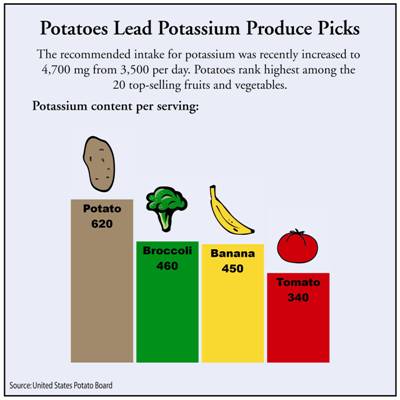
Too bad potatoes are too starchy for me ... but there
so many other vegies that I CAN eat (see below!)
Potassium helps prevent hair loss, brittle teeth and nails, sinusitis, runny nose, toxic waste in the body, plus stunted growth. Potassium is vital for cell production and cell growth as well as the maintenance of the body. "Potassium deficiency is a proven contributing cause of many illnesses including: arthritis, kidney stones, atrial fibrillation, adrenal insufficiency, celiac disease, high blood pressure, coronary artery disease, ulcerative colitis, hypothyroidism, irritable bowel syndrome, Alzheimer's disease, multiple sclerosis, myasthenia gravis, Crohn's disease, lupus, atherosclerosis, diabetes and stroke." Linda Page, ND, PhD Healthy Healing (www.healthyhealing.com). Parkinson's patients, people with systemic candida, IBS and cancer patients all need the revitalizing of potassium-rich foods to combat the evil happening within their bodies due to disease onset.

The human body can be likened to a flower or vegetable garden. Potassium is necessary for the health production of the substances that lend rigidity to plant stems and increase their resistance to the myriad of attacking diseases. Likewise, potassium is the element that changes seeds into plants and fuels the blooming of flowers. Without sufficient potassium, plants become stunted, and if the insufficiency continues, plants wither, turn yellow and die. In the same way, humans (and animals) also suffer from slow degeneration leading to cell death from potassium deficiency.

The healthy human body, balanced with vital potassium and other vitamins and minerals, can better withstand the attack of diseases and the aging process. People create their toxins by their eating and living habits. The properly nourished, healthy body gets a new bloodstream, a river of life continually circulating nutrients throughout the body, every 90 days. Every 11 months a set of billions of miraculous blood cells are replaced, and every 2 years the body rebuilds an entire new set of bones and hard tissues. The two great enemies of this recreation of the body are the toxic poisons from foods, air, water and soil that we ingest and the nutritional deficiencies created by an unhealthy diet. The truth of "we are what we eat" is exemplified by our dietary choices.


Potassium could be called the great detergent of arteries. It slows down hardening and clogging processes that cause harm to the whole cardiovascular system, and makes the flesh healthier and tenderer. There is little doubt, in animal or man, that the main function of potassium is to keep the tissues healthy, soft and pliable, as well as work to head off heart attacks and strokes. It can be said that potassium is to the soft tissues what calcium is to the hard structures. Potassium keeps the body young and supple, calcium keeps our frame strong and erect.

Body signs of potassium deficiency
  • bone and muscle aches and pains, especially lower back
  • the body feels heavy, tired and moving is an effort
  • dizziness and/or shooting pains when straightening up after leaning over
  • morning dull headaches upon arising and when stressed
  • dull, faded-looking hair that lacks sheen and luster
  • scalp itchiness and dryness; dandruff; premature hair thinning or balding
  • hair is unmanageable, mats, often looks straw-like, is sometimes dry and sometimes oily
  • eyes itch, feel sore and uncomfortable and appear bloodshot and watery
  • eyelids may be granulated with white matter
  • eyes tire easily and will not focus as they should
  • physical and mental tiredness with the slightest effort
  • loss of mental alertness and onset of confusion, making decisions difficult
  • memory failure, even familiar names and places are easily forgotten
  • easily impatient and irritable with family, friends, and people in general
  • nervousness, depression, in a mental fog, difficulty accomplishing things due to mental fatigue, even the slightest effort leaves exhaustion, upset and trembling
  • at times, hands and feet are chilled, even in warm weather, a clear sign of potassium deficiency
Much of this information comes from the insightful book Apple Cider Vinegar: Miracle Health System by Bragg and Bragg.

Tuesday, May 15, 2012

Daily Candida-expunging Protocol

DURING ALL PHASES OF THE CLEANSE:
  • Take digestive enzymes right before eating and before bed
  • Drink organic aloe vera gel in water as often as desired. Note: Most store-bought aloe vera juices have citrus acid in them for preserving. Avoid!
  • Use ground dulse on food instead of salt (suggestion)
  • Drink tea made with real ginger root or chew on ginger
  • Drink peppermint tea
  • Unless otherwise stated on bottles, herbs work best on an empty stomach: generally ½ hour before eating & 2 hours after eating
  • Fiber must be taken with a huge amount of water, and then will only work if the body is properly hydrated throughout the day
  • Drink at least ½ a cup of water every hour of the day - If drinking reverse osmosis or distilled water, add mineral drops
  • Avoid multivitamins until stated in later phases as they help yeast & parasites thrive and actually spread the condition in the body.
Remember - Throughout the whole protocol for ridding the body of Candida, eating food at any time that feeds the yeast strengthens it and promotes growth, which allows the yeast to multiply again ... taking longer to kill it.


STEP 1: Preparing the body & weakening the candida - 4 weeks 
  • Eliminate foods that feed the yeast
  • Eat 70 - 80% alkaline and 30 - 20% acidic
  • Eat a small meal every 3 hours to keep cortisol in check
  • Eliminate foods and environmental factors that destroy the good bacteria that needs to be replaced in the colon
  • Candida and fungus live off of sugar, so to weaken them, starve them. Keep carbs to less than 150 grams / day. If very active daily (like heavy labor job) go up to 150 grams of carbs a day as needed. But if possible, try to eat only about 50 grams a day. The lower the carbs, the weaker the Candida becomes. Going into ketosis will not help, so eat above 30 grams.
  • Always eat protein, fat and veggies together.
Mastering the dietary changes for 4 weeks before getting into the expensive parts of the candida cleanse allows for screw-ups from cravings that most candida sufferers experience. Cravings must be ignored. Before moving on to the STEP 2, flawlessly completing STEP 1 is best. 


STEP 2: Cleaning The Colon & Mechanically Removing Candida - 6 weeks to 2 months 
If medically safe, a fasting colon cleanse is a fast & effective method of removing a lifetime of old fecal colon plaque that is stuck to the intestinal walls (where candida, parasites & bacteria thrive). An effective, simple & common colon cleanse (usually done for 5 - 7 days) is:
  • 1 Tbsp bentonite (hydrated volcanic ash clay) + 1 tsp to 1 Tbsp psyllium seed husks in a large glass of water 5 - 6x a day. Follow with another full glass of water.
  • Drink 5 liters of water thoughout the day.
  • Two hours after / one hour before the psyllium & bentonite, take digestive enzymes (enteric coated pancreatin or serrapeptase are best) and Diatomaceous Earth (name: K-MIN from the Daily company).
  • When coming off the fasting cleanse, eat only raw vegies and leafy green juices (wheat grass, barleygreen, etc) for a whole day.
If medically unable to fast, the following is a slower cleanse: (3x a day) 


  • Take NAG, MSM and digestive enzymes on empty stomach 30 minutes before eating
  • Take Diatomaceous Earth (name: K-MIN from the Daily company) with food
  • Take fiber (preferably ground flax seed mixed with grapefruit fiber and psyllium) + bentonite 30 minutes after eating
STEP 2 - Phase 1: Herbal Killing - 2 to 8 months

For the next phase, continue doing the slower cleanse above for three days while adding anti-fungal herbal rotations. All herbs are to be taken for only 4 days, then move onto the next herb, because like bacteria, fungus/yeast can become resistant to anti-fungals. If using combination anti-fungals, make sure that the ingredients are not repeated between the combination capsules.

Use all herbs to the strongest recommended dosage. Make sure to have them at least 4 times a day, evenly spread out (as if a prescribed antibiotic). Pick at least 4 different strong anti-fungals. Here are some used in combined rotation - pairing a non-systemic anti-fungal with a systemic one.

Examples:
Day 1-4 ... Goldenseal + olive leaf extract
Day 5-8 ... Colliod silver + fresh garlic*+ caprillic acid
Day 9-12 ... Oil of oregano (Oreganol P73) + enteric coated peppermint oil + cloves
Day 13-16 ... Extra Strength Grapefruit seed extract + Pau d’Arco
Then repeat the cycle over and over.
* large clove of garlic, chop finely (don’t press!) let sit 5 minutes, then drink down with water
Support supplements taken during Phase I:
Molbdenum (it chelates the mycotoxins excreted by fungus & contaminated foods)
Biotin 8 (8000mg - it stops Candida from further changing into the aggressive, fungal form. Make sure it is not yeast derived!)

Vaginal anti-fungals:
If having vaginal infections, this needs to be included in the cleanse. Rotate the same anti-fungals taken orally on that day in the vaginal therapies. Here are methods of making suppositories & douching for different anti-fungals:
  • Garlic: douche with 1 tsp Kyolic liquid aged garlic to 2c pure water or wrap a halved garlic clove in cheese cloth, tie it off leaving a tail to pull it out after leaving in overnight
  • Grape seed extract: douche with 15 drops in ½ c aloe vera gel
  • Oil of oregano: Put one drop in an empty capsule and fill the rest of the way with olive oil, puncture a few holes in the capsule with a needle and insert. Or make a suppository by melting coconut oil in a hot water bath, add a drop of oregano, put in something small and freeze in the freezer. Insert as high as possible at bedtime.
  • Goldenseal – douche with 15 drops in ½ cup pure water. Most of the anti-fungals can be used vaginally either by making a suppository, putting it in a capsule with a few pinholes or by douching in the above manners.
Douches should be at least 2x / day, try for 4 if possible. Continue with Phase I until the Candida symptoms are about 90% gone. This should take about 6 weeks for a very mild case. For systemic Candida overgrowth, this could take 8 months to a year. When moving onto Phase II, overlap the phases for 3 days. DO NOT GAP IN BETWEEN! Candida yeast starts multiplying once the anti-fungals have been withdrawn. 


STEP 2 - Phase 2: Mop-up Killing & Parasites - 3 months

Continue diet and switch back to the slow colon cleansing method while overlapping the anti-fungal rotation for 3 days. This is a mop up to kill all the resilient fungus and parasites in the system.

Same rules as Phase 1. Except the anti-fungals in this battery are taken for 7 days consecutively instead of 4, rotating SF-722 by the Thorne Company with 2 other preferred fungals from Phase 1. Take the SF-722 with meals (up to 5 caps each dose), others on an empty stomach as done in Phase 1. Continue the most effective vaginal anti-fungals in Phase 1.

Parasite cleanses must be done for 3 months in order to kill off all phases of parasites from egg to reproducing adult. In the morning & evening on an empty stomach, have: garlic oil, bromelin, pancreatin (enteric coated is best), NAG, MSM, anti-parasital herbs from the parasite cleanse of choice (example, the parasite cleanse from the Dr. Hulda Clark’s program + Para 90 from the AIM company). One hour later, take K-MIN and fiber + bentonite. With Food, take digestive enzyme complex (enteric coated enzymes are best), Betaine Hydrocloride acid (HCL) supplement with pepsin. 

STEP 2 - Phase 3: Probiotic Re-Colonization

To prepare for a probiotic enema and douche:
  • Stop taking bentonite for 14 days before your enema (last 2 rotations).
  • Stop taking all anti-fungals that are also natural anti-biotics for the last 7 day rotation (ending on 7 days of SF-722 is a good choice). For maintenance after this point, stick with anti-fungals that are not anti-biotic.
  • Stop taking any laxatives, K-min or psyllium for the last 7 day rotation. Use chicory root inulin fiber instead and fresh ground flax seed fiber with meals.
  • Do a sweet dairy whey enema 1x / wk for 3 weeks before your probiotic enema to re-acidify your colon (4T of whey to 1 quart of distilled or reverse osmosis water). Probiotics need an acidic colon to survive; fungus & parasites thrive in an alkaline colon. The colon needs to be re-acidified since it will be alkaline from the bentonite.
  • Make sure that the pro-biotics have been refrigerated and are human strain. Only human strain probiotics root and take up permanent residence in the human body.
The Enema:
Do a sweet dairy whey enema first to eliminate debris. Use this ratio, but increase uniformly if more water is required: 1 Tbsp sweet whey with 4 capsules of Kyo-Dophilus + 5 billion count refrigerated human strain probiotics to 2 cups of purified water.

Get positioned on hands and knees, then lay on right, then on back, then left side and massage the belly from bottom left in a clockwise circle to bottom right while holding in water for at least 10 minutes. Hold for as long as possible. Make sure to release the valve on the enem bottle so water starts coming out which removes all air bubbles before inserting the enema tube.

Probiotic Douche:
2 Tbsp of pure water to 1 billion count of human strain probiotic. Douche 2x / day, again trying to hold in the water for as long as possible (best to lay on a slant board for 15 minutes). Follow-up, vaginally insert a probiotic capsule with tiny pin prick holes and leave it in overnight. Be sure to stay away form all things that will kill or inhibit the probiotics, or the purpose of recolonization will be defeated. Avoid chlorinated water, colon cleansers (herbal laxatives, fiber…), do no oxygen therapy, and do no use anti-biotic drugs or more parasite killers for 3 months.

After the enema:
CONGRATULATIONS!! The body's BACTERIAL BALANCE has been restored. Now just maintain it by STAYING AWAY FROM EVERYTHING THAT HURTS PROBIOTICS and AVIOD THINGS THAT ENCOURAGE CANDIDA / FUNGAL GROWTH.

Know that ... 
Candida is communicable from sexual contact & medical staff hands. Any enema other than a probiotic enema is not good: herbal, oxygen, ozone, bentonite, wheat grass, plain water all = alkaline colon & destroy your good colony.

Be extra careful for the first 6-8 weeks after your enema. The probiotics still need to try to root and colonize into the intestinal wall for permanent residence. Try to eat mainly soft, easy to digest foods (cooked veggies & grains, easily digested animal protein, healthy fats only). It will take up to a year for the probiotics to fully root & colonize, so treat your body well.

If you are ever in a situation where you might hurt the probiotics, go back to an anti-fungal diet for 4 weeks, do take human strain probiotics daily during the period & after the intrusion is over, do another probiotic enema and /or douche.

STEP 2 - Phase 4: Restoring vitamin and Mineral Balance, Rebuilding the Immune System
  1. eliminate all toxic metals - take nutrients to reduce copper, support adrenal & thyroid functions as well as support iron and anemic factors 
  2. correct vitamin / mineral, amino acid, hormone and fatty acid deficiencies - Immune function will not come back if there are deficiencies and toxic metals as these problems can suppress the immune system. Involved are: B complex, wheat germ oil, glyconutrients, germanium (stim. Interferon), omega-3 oils, vitamin T (in sesame oil), A, B12, B5, magnesium, copper, C, zinc, iron, folic acid, protein

DISCLAIMER:
I don't agree with all the information in this posting but I do think that it's a good application of a Candida expunging protocol which follows the one advocated by the Biamonte Center, and which I blogged on earlier in an intro to their practices and in the protocol itself. This summary is taken from the old blog Beating Systemic Candida and Other Natural Jazz.  I really appreciate the person who did the research to compile this insightful detailed list of time and treatment tools. To go to the original source of this article, go to www.health-truth.com (Biamonte Center's key page) which describes the nature of Candida albicans overgrowth and why the steps in this layout are the most effective method of rebalancing the body’s natural bacteria.

Wednesday, May 9, 2012

High Copper and Candida

90% of people treated by a Doctor of Nutripathy for candida had high levels of the trace mineral copper. Copper toxicity can be traced back to copper pipes affecting drinking water, eating acid foods that were prepared in uncoated copper pots as well as other environmental sources like fungicides, pesticides and household cleaners. Vitamin and mineral deficiencies, the vegetable heavy vegetarian diet, vitamin pills, jewelry and birth control pills can also disrupt the copper balance. Copper buildup and toxicity affects the liver and the kidneys. Besides copper affecting people with candida, copper has also been traced to three diseases - (1) Indian childhood cirrhosis that is easily traced to the Indian population that boils milk for children in copper pots, (2) Wilson's disease, a genetic disease causing neurologic and psychological symptoms and liver and brain disease from non-secreted copper buildup, and (3) Alzheimer's disease where elevated copper and zinc, opposing elements actually, bind to amyloid beta proteins which form reactive oxygen species in the brain.

Copper as an Essential Mineral

Copper is actually necessary as a trace mineral (between 50mg and 120mg) to maintain the healthy body. Copper-rich sources ae beef and calf liver, but it is also high in oysters, shellfish, avocado, sunflower seeds, nuts and trail mixes along with many other foods but at lower levels. Once eaten, copper is assimilated through the stomach lining and then transported via the blood stream to other body parts. As an important element found in 13 enzymes in the human body, having access to it (the body does not produce copper) is essential. Copper is important for proper nerve function, bone growth, fetal development, formation of blood cells, heart and muscle movement and tone as well as development of the brain and nervous system. It has functions throughout the body and is essential for the body to effectively use iron in the blood stream.

Copper Deficiencies and Excess

Copper deficiencies, on the other hand, are thought to play a part in high cholesterol and increased risk of heart disease. Anemia, osteoporosis and a wide variety of other major and minor health conditions are also thought related to copper deficiency within the body.

Kayser-Fleischer ring, copper deposits found in the cornea, is an indication the body is not metabolizing copper properly. [Wikipedia, "Copper Toxicity"]
Large deposits of copper resulting in toxicity is apparent through iridology, which identifies a Kayser-Fleischer ring, that is, a dark ring or rings that encircle the iris of the eye, and clearly points to copper toxicity. The Kayser-Fleischer rings are most common in people with Wilson's disease.

In excess, copper does the following - (1) suppresses potassium storage in the cells (potassium is vital as it helps the thyroid produce the body's energy), (2) suppresses adrenal gland function (the adrenals are the "fuel pumps" for the body), as well help control blood sugar and allergy response, (3) blocks the functions of zinc, the mineral involved in thousands of evergy and immune-related cycles (high copper and low zinc have been found to cause depression and mental disorders), (4) suppresses iron storage, causing anemia, (5) causes abnormal depositing of calcium in the soft tissues, which has been shown to depress thyroid function and cause an increase in viral activity.

NOTE:  Hidden Copper Toxicity Indicators. The hair copper level is a very unreliable indicator for copper toxicity.  So is serum copper, serum ceruloplasmin, and many other tests because the copper can hide deep in the brain and the liver.  A liver biopsy is a good indicator, but is a painful and somewhat invasive procedure.

Biamonte Center - The Copper Connection
Copper toxicity - Wikipedia
Copper Toxicity Syndrome (excellent info!)
How Does Copper Affect Us?

Sunday, April 22, 2012

Biamonte Ctr - Treating Candida, part II

The Biamonte Center, which is specifically for treating candida, has developed a four-stage program for eliminating candida and rebalancing the body. For an overview of the center and its purpose, see the previous blog entry or go to the website.
Phase 1 : Eliminate the candida infection
Phase 2 : Detoxify the intestines and body
Phase 3 : Correct hormone or nutritional deficiencies
Phase 4 : Support and rebuild the immune system

Michael Biamonte, clinical nutritionist, gives an overview of each of the phases and includes some of the elimination drugs/supplements used as well as discusses the philosophy behind each phase. I do appreciate this information, especially some of the whys and wherefore being explained about the chronological process.

_____________________________________________________________________________

PHASE 1 : Eliminate the candida infection

This is the "systemic phase", the phase that refers to treatment of the entire body and its systemic infection (caused by virus, bacteria, yeast, fungus or parasite).

In this phase there are two types of natural and herbal substances to be taken. The first is taken on rotation, that is, every 4 days one of the items is stopped and another is taken for 4 days. There might be 4-6 items in the rotation group with the products being taken for 30 days before re-evaluation, resulting in possible extention of treatment for another 30 days. The principle behind rotating these treatment herbs/supplements is that candida is able to build up immunity to an herb/supplement/drug after only 21 days (some say 7 days), and so to keep the process of elimination alive and continuous, rotation is needed. The carefully selected herbals/supplements in Phase 1 are chosen for their ability to be absorbed by the blood, travel through the bloodstream and lymphatic system, and be able to kill or eliminate most of the infection throughout most of the body.

Non-rotated supplements are the second group. The non-rotated items are to be taken every day. They aid the die-off of the infection. Products used are Biocidin or Bioradiance (the double-strength of Biocidin) accompanyied with Biotonic, products of Bio-Botanical Research Inc. These products are said to be very powerful so must be taken with food.

Resulting from the rotated and non-rotated herbals and supplements is the likely die-off reaction, also known as Herxheimer reaction. The reaction is due to a larger number of bacteria or toxins being dumped into the bloodstream, colon or wherever too quickly for them to be transported out, resulting in a toxic reaction. The toxic reaction in itself is a good sign of the products working, but it can affect the already weakened immune system; therefore, some of the doses should be lessened in order for the body, specifically the liver, not to be too overworked-overstressed. Reactions could be headaches, myalgia, fever, chills, fluttering heart, hypotension, flu-like symptoms, among others. During die-off, to lessen discomfort and reaction, continual flushing with fluids is strongly recommended - at least 4 oz. every half hour.

Through the Biamonte Center, this phase lasts 30 days before retesting, which determines whether the person procedes to the next phase or will repeat phase 1 again with perhaps a change in herbals/supplements and dosages. Urine tests are given to determine progress. The urine sample measures 3 things:
(1) pH which tells the likelihood of an active infection (should be about 6.4 but if 5 or especially below 4 the person is more infection susceptible; a pH between 6-7 shows little infection susceptibility)
(2) indican, which indicates the amount of toxicity in the colon and intestines. Indican is produced by food that is putrefying in the intestines, mixing with harmful bacteria, parasites or yeast, which is then releasing indole, a harmful substance. Indole gets absorbed in the blood and then is eliminated through urine as indican.
(3) protein waste product that is given off by parasites and yeast

Also in the non-rotated group are supplements, e.g. enzymes to help aid digestion, perhaps an anti-viral, anti-bacterial, anti-parasitic or anti-yeast product.

What is not used in this phase are immune boosters and/or anti-oxidants. Taking such would counteract the herbals and supplements for killing off the candida by strengthening it. Anti-oxidants include beta carotene, vitamin E, vitamin C, selenium, zinc, quercetin, pycnogenol as well as nutrients which stimulate and/or activate viruses/bacterias - calcium, vitamin D, copper, CoQ10, B-complex (individual vitamin Bs may be necessary though).

This phase will NOT eliminate all the symptoms or all the infection, but the severe symptoms of active infection are expected to go away. Once symptoms have been reduced and bloodwork determines that the infection likewise is reduced, the person procedes to Phase 2 with no "vacation" between herbal/supplement cycles. In fact, for best results, a three-day overlap of supplements in Phase 1 and Phase 2 is often encouraged.

_____________________________________________________________________________

PHASE 2 : Detoxify the intestines and the body

Phase 2 is to cleanse the body of viruses and parasites. Parasites are eliminated through cleansing the bowel. Viral conditions like Epstein-Barr or cytomeglio virus or other Herpes-type viruses usually associated with chronic fatigue are cleansed through the intestines and by cleaning the liver, the lymphatic system, the spleen, and various other organs and glands that are known to house viruses. Bacteria is eliminated in similar ways. Phase 2 has three steps.

Step 1 : Use 4-5 different supplements to kill the infection
.......... i. "looseners"
.......... ii. "bulldozers"
.......... ii. "digestive aids"
.......... iv. "mop-up items"
.......... v. "vermifuges" (some people only)
Step 2 : Introducing friendly bacteria
Step 3 : Repair the intestinal tract

Step 1 : Use 4-5 different supplements to kill the infection

The "looseners" - Their job is to loosen old debris, old mucus or fecal matter sitting in the intestinal tract and which hide yeast, parasites or harmful bacteria. Once loosened and removed, more intestinal tract surface will be available for the "good" bacteria to live and thrive. Castor oil, garlic oil, bromelin, pancreatin, pepsin (an enzyme produced in the stomach) and comfrey. Taken on an empty stomach 2-3 times a day and usually in high amounts, as in 4-8 "looseners" at one time - Example, 4-7 castor oil or garlic oil first thing in the morning and last thing at night and 4-6 pancreatin 2-3 times a day.

The "bulldozers" - These push out debris from the intestinal tract which the looseners have loosened. High fiber products commonly containing psyllium (a fiber) and benzonite (a highly absorbent clay capable of holding several times its weight in toxins and toxic matter). Taken on an empty stomach twice a day, first thing in the morning and last thing at night.

The "digestive aids" - These help with rebuilding the digestive system or aid the overtaxed digestive system with its work. Enzymes, hydrochloric acid, pancreatin, bile salts - items the body needs and if healthy can produce on its own. Taken at meal and snack times.

The "mop-up items" - Also known as "candida killers" are to mop up any remaining substances secreted in hard-to-get areas. They are oil-type products that line the intestinal tract and absorb into it, reaching yeast that is unreachable by other products. These are products that absorb into the blood and travel throughout the body, killing yeast in obscure places. Taken with each meal but these supplements/oils needs to be rotated.

The "vermifuges" - These are "vermin" (worm or parasite) killers. Nasty as it may sound, almost everyone with candida has worms or parasites which must be expelled before real healing can be expected. K-min, black walnut and butternut bark. Taken on an empty stomach.

Phase 2 also has Herxheimer reaction, and some people have gastro-intestinal upset gas, bloating, poor digestion. Rectal itching is also very common, especially if a person has worms or parasites.

Step 2 : Introducing friendly bacteria

Friendly bacteria are started to be introduced into the system via FOS, a fruit sugar found in garlic, artichokes, bananas, and other fruits and vegetables which tend to selectively feed only friendly bacteria. Bifidofactor or Superdophilis are two powerful types of the DDS strain and which do a fast and thorough job. Dosages are half a teaspoon of Bifidofactor in the a.m. and half a teaspoon of Superdophilis in the p.m. while taking FOS three times a day at half a teaspoon doses. All should be taken on an empty stomach because the acid in the stomach can kill these friendly bacteria. The FOS is the most important because it will get into the intestinal tract and feed the friendly bacteria and get it to multiply.

In this phase it is very common to have intestinal bloating, gas and abdominal discomfort due to the growth of the friendly bacteria which produces gas and bloating as it wipes out the harmful bacteria. If the gas and bloating is bad, simply reduce the doses until no reaction in produced and then gradually try to increase the amount.

Step 3 : Repair the intestinal tract

Certain vitamins and nutrients are used for repairing the intestinal damage, like "leaky gut" or permeability, caused by the candida, thereby also eliminating the key symptoms of leaky gut which are arthritic symptoms and food reactions. Two categories of supplements are used - one for repairing and the other for reducing inflammation. Depending on the supplements, they can be taken with food or on an empty stomach.

At the end of Phase 2 a person should have vastly increased digestive ability, far fewer food reactions, better bowels movements and less gas and bloating. The person should now be ready to correct vitamin and mineral and other nutrient absorption.

_____________________________________________________________________________

PHASE 3 : Correct hormone or nutritional deficiencies

This part of the program addresses issues of energy and also nutritional deficiencies. Blood testing and hair analysis (done through the Bio-Cybernetics Center) is used for assessing how to individually treat each patient. Blood shows transportation of say nutrients while hair shows storage of for example toxins like mercury, arsenic, lead, copper, bismuth, etc. Many people who have arthritis or any type of joint or muscular pain commonly have toxic metal poisoning, as do women with severe PMS or difficulties conceiving. Commonly also are people with candida or Epstein-Barr virus having excess copper (likely from copper pipes) or mercury (likely from silver fillings).

The adrenal glands and the thyroid are the energy producers in the body. Many people may also have energy issues due to deficiencies in their reproductive organs - the prostate and testicles for men, the ovaries, uterus and mammary glands for women. In fact, candida in women is very likely linked to issues of either too low or too much estrogen. Women need special attention in regard to rebalancing their reproductive organs as estrogen is always fluctuating throughout the month. In general although men may have hormonal imbalances, they need less attention to hormonal therapy.

To boost the energy level and to get the glands working properly, specific nutrients the person is deficient in are given, for example, vitamin A and C may show up as needed mutritional supplementation. Or B-complex. Mineral deficiencies may also show up, but supplementation may not be done with minerals as a further imbalance could be created with this micronutrient category. Protein concentrates are given and these are actual protein organ extracts of animals specifically raised for the purpose of gland and organ processing. Specific herbs for stimulating specific organs or glands could be prescribed.

On this phase diet is changed to address the issue of building the body's nutritional defences. The diet is changed to fit the person's fast or slow metabolism. If the person has a slow metabolism, the person should eat a meal high in protein and low in fat to stimulate the thyroid, adrenal glands and energy-producing glands for raising the metabolism and for burning more calories. Only protein is capable of increasing metabolism and the calorie burning rate. If the person has a fast metabolism (only about 20% of the American population), then he/she burns up carbs and starches too quickly and runs out of energy so needs to consume more fats and oil which are slow-burning fuels for maintaining a more constant level of energy within the body.

_____________________________________________________________________________

PHASE 4 : Support and rebuild the immune system

This phase deals primarily with the immune system and to make sure the thymus gland, spleen and lymphatic system are functioning properly, and very importantly, to make sure the liver is producing antibodies and has an immune system response. Of course the adrenals need to be furthered strengthened, so reintroducing some of the Phase 2 supplements might be considered. Phase 4 has two parts - the first is to take nutrients for 1-2 months to build and repair the immune system, and the second is to use specific herbs which stimulate the immune system.

Part 1: Nutrients to build and repair the immune system

Which supplements are given are determined through blood and/or hair testing, or even occasionally through a special test for T-cells and B-cells (similar to the test given to HIV patients) for determmining exact immune system requirements. However, the principal test that will determine progress is by the white blood count and the many individual white blood cells which are measured on a complete white blood count: cenefils and basofils (white blood cells that indicate allergies), monocytes (tell how well the liver is functioning), and then the primary indicators, the nutrofils and lithocytes (which are good indicators of infection in the body). In another section on the blood test, the total globulin (a protein utilized by the immune system) also tells how well the immune system is doing, as also does the albumin (another protein). A test called totalbillyrubin can give some idea of the functioning of the thymus and the liver and also an idea of the immune system's response.

In the hair analysis, some of the principal minerals which indicate the immune response in the body are zinc, copper and iron. In an immune-deficient person an excessively low zinc and an abnormally high copper is common. A very low or high iron also tells how the immune system is functioning. The mineral selenium indicates how well the body is responding to chemical toxins or odors and fumes and things in the environment which cause sensitivities. Toxic metals such as cadmium, mercury, lead, aluminum, arsenic and copper also give an idea of how well the immune system is doing - the lower the metals, the better the immune response.

Part 2 : Specific herbs for boosting the immune system

Vitamin C flush - Sometimes a vitamin C flush is necessary for boosting the immune system. The flush gives the system very high doses of vitamin C to the point where it totally saturates the system. For this flush, vitamin C is given every hour (strict records are kept documenting time and amount as well as outcome, e.g. loose stool, diarrhea). For example, if someone takes 1000mg of vitamin C every hour for 6 hours and then has loose stool or diarrhea, then 6000mg was consumed before reaching evacuation. So, subtract 1000mg from the total to reach 5000mg, and then in the next 3 hours the high tolerance doses of 5000mg is given to saturate the body and boost the immune system. Another example, is a person takes 12,000mg before having loose stool, and so subtracting 1000mg, the high vitamin C dose of 11,000mg is given within the next 3 hours. The high dosages would continue for up to 3 days at 3 hour intervals, but every time 1000mg less would be given, and the outcome of the doses would no longer result in loose stool or diarrhea. This is the vitamin C flush. [The reason for achieving loose stool is for the body to indicate that it is totally saturated by vitamin C. The flush has been shown clinically to raise the immune response as high as possible by the megadoses.] High power vitamin C used in this program could be Ultra Potency by Metagenics or another high powered one by Alacer company or a supplement called Emergency-C or even another kind.

The mineral germanium - [Purpose : unclear] Another mega-dosing program is with the use of the mineral germanium, to be effective, taking germanium in a 4-day to 1-week course. For example, a person might start with 25mg one day, the next take 50mg, then 100mg, then 150mg, then 200mg, and then 250mg. Perhaps then the person would take a 2-day break and then start over at the 25mg dose and work up in the same way. The cycle could even be repeated again.

Vitamin A - For mega-dosing with vitamin A, water-soluable A (a kind of vitamin A that does not accumulate in the liver for long periods of time) is used and in dosages of up to 250,000 units. The 250,000 dosage can be maintained for 2-3 weeks and then dropped down to 50,000 units for 1-2 weeks, and then brought up to 250,000 units for another few weeks before being dropped back to 50,000 units for a week or so. So, one could conceivably be taking 250,000 units a day for 2-3 weeks, and 50,000 units for 1-2 weeks. This again serves to stimulate certain parts of the immune system at a very high level.

Glandular concentrates - Certain other glandular concentrates from the thymus, lymphs, spleen, adrenals and liver are also used in very high doses in order to generate and increase immune response. Sometimes they may be taken every hour.

The vitamin C flush, germanium, vitamin A and the hourly technique of taking glandular concentrates may also be used if the person is feeling on the verge of a relapse or coming down with a cold or flu. Echinacea, a commonly used herb for the immune system, can also be used to ward off an oncoming cold or flu. The dose is 2-3 teaspoons, 3 times a day, and then after the inital high dosages, dropped down to 1/2 teaspoon 3 times a day.

Phase 4, the rebuilding of the immune system which took years to destroy, takes the longest; it may very likely take as long as a year. In this very individualized phase, fiber supplements to keep the bowels moving, some flora supplement for aiding correct bacteria growth, and digestive supplements for assisting with digestion are employed. Energy boosters from Phase 3 might even be continued in addition to the mega-dosing techniques above.

Sometimes in this phase a rash or pimples might appear. These are primarily the result of the lymphatic sstem and the immune system cleansing themselves. If this happens, a dry massage to massage off dead skin can be done to activate better circulation of the vascular and lymphatic systems which will help push poisons out of the skin. Saunas and steam baths are even more efficient for cleansing impurities out.

_____________________________________________________________________________

Other principles to keep in mind:

Phase 1 and Phase 2 are done under a very carefully regulated diet. The Biamonte Center has three diet choices: a high-protein diet that includes meat with few carbs, a vegetarian diet which includes a few more carbs, and the caveman diet which is for toughest candida (mainly meat protein with low carb vegetables).

Phase 1 and Phase 2 primarily eliminate the total infection; Phase 3 and Phase 4 build back the immune system and repair the damage caused by the infections.

Phase 1 handles active infection; Phase 2 handles the digestive system and nutrient absorption; Phase 3 addresses energy; Phase 4 aims for rebalancing the immune system.

Rule of thumb - Liquids are taken on an empty stomach; all tablets or capsules are taken with meals.

At no time in the program does a person want constipation. Drinking plenty of water and eating lots of fiber is to help flush the body regularly and speedily from the toxins that are poured into the colon, but if constipation occurs, the toxins build up and are reabsorbed back into the bloodstream and possibly making the person very ill indeed.

_ _ _ _ _ _ _ _ _ _ _ _ _ _ _ _ _ _ _ _ _ _ _ _ _ _ _ _ _ _ _ _ _ _ _ _ _ _ _

All the of the above material came from the Biamonte Center's webpages, specifically under the category of "Tour Our Program". I have tried to condense the pages describing the program as succinctly as possible without changing any of the therapies or nuances of the 4 phase candida cleansing and repair program. I do NOT agree with everything in the program, but this summary is just what it is, a summary of a program and devoid of my opinion.

Monday, April 16, 2012

Strict Candida Diet

The Strict Candida Diet is for people experiencing a wild array of symptoms related to foods. To make this diet, I’ve cross-referenced many candida diets and read about why certain foods are on the list or why they are stricken from it. This is not a “perfect” diet for everyone experiencing radical food sensitivities as people even develop individual sensitivities/allergies. However, this is a core diet and can be added to or subtracted from based on the individual’s needs.

The diet principles exercised here are sugar-free, gluten-free, dairy-free, meat-free, yeast-free, processed food-free, and low-carb. The intent is to starve (actually weaken) the offending bacteria so that anti-bacterials, anti-fungals and anti-inflammatories can further damage and kill them off.

DIETARY RATIO – 65% - 20% - 10% - 5%

Keep this tentative ratio in mind when planning meals: 65+% of high fiber foods such as steamed vegies (broccoli, celery, red radishes in moderation, asparagus, cabbage, spinach and kale) with raw garlic, onion and ginger, three natural anti-fungals; 20% of high protein foods like nuts, seeds (and some people eat eggs); 10% complex carbs like brown rice, millet, select beans (carbs actually help promote a healthy body and deter candida, but once there is overgrowth the bacteria must be weakened and so carbs are withdrawn); 5% fresh fruits like lemons, limes, avocadoes and perhaps green apples or blackberries if the person can tolerate them (some people like myself must be very strict with this category). ?? % of oils is unknown but depends on the individual – some oils are very instrumental in fighting against the candida overgrowth, and so some people require more oil than others; for those upping their oils, reduce the carbs as they compete with each other. A word of caution here, a low-carb diet long-term, say for six months or more, has been known to cause electrolyte problems.

ALLOWABLE FOODS

VEGETABLES

Vegetables starve the candida of the sugar and mold that feed it. Vegies filled with chlorophyll absorb fungal poisons and escort them out of the body. Avoid starchy vegies like carrots sweet potatoes, potatoes, yams, corn, all winter squash, beets, peas, parsnips and all beans except green beans; the starch quickly turns to sugar which feeds the candida. Vegies are typically very alkaline and should be eaten raw or slightly steamed. Cooking makes all food - vegies included - acidic, the pH which candida thrives in. Seaweeds are good, e.g. spirulina, chlorella, dulse, but many seaweeds are processed with processed salts and corn oil, which could cause reaction and/or feed the candida. Tomatoes are acidic (yellow tomatoes less so) and a nightshade, which affects inflammation and particularly those with rheumatoid problems - best to avoid.

Vegetables : amaranth leaves, asparagus, beet greens, bok choy, broccoli, cabbage, cauliflower, celery, collard greens, cucumber (peeled), dandelion greens, eggplant (controversial as it’s a nightshade), endive, garlic stems, green beans, kale, lettuce (all types), leeks, mustard greens, okra, fresh olives, onions, red radish (in moderation), seaweed, spaghetti squash, spinach, spring onions, swiss chard, tomatoes (controversial), turnip greens, zucchini

LEGUMES
Legumes can be very moldy. Some candida diets restrict all legume consumption, some allow low-carb legumes such as chickpeas/garbanzo beans, lentils, black beans, black-eyed peas and adzuki beans. Because of the possible mold factor, soak beans (except lentils) for 8 hours, drain off dirty water and rinse till rinse-water is colorless. Cook as desired. Slow-cooking in a crock pot will retain the most nutrients that higher heats will kill.

NUTS & SEEDS
Nuts are rich in nutrients, essential fats but can be very moldy. Also they are tough on the digestive system of many candida sufferers; some people react while others tolerate them well. For eliminating mold on nuts, soak and rinse nuts before eating. For the busy person, they can be soaked in bulk and dried in a dehydrator to be eaten when desired. Drying temperatures over 118F (in the oven for example) kill nutrients, essential for the healing candida sufferer’s body. Flax seeds (chia and hemp to a lesser degree) go rancid quickly so buy whole seeds and blend the seeds to a powder just before using. Heat also destroys the nutrients in these fragile seeds so eat raw.

Nuts : almonds, walnuts, Brazil nuts (no more than 6 at a time due to heavy selenium)
Seeds : sunflower seeds, pumpkin seeds, flax seeds, hemp seeds, chia seeds

GLUTEN-FREE GRAINS
Grains contain a high amount of fiber, so figuratively they are the pipe-cleaners of the intestines grabbing pollutants, chemicals, pesticides and heavy metals and sweeping some of them out. Grains are complex carbs but they do break down into sugars and so must be eaten in small proportion when “starving” the candida so anti-fungals work more effectively.

Gluten-free grains: adlay/Job’s tears, amaranth, buckwheat, millet, quinoa, sorghum (possibly), wild and brown rice

BEVERAGES
The GI track needs to be continually washed throughout the day to remove toxins, so drink lots of water. The herbal teas listed have anti-fungal properties. Chickory root is also a great prebiotic (it contains 20% inulin) so can help repopulate the gut with healthy bacteria.

Beverages: almond milk, chamomile tea, chickory root, cinnamon tea, clove tea, fennel tea, ginger tea, lemongrass tea, licorice tea, peppermint tea, taheebo/pau d’arco tea, lots of water

SWEETENERS
Candida loves sweeteners. Supposedly stevia (controversial) can be eaten in tiny amounts every day. Coconut oil is naturally sweet, as are green apples, cinnamon, almonds and almond flour. Blend ingredients considering natural flavors and skip on all sugars and chemical-compound substitute sugars, including xylitol (known to mess up pets’ pancreases) and agave (90+% fructose while corn syrup is only about 50%; also processed at temps around 400F! thus a trans fat?).

FRUITS
Fruits range from very high fructose to fruits with much less fructose. Fruits tend to be slightly acidic, which makes them even more appealing to candida. So, choosing low fructose, low-acidic fruit is important. Limes and lemons are both low acidic, as are avocadoes. Cranberries are very low fructose but high acidic; tomatoes are acidic. The following fruits are “good” fruits for the strict candida diet but must be eaten only upon occasion and as each body allows. Limes, lemons and avocadoes are the first fruits to add to the diet.

Fruits: avocadoes, blackberries, cranberries, green apples, green papaya, lemons, limes, red or black currants

CONDIMENTS, VINEGARS & SEASONINGS
Condiments are typically fermented but people with candida have huge intolerances to yeast and/or fermentation, so they must think simple, eat simple … but feel well. Coconut aminos is a great alternative for soy sauce. Salt, by the way, is processed and often has dextrose and chemical ingredients in it; eat unprocessed sea salt which is loaded with accessible nutrients and minerals. Dried herbs are known to be moldy, not to mention irradiated. Dehydrated garlic and onion powders might have sugar additives.

Condiments: fresh garlic, fresh ginger, fresh onion, fresh lemon juice, olive oil, coconut oil, flax oil, hemp oil; mustard powder (rarely; very arguable); apple cider vinegar (very very arguable!)
Seasonings: (unprocessed) sea salt, black pepper (very arguable)

HERBS & SPICES
Certain herbs and spices contain antioxidants and anti-fungals. Some increase circulation and reduce inflammation. Some improve digestion and alleviate constipation. Most herbs and spices are beneficial in the fight against candida. Avoid the nightshades, that is, any in the red pepper family.

Herbs and spices: basil, black pepper (very arguable), cardamom, cayenne (very arguable), cilantro, cinnamon, cloves, coriander (good cinnamon substitute), cumin, dill, fennel, garlic, ginger, marjoram, oregano, parsley, rosemary, thyme, tarragon, turmeric

OILS & FATS
Eat carefully selected oils only, and always choose cold-pressed and extra virgin if given the option. Heating or boiling destroys oils, especially fragile oils like hemp and flax oils.

Oils: coconut oil, olive oil, flax oil, hemp oil
Fats: avocado, cleaned nuts (almonds, walnuts and Brazil nuts)


FOODS TO AVOID

SUGARS

Sugars exacerbate candida. Soft drinks are loaded, and even if “sugar-free” there are chemicals and the drinks are very acidic. Artificial sweeteners can impair the immune system.

Avoid: honey, syrup includes brown rice syrup, lactose, malt, sucrose, fructose, chocolate, molasses, artificial sweeteners (e.g. asulfame, nutra-sweet, saccharine, maltodextrine), agave nectar, coconut sugar, yacon syrup

ALCOHOL
Alcohol is high in sugar, plus it is fermented, both of which cause candida to thrive. Alcohol puts stress on the organs and immune system. Mixing alcohol and candida is like opening all the windows in a house fire!

Avoid: beer, cider, liquors, spirits, wine

GRAINS & GLUTINOUS FOODS
Most candida sufferers have high sensitivities to glutens, so avoiding them allows the immune system to repair itself and spend more energy attacking the bacteria rather than the introduced toxin. Corn products like popcorn are highly contaminated with toxic fungi. White rice causes rapid spikes in blood sugar levels.

Avoid: glutens (wheat, rye, barley, oats and wheat variations like spelt, couscous, cream of wheat, durum, semolina, farina, triticale, etc); corn (popcorn, blue corn, hominy, grits)

LEGUMES
Most legumes are high in carbs, moldy, as well as hard to digest and so should be avoided. Lentils, garbanzos and black beans are probably the easiest to digest and have the lowest glycemic count. Soy products are toxic to people with candida, probably because the majority of soy is GMO, which has been linked to immune system damage and other health problems. Soy is also disruptive to the thyroid, a common problem with candida sufferers. Cocoa powder, even unsweetened, contains caffeine and weakens the adrenal glands. Bean sprouts contain high levels of bacteria and sometimes e.coli – those grown at home can be safe.

Avoid: all beans except later on the lentils, garbanzos and black beans; all soy (tofu, tofu cheese, textured vegetable protein, soy milk, tempeh, etc); carob powder; cocoa powder; bean sprouts

NUTS
Nuts contain high amounts of molds/fungal toxins, which can inflame candida. Some nuts are extremely moldy like the peanuts and pistachios while almonds and walnuts are easiest for the candida sufferer to clean and eat. Coconut meat is inflammatory while coconut oil fights against the candida bacteria (the body uses these materials very differently).

Avoid: all nuts, especially peanuts and pistachios; coconut meat, milk and cream; pecans cause inflammation; cashews can be very moldy

MUSHROOMS
Mushrooms often have mold on their exterior. Eating fungi can further the spread of candida, as they are a mold; however, some molds have been used to fight the candida mold-bacteria, ex. reishi and maitake.

FRUITS
Fruits have high sugar content, which candida thrives on. Melons and especially cantaloupe tend to be very moldy. Oranges and grapefruits cause inflammation and are acidic (even orange peel as a flavoring must be avoided) while lemons and limes are alkaline and low-inflammatory. Dried fruits and fruit juices are sugar intensified and must be avoided as they heavily tax the adrenals; processed canned fruit with natural fruit sugars and the added sugars does too!

ROOT/STARCHY & OTHER VEGETABLES
Root vegies are dense in nutrients but have high starch that easily convert to sugar. Winter squash are incredily starch and thus speedily convert to sugar. Hot peppers (capsicum family) and other peppers, including sweet peppers, are in the nightshade family (along with potatoes, eggplants and tomatoes) and therefore cause inflammation in many people with autoimmune diseases, particularly those with rhuematoid problems.
Avoid: beets, brussel sprouts (many people react), carrots, daikon radishes, eggplant, parsnips, all peppers (hot and not), peas, potatoes, all squash (except zucchini and spaghetti squash), sweet potatoes, tomatoes, yams and yucca

MEATS & FISH & SEAFOOD & EGGS
Avoid all meats: Meats like beef and pork are grain-fed, which increases the acidy of the meat, filled with hormones and antibiotics, and bacterial carriers. Pork cells contain retroviruses that survive cooking and may further harm a weakened digestive system. Processed meats like lunch meat and spam are loaded with dextrose, nitrates, nitrites, sulphates and sugars.

Avoid all fish and seafood: Most fish, excepting perhaps sockeye salmon and sardines, contain alarming levels of heavy metals and toxins, which suppress the immune system. Farm-raised salmon is grey in color before factory coloring making it more appealing to consumers, not to mention farm-raised salmon is extremely inflammatory while wild salmon is considered extremely anti-inflammatory, excepting for the fact that it’s loaded with PCBs, mercury and carcinogenic agents, as is farm-raised salmon according to studies. Seafoods are the oceans floor sweepers and are toxic by nature.

Avoid eggs: eggs are inflammatory (one naturopath found that 90% of all people with food sensitivities had an egg sensitivity too)

DAIRY PRODUCTS
Dairy is inflammatory, loaded with bacteria, hormones and antibiotics as well as pus. Dairy also contains lactose, a sugar compounded with milk agents, which feed bacteria and create phlegm (bacteria crap). Cheese is created by bacteria by-products aka crap.
Avoid: dairy (all cheese, milk, cream, buttermilk, even kefir and yogurt although many argue that these two are beneficial as probiotics, but these are fermented)

ADDITIVES & PRESERVATIVES
Chemicals disrupt friendly bacteria and allow candida yeast to flourish. MSG and citric acid are in most processed foods and are derived from yeasts as they underwent a fermentation process. The natural citric acid in lemons and limes is not a chemical compound and is beneficial.
Avoid: MSG, citric acid, maltodextrin, chemicals and anything on the list that can’t be pronounced.

BEVERAGES
Caffeine causes blood sugar spikes feeding candida and stressing the adrenals and weakening the immune system, both already weaknesses in the candida sufferer. Coffee contains mold, one of the most important food categories to avoid; it also contains taurine, another evil. Decaf coffees and teas contain residual caffeine. Coconut water/milk contains a high amount of sugar and so is inflammatory.

Avoid: coffee, black and green tea, diet and regular sodas, energy drinks, sport drinks, malted drinks (e.g. Ovaltine, Horlicks, Caro), coconut water, fruit juices (fresh or packaged), rice milk, coconut water/milk

CONDIMENTS & VINEGARS
Condiments are usually fermented (vinegars, olives, pickles) or have sugar and/or citric acid (ketchup, tomato paste). They may even contain soy (soy sauce, fermented Asian bean sauces, Bragg’s, balsamic vinegar). Vinegars are made in a yeast culture, which depletes the stomach of acids and can cause inflammation in the gut

Avoid: Bragg’s, horseradish, ketchup, mayonnaise, mustard, relish, salad dressings, soy sauce; brewer’s yeast; nutritional yeast (some can tolerate nutritional yeast flakes though)

FATS & OILS
Avoid: Peanut, cottonseed, cotton and canola oils are mold contaminated. Sunflower and safflower oils are highly processed. Most beans in soy oil are GMO. Margarine is dairy plus saturated fat. Shortening is highly processed and has trans fat. Sesame seed oil is inflammatory for people with candida (some can tolerate it though).


SUMMARY

Candida flourishes in an acidic environment, and this acidity inhibits the bodies’ ability to absorb vitamins and minerals as well as limits enzyme production of digestive proteins, thus causing gas and a sense of being bloated and an increase in food sensitivities. Therefore, selecting foods from the ALLOWABLE FOODS list is important. A rule of thumb when “starving” the candida is to diet for one month for every year the person has had candida. That is, if someone’s had it for 18 years, then he/she must be on a strict candida diet for 18 months. Candida results in deficiencies; the strictness of the diet does not aim to clean up those deficiencies and may create more; however, once candida has been eliminated the body can be restored. There will never be any kind of restoration as long as candida survives and thrives.

ADDITIONAL COMMENTS

Reverse osmosis water and distilled water are acidic waters and contain no minerals and actually leach minerals from the body. Adding minerals to water does not help as processed minerals cannot possibly duplicate what Mother Nature provides.

Canned foods are high in molds and lack nutrients; frozen is better; fresh is best.

Avoid all yeast: brewer’s yeast, baker’s yeast, vitamins & minerals (unless labeled “yeast free” and “sugar free”), B-complex (usually vitamin B1 undergoes a major fermentation process … this might affect the vitamin B1 additive in breads too)
Avoid malt products: malted drinks, cereals, candy (fermented)

Avoid sprouts unless home-grown. Sprouts often contain high amounts of bacteria and even e.coli.

Leftovers grow mold. Two hours after putting leftovers in the fridge, mold starts growing. It’s best to freeze leftovers.

Drink at least 2 liters of water a day. Consider lymphatic drainage techniques also (dry skin brushing) to keep the lymph system moving, which by the way, has more fluid in it than there is blood in the body. Exercise regularly (cardiovascular) to promote good circulation and oxygen-rich blood, which candida dislikes.


SOURCES

http://www.guruwellness.com/wellness_candida-2.htm

http://www.yeastinfectionadvisor.com/candidadiet.html

http://www.healingnaturallybybee.com/articles/foods50.php

http://www.thecandidadiet.com/foodstoeat.htm
http://www.thecandidadiet.com/foodstoavoid.htm

http://www.becomehealthynow.com/ebookprint.php?id=416

http://www.detoxwithcolonics.com/the_candida_diet

http://www.holistichelp.net/candida-diet.html

http://lightworkers.org/node/45200

http://www.yeastinfectioncure101.com/a-detailed-candida-diet-stage-1a-candida-detox.html

http://www.wellnesswatchersmd.com/feature_articles/cure_candidiasis.php

http://www.vrp.com/womens-health/candida-yeast-protection-program-part-ii-freeing-the-body-from-candida-and-preventing-recurrence