Showing posts with label Parkinson's. Show all posts

Friday, October 5, 2012

Potassium, Vital for Cell Development

In our fast food and convenient instant food world today, millions are suffering the consequences of the commercialized, processed foods that by their denaturing are potassium deficient. In result, skin and muscle tone become bad, the flesh does not cling firmly to the body's bony framework, lines and wrinkles fill the face and skin. One common ailment visible in many today is the prolapsing eyelids, that is, flabby excess skin starts to hang over the eye and making thousands turn to eyelid surgery every year. Droopy eyelids, wrinkled skin and loss of skin and muscle tone are the signs of potassium deficiency, not specifically related to the aging process.

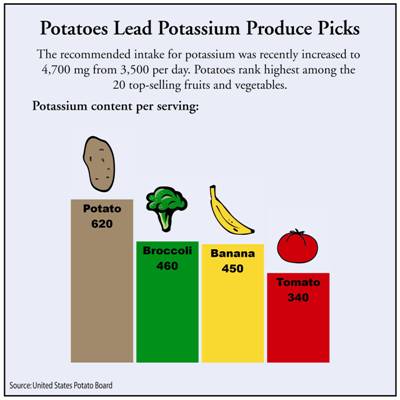
Too bad potatoes are too starchy for me ... but there
so many other vegies that I CAN eat (see below!)
Potassium helps prevent hair loss, brittle teeth and nails, sinusitis, runny nose, toxic waste in the body, plus stunted growth. Potassium is vital for cell production and cell growth as well as the maintenance of the body. "Potassium deficiency is a proven contributing cause of many illnesses including: arthritis, kidney stones, atrial fibrillation, adrenal insufficiency, celiac disease, high blood pressure, coronary artery disease, ulcerative colitis, hypothyroidism, irritable bowel syndrome, Alzheimer's disease, multiple sclerosis, myasthenia gravis, Crohn's disease, lupus, atherosclerosis, diabetes and stroke." Linda Page, ND, PhD Healthy Healing (www.healthyhealing.com). Parkinson's patients, people with systemic candida, IBS and cancer patients all need the revitalizing of potassium-rich foods to combat the evil happening within their bodies due to disease onset.

The human body can be likened to a flower or vegetable garden. Potassium is necessary for the health production of the substances that lend rigidity to plant stems and increase their resistance to the myriad of attacking diseases. Likewise, potassium is the element that changes seeds into plants and fuels the blooming of flowers. Without sufficient potassium, plants become stunted, and if the insufficiency continues, plants wither, turn yellow and die. In the same way, humans (and animals) also suffer from slow degeneration leading to cell death from potassium deficiency.

The healthy human body, balanced with vital potassium and other vitamins and minerals, can better withstand the attack of diseases and the aging process. People create their toxins by their eating and living habits. The properly nourished, healthy body gets a new bloodstream, a river of life continually circulating nutrients throughout the body, every 90 days. Every 11 months a set of billions of miraculous blood cells are replaced, and every 2 years the body rebuilds an entire new set of bones and hard tissues. The two great enemies of this recreation of the body are the toxic poisons from foods, air, water and soil that we ingest and the nutritional deficiencies created by an unhealthy diet. The truth of "we are what we eat" is exemplified by our dietary choices.


Potassium could be called the great detergent of arteries. It slows down hardening and clogging processes that cause harm to the whole cardiovascular system, and makes the flesh healthier and tenderer. There is little doubt, in animal or man, that the main function of potassium is to keep the tissues healthy, soft and pliable, as well as work to head off heart attacks and strokes. It can be said that potassium is to the soft tissues what calcium is to the hard structures. Potassium keeps the body young and supple, calcium keeps our frame strong and erect.

Body signs of potassium deficiency
  • bone and muscle aches and pains, especially lower back
  • the body feels heavy, tired and moving is an effort
  • dizziness and/or shooting pains when straightening up after leaning over
  • morning dull headaches upon arising and when stressed
  • dull, faded-looking hair that lacks sheen and luster
  • scalp itchiness and dryness; dandruff; premature hair thinning or balding
  • hair is unmanageable, mats, often looks straw-like, is sometimes dry and sometimes oily
  • eyes itch, feel sore and uncomfortable and appear bloodshot and watery
  • eyelids may be granulated with white matter
  • eyes tire easily and will not focus as they should
  • physical and mental tiredness with the slightest effort
  • loss of mental alertness and onset of confusion, making decisions difficult
  • memory failure, even familiar names and places are easily forgotten
  • easily impatient and irritable with family, friends, and people in general
  • nervousness, depression, in a mental fog, difficulty accomplishing things due to mental fatigue, even the slightest effort leaves exhaustion, upset and trembling
  • at times, hands and feet are chilled, even in warm weather, a clear sign of potassium deficiency
Much of this information comes from the insightful book Apple Cider Vinegar: Miracle Health System by Bragg and Bragg.

Tuesday, May 1, 2012

5 Stages of Candida

The Wellness Guru site analyzed candida in a way that few other wellness centers, sites or practitioners do. The Wellness Guru categorized candida in stages or categories based on how badly the yeast has affected the human body. This is a reason why when people with candida go online to find a diet to help them eliminate their problem they find diets that conflict with one another, e.g. one says don't eat meat and others say do; don't eat tomatoes, but other sites say eat them; many sites say don't eat peas or winter squash or potatoes while many others list those starchy items under vegetables to be eaten; and then the most conflicting one to me is the very few sites that say don't eat dairy or even yogurt because of the lactose (another form of sugar) and hormone content of milk and yet the vast majority of sites assert that yogurt is loaded with the good bacteria and will help build more good bacteria. Hmmm, in my case milk especially but all dairy immediately makes my twisted pinky joint swell and I get achy and my throat phlegmy. Maybe it's just me, but I think not. With all the conflicts over what is "good" for the body, and what isn't, no wonder people are confused.

Well, Wellness Guru has an eye-opening 5 category analysis of candida as a progressive disease. The analysis is certainly not comprehensive but it is thought-provoking. On their website after the 5 categories are analyzed, they also posted dietary recommendations and restrictions per each category. I would post those here also, but there are a few points in the listings I don't agree with and since I already posted a Strict Candida Diet once, I'm not going to post what I think is a more careful diet for each of the categories. Their diet recommendations, however, are certainly worth taking a look at. They might very much help someone decide when a food item should be assiduously avoided ... or added back in.

The 5 Categories of Candida (not comprehensive)

Category #1 - The individual is probably not experiencing any major discomforts or ailments but may once in a while not feel 100%. This person would benefit from a modified yeast free regime to prevent future problems and to fine tune the occasional imbalances; however, it is not essential.

Category #2 - The individual is beginning to experience small irritations and occasional discomforts such as digestive problems, PMS, food and environmental sensitivities and allergies, headaches, fatigue, sinus and bronchial problems, anxieties, canker sores in the mouth, thrush in the vagina or mouth, athlete’s foot, an itchy groin in men or women, vaginal discharge, mild skin irritations.

Category #3 - The individual is experiencing a number of problems on a weekly basis such as gastrointestinal problems, hormonal imbalances, food and environmental sensitivities and allergies, headaches, fatigue, sinus and bronchial problems, anxieties, occasional sleep disturbances, pain and discomfort in the joints and limbs, canker sores in the mouth, thrush in the vagina or mouth, athlete’s foot, an itchy groin in men or women, vaginal discharge, skin irritations or have had surgery on an organ.

Category #4 - The individual may be suffering sleep disorders including difficulty going to sleep and/or waking up during the night, depressions, constant fatigue, pain and discomfort in the joints and limbs, temperature fluctuations, eye-sight problems, chronic gastrointestinal problems such as constant constipation, presence of cysts, endometriosis, irritable bowel syndrome, colitis, ulcers, kidney stones, serious skin conditions, migraine headaches, nightmares, elevated sugar or cholesterol problems, high or low blood pressure, arthritis and rheumatism.

Category #5 - the individual has been diagnosed with a serious heart condition, HIV, AIDS, cancer, MS, Parkinson’s, or any other life threatening condition.

In my wide readings I found one other site that also categorized candida in 5 stages. I don't recall much about the stages except that stage #4 was when the candida yeast/mold had compromised a few or many organs in the body and they were starting to badly malfunction or shut down. Stage #3 was pretty extreme too, something like extreme insomnia, restlessness, racing heart and other problems that I had experienced at disease onset. I figure that when I was at my absolute worst and almost completely disfunctional that I probably was in stage #4 in this other candida classification heirarchy. I was eating only vegetables and forcing myself to walk in the freezing weather every day (when I could) and oh so slowly I started to get better. Thank goodness too, because I didn't diagnosis myself for many more months or come across that staging until even after that. Stage #5 on that web page was pretty scary, death. When the yeast/mold totally engulfs the organs, they can't function. For the Wellness Guru the stage #6 unspoken category would also be death. Very uncomfortable to think about.

Saturday, April 7, 2012

Tourette's Syndrome and the Candida Diet

A friend has been struggling with her son's sudden increase in tic symptoms and other side effects of Tourette's Syndrome. She's been to doctors, therapists, acupuncturists, alternative med places and is currently doing hair analysis to find help for her teenage son. Medical personel just don't seem to know much about Tourette's and she's getting more and more frustrated, plus getting extremely tired of educating people on the problem that she is seeking a solution for. Although we've been friends for years, she didn't know I've had candida for the past 2 1/2 years and I didn't know that her son's had Tourette's for 2 years ... we've kept our skeletons well hidden. But because of a posting on the health problems related to soy products, we opened the closet doors and the bones fell out.

Research on Tourette's Disease and Outcome

I didn't know hardly anything about Tourette's previously so spent a few hours looking at various sights and how the disease could be treated holistically. Well, not really to my surprise, Tourette's Syndrome (TS) is thought by some doctors to be a result of a yeast overgrowth, much like candida, and should be treated with the powerful and very body-compromising statin, Nystatin, also the principle drug for treating candida. This didn't really surprise me as I've discovered that most, perhaps all, autoimmune diseases are the result of bad bacteria in the body, just different kinds of bacteria in different locations. TS, according to many other web sites is also very related to the neurological disease Parkinson's (PD), which my dad has. The basal ganglia in the brain is the control center for most of the body and where both TS and PD originate in symptom. And then other but fewer sites relate TS to epilepsy based on where the tics are originating - in the brain - but then the neurological tremors are originating in the brain from PD people too. Does epilepsy also originate within the basal ganglia? It wouldn't surprise me.

As for nutrition, TS results in vitamin B deficiencies, magnesium (and perhaps potassium) deficiency, as well as abnormalities in the neurotransmitters dopamin and serotonin and norepinephrine (similar to PD). Therefore, B vitamins are essential for helping to rebuild the nerves, foods promoting the increase of the electrolytes magnesium and potassium are necessary, and then of course amino acids - the building blocks for neurotransmitters in the brains - are a must.

Looking for a Diet for Tourette's

Anyway, my friend is looking for a diet or at least diet ideas to ease her son's increasing discomfort. I was able to gather three dietary suggestions from the many, many web sites I looked through - over 30 sites! The suggestions were to follow a modified Atkin's diet, follow a ketogenic diet (needs medical supervision), and the implied suggestion of following a candida diet. By implied I mean that the site suggested that TS was the outcome of yeast overgrowth (candida) and to treat with Nystatin. Well, no one can hope to be successful in treating yeast overgrowth if some effort with diet isn't made, and for that reason, an implied diet could be said to be suggested. However, I want to add that if the site had explicitly said to follow a candida diet, the reader would still be very much in the dark as there are so many candida diets on the web and they confusingly contradict each other as to what is beneficial. If I followed 95% of those diets, I would revert to my former very sick self. I've come to realize that the majority of those candida diets on the web are for the mildest cases of candida, not the kind that chokes the body with yeast (mold) to the point that the organs are suffocated and are slowly shut down.

Since three diet ideas have been suggested, finding out how to build a diet for Tourette's is the next task. For starters, I recommended taking a look at Parkinson's Disease and the Candida Diet and then adding to the diet from there.

Other off-the-top-of-my-head suggestions are:

Cleaned walnuts and almonds (powerful Omega-3 and calcium, respectively) - avoid other nuts for now, esp the very moldy peanuts and pistachios; cleaning gets rid of the mold and dust causing allergens. If no dehydrator, then just soak the walnuts 1 hour before eating and almonds 8 hours, pour off the polluted water and the nuts will be much cleaner!

Flaxseed oil (2-3 tsp oil is better than 2 capsules) - take in the a.m. with 8 oz of water upon waking. First drink the water then sip the oil. The oil will lubricate and actually fight against the bad bacteria as it descends down the GI track and into the stomach. Wait at least 15 min before eating, 30 min is best. (This is based on naturopath's belief that 70+% of diseases start in the GI track.)

Evening primrose oil capsule - 1300mg - take one with a tall glass of water before going to bed. This fights inflammation which is often worse at night.

Hawaiian spirulina - take 1-2 teaspoons in a glass of water between meals, once or twice a day. This has very high vit A, B12, magnesium and other trace minerals. It's also a complete protein - amount depends on the product.

Bee pollen (granules) - must be organic. This is extremely high in vitamin Bs. I'm a little hesitant to take it myself b/c it has 2g sugar and my candida-infested system can't process sugars. My cat, on the other hand, has been simulaneously sick with me (am sure it's our heavily chlorinated water). She's had some severe neurological symptoms - obvious neuropathies - and once I started pumping bee pollen and other herbs in her system, she drastically improved! One caution of this - this is a bee product and some people have severe reactions, so before taking the label suggested amount of 1 teaspoon, a person should put a few granules under the tongue and wait; if no reaction, repeat with a larger amount later; repeat again with a larger amount, and then the person should be good to go. The person can then build up to the suggested 1 teaspoon a day.

Coconut oil, organic and cold-pressed - Can be taken much like flaxseed oil as it has the same bad bacteria fighting properties while boosting the system. This is the product that helped me overcome hypoglycemia, a problem for some people with candida. At that time, I was taking as much as 6 tablespoons a day. That is 600 calories in oil ... but I needed it!

Hemp seed - 4 tablespoons a day equals a complete protein! This is amazing stuff b/c it contains all of the essential proteins the body needs - very good, especially for people with Parkinson's and Tourette's because of the complete amino acids which help make serotonin and dopamine. Caution - some people develop allergies to this b/c of overdoing it, so this cannot be over-consumed and probably should be eaten in a rotation diet, that is, not every day. [Spirulina also is a complete protein but supposedly can be taken every day!]

Enzymes for digestion - take one enzyme every time food is put in the mouth, for meals and for even a candy or cracker snack. When the body is so heavily taxed and riddled with symptoms, it has difficulty producing all the enzymes needed to make it function properly or digest food properly, so enzymes take the stress off the liver, pancreas and adrenals which give them more space to recover and heal.

Tuesday, April 3, 2012

3 Guru Role Models

In regard to my candida, there are three people who have been guru models in shaping my decisions about how eagerly to pursue full recovery. One is my younger bro (Bro), another is a church member with Multiple Sclerosis (JB), and the last is a close family friend with Rheumatoid Arthritis (SC).

BRO

Bro got very sick many years ago in his early 20s. I wasn't around at the time so didn't see his bouts with anaphylactic shock when eating peppers of any kind, difficulties breathing when eating other things, difficulty with reflux and I really have no idea of his problems. He was having so many severe reactions to food that of course he would eliminate from his diet all those foods he had eaten in the meal. Pretty soon, he had only about a list of 20 items: apples, oats, a few green leafies and not much else. He had even eliminated garlic and onions because they were in a meal he had a severe reaction to. He was so sick and could hardly perform his job, so took some time off and went to a lifestyle center in Battle Creek, MI that unfortunately is no longer open, and got amazing help.

His body was choked with mercury and toxins because he couldn't sweat, and he went through intensive regimens of therapies throughout the day and even wore charcoal packs around his waist at night to rid his body of pollutants trapped in the skin, intestines, lymph system, everywhere. The kitchen workers cooked special meals for him - fresh ground grains that had no time to mold (wheat was included without reaction) and made many dishes using specially cleaned cutting boards and kitchen equipment because of his huge issues with cross-contamination. He came out of that lifestyle center two weeks later able to eat quite a lot! The docs even convinced him to eat a small slice of pepper, which instead of giving him anaphylactic shock only gave him a mild skin rash. No sugar of any kind, freshly ground grains, tons of fresh fruits and even more tons of fresh vegies, a careful selection of herbs and spices, and only specific oils were the backbone of his no-deviation vegan diet. What a comeback!

Maintaining such a strict diet would keep a person in the kitchen all day, so he's back to having anaphylactic shock with peppers, reflux and other problems ... but no where nearly as bad as before. After 15 years he started eating pure chocolate (absolutely without dairy contaminants), imagine the cravings, and other sweets. But he's been on a gluten-free vegan diet (except last 3-4 years he added some free-range eggs) that is carefully regimented to avoid all those hidden food allergens other people tolerate quite well but which crash his system. BTW, he hasn't been able to eat in a restaurant for most of those 20 years, so when I go home, I try to plan "exotic" meals that he just doesn't have time to fix. I blend herbs and spices I know he can have to create recipes I've experienced in foreign countries or seen online.

So when I got sick almost three years ago, adjusting to a carefully monitored diet wasn't that difficult. We packed lunches for Bro's working days, and carry snack or energy foods with us when going somewhere. So for me to pack and carry a lunch is kind of normal. Bro loves going into restaurants with people (provided there's not a lot of pepper cooking) and he "eats with his eyes", then goes home and tries to replicate. Over the years he role modeled "eating with his eyes" and since I've gotten sick too, my taste buds and senses to mixing foods with herbs and spices has gotten much keener. Bro is absolutely INCREDIBLE! He doesn't whine about his food limitations and cramped lifestyle because of it. He works with it, and leads a pretty active life. He is so AMAZING, and he's one of my biggest role models in life!!!

JB

JB was diagnosed with Multiple Sclerosis when she was about 60 years old. I also wasn't around at the time but heard that she was fighting for her health and sanity. Before she could get treatment, help and maybe even diagnosis, the disease blinded her in one eye and really compromised one side of her body. Her MRI of her spinal cord showed heavy plaque and prognosis was to be soon confined in a wheelchair.

Our Seventh-day Adventist Church teaches a lifestyle that we often refer to as "the health message". Longevity reports come out of Loma Linda, California attesting to this healthy lifestyle. Therefore, believing that nutrition and healing go hand-in-hand, she decided to go to the Black Hills Health and Education Center located in South Dakota, and for some reason, she and her husband ended up staying and working there for the next six years.

At first her system was so run-down that she told me years later, she only could eat lightly boiled spinach to nourish her body as raw vegies were just too hard for her body to deal with. We didn't hear much from she or her husband for about six years when they moved back and again were attending our church. She was ecstatic! Her most recent MRI had shown absolutely no plaque anywhere on the spinal cord, and she had been symptom free for quite a while. They attended our church regularly, joining us in our vegetarian potlucks that did have cheese and other dairy, wheat, unknown cooking oils and sugars. I'm not sure if she maintained the gluten-free, vegan lifestyle of the Black Hills Center at home but after eight months she was experiencing the by-now familiar symptoms of ... Multiple Sclerosis.

She went back to her strict diet and the symptoms were well managed. She had heard that once a person has an auto-immune disease that it is for life. Hers evidently is. So now we're both watching how my health problems are going to ultimately work out. Will I be able to lick the candida problem? Or has it already rewritten my DNA and I will fight this for life? I'm still hoping for the complete cure ... and no, I don't plan to go back to my former diet, not that I wouldn't like to indulge upon occasion in some foods not permitted at the moment. But if I ever recover, knowing what she taught me through experience will be big incentive to keep on enjoying the great foods I'm eating now!

BTW, I have a colleague, about age 50, who had systemic candida so badly as a child that she hardly had an elementary school education for spending so much time at home sick or in the hospital. In her mid-twenties she did the candida diet - months and months of it. She doesn't have much recall of what she did but she does remember having to slug down 4 ounces of some kind of nasty oil at one time in order to coat her GI track to fight the bad bacteria. She's been fine ever since .... so there is hope of full recovery! I'm still clinging to that hope.

SC

The last person who is my role model is very unfortunate. He was diagnosed with Rheumatoid Arthritis about 25 years ago, and has been in such pain from serious connective tissues damage that it is evident in the way he walks, from mangled ears and droopy eyes, and from the twisting of his fingers which now are almost perpendicular to their original joints. For a few years he staunchly refused to take any meds, although he occasionally broke down and took some NSAIDS, but finally the pain was too great, and to stay out of a wheelchair he started steroids. He now heavily relies on steroids, refuses any kind of verbal or other help - claiming he's as tough as he always was - disallows that diet can help, and eats out every day and then goes home to eat ice cream, "a treat" for his old age. He's now in his early 80s.

Every once in a while he and his wife (with brittle diabetes) will stop in and eat with us, gorging themselves silly. We're so happy to give them a good meal because they obviously have little other happiness in their lives from their few moments at the same restaurant every day before they go back to their lonely house with overly loud TV.

One day we planned a massive vegetable quiche meal with tons of vegies on the side. I did the cooking - gluten-free, vegan except for the eggs, lots of greens for toxin removal. I wanted them to feel good when they went home ... and wow did they dive into that food! They ate so much, and then dad and SC started talking about the ice cream at home in SC's freezer and how that was his treat almost every day. I was a bit horrified as I know the effects of dairy plus sugar (the devil's mixture) on Rheumatoid Arthritis, or for anyone's system for that matter. Well, mom piped up that we had some nutty buddy chocolate cones in the basement and went down and brought one up for everyone except Bro and myself.

And then I watched the transformation, and it was horrible! SC became louder, perhaps it could be said aggressively so. Ah, speech changes! Behavior changes! His eyes became even more inflamed and very watery. He was constantly blinking them which reminded me of when mine were so inflamed to the point of being dry-painful. I looked over at dad enjoying his cone and his hands were trembling more from his Parkinson's. And, rude though I might appear, I just couldn't help myself. I started asking SC how he felt - a question he hates! I asked him if his eyes were stinging. Well, a bit. I wanted to know if he felt better before he ate that ice cream. He admitted to feeling better. Then I asked him if he thought the ice cream was making him feel badly, and if he always felt this way after he ate his ice cream every day. Well, hem, haw, well, yeah, I guess it does bother me a bit.

I didn't press it, but I wanted mom to see the results of dairy on the system. Bro has an immediate reaction of what feels like sharp nails piercing his stomach and intestines. From milk, I've had mild but gross reflux most of my life and just refused to drink it as a child, much to her frustration because at the time, milk was "known", and oh so falsely advertised, to be healthy. Most people have subtle reactions but obvious if a person knows how to spot them. Anyway, I asked mom afterwards, "WHY did you give SC ice cream when you know that people with Rheumatoid Arthritis shouldn't have it?!" And then I more clearly pointed out the speech changes, behavior changes, the obvious inflammation which she hadn't noticed at all till I pointed the reactions out ... and dad's out.

Well, I know that SC will probably enjoy ice cream and probably every day until he dies. But success was made that day because mom no longer keeps a stock of ice cream cones in the freezer for dad to prevent him from losing weight.
SC is my sad guru. In his miserable old age he's just looking for something to make part of his day better, but even though now he's aware that "that something" is toxic to his system, it's his crutch. Everybody has crutches. Me too, but I’m trying to be like my brother who has learned to “eat with his eyes” and to think of my friend JB who is eating to maintain long-term health while leading an active life. And then when I think of my brother eating oh-so-strictly for over 15 years and JB who must in order to have that pain-free life, the one to two years more of super strict eating seem rather insignificant.
Thursday, February 16, 2012

Ionic Detox Foot Bath

My parents have had an Ionic Detox Foot Bath for 2-3 years now. They try to give themselves a detox foot bath at least once a week, and on the days that they do one (40 minutes) my mom says she feels lighter in the feet and happier in the mood. Dad isn't quite so analytic but his Parkinson's tremors do seem to be lighter on the day and even the following day that he takes a foot bath. The only problem with giving him a foot bath is that he has to get up quite early in the morning before he starts taking his schedules medicines for the day in order that the foot bath won't detox/remove the necessary drugs from his system. He needs those drugs, sad to say. And after taking a foot bath, he's quite exhausted and sleeps for about 2 hours, but when he wakes up, he's more alert than usual.

I've taken the foot baths too when I'm at home, and also feel better - like my mom, lighter in the foot but in general more alert. It's rather disgusting the amount of detoxing that comes from the feet. To do the detox, of course you need the ionic detoxer, 1/2 teaspoon of sea salt to activate the tub of warm water, an electrolyte drink (because of candida I can't do the frequently used drinks so fresh squeeze a lemon in a quart of water) to drink throughout the detox in order to keep electrolytes in the body and to stay properly hydrated, a 40-minutes timer, and a book to read! More specific directions are in the following picture:


The ionic detoxer is to be used a maximum of 45 minutes as it not only pulls toxins out of the body but much needed minerals and electrolytes. 45 minutes max!


This last picture showed a lot of black, brown and orange particles which, according to the printout, suggest that I am detoxifying from my liver (heavily) and from my joints. There's also a bit of white foam although I have to say it's rather minimal compared to last summer! The white foam suggests detoxing from my lymphatic system. When the water is poured down the toilet (it's toxic so not to be poured into a sink), white particles or red flecks or black flecks can be seen which reflect detoxing from other body areas - refer to chart below for more clarity.

Sunday, February 5, 2012

Turmeric Asparagus Soup

Asparagus is something I eat a lot of! Asparagus is full of antioxidants, is great as a blood cleanser (awesome for people with candida and cancer) and has protein and other health factors making it highly recommended for people with Parkinson's. It's also great for bladder and urinary infections, as a detoxifier, and has anti-viral and anti-fungal agents. Yup! I eat a lot of asparagus!

My favorite way to eat it is in soups. I make a big pot of soup loaded with asparagus, zucchini, a green leafy and of course onions and garlic. My favorite seasonings in the soups vary but pretty much standard are turmeric, thyme or basil (sometimes both), and sea salt. Cumin, marjoram, parsley, dill, lemon grass, and coriander might even find their way into the soup pot, but, uh, not all together!

This particular asparagus soup got thickened with either the leftover broth from a crockpot of garbanzo beans or part of the soup was whizzed in the blender to make it look rich and creamy. The yellow cheesy look comes from the combined thickness and the turmeric. The complementary grain of the evening was brown rice with chestnuts and garlic cloves cooked in.


This particular asparagus soup had less asparagus and more other vegies cooked in. I suspect in the bowl was chopped up broccoli too. It's also thick but the thickness from this batch comes from a spoonful of brown rice mixed into the soup and cooked as a one-dish meal. More turmeric was sprinkled on top to give it some extra zest, which black pepper would have served nicely for the non-candida person. Soup was served with a few tapioca-coconut oil crackers found at the International Food Mart in Itaewon, Seoul! Nice treat as all four ingredients I can have: tapioca starch (just a few but it is non-glutinous), coconut oil, sea salt, garlic.


And yet another asparagus zucchini version of the soup - with an island of Garbanzo Bean "Mashed Potatoes". Oh, yum. These flavors are very complementary and the meal is very filling. And no, my purrrfect cat is NOT interested in people food; she was just curious enough to want a smell.

Thursday, January 19, 2012

Soaking and Washing Nuts

Soaking toxins and mold off of nuts before eating them is absolutely important for the person with candida (even cancer for that matter as the liver in both groups is compromised and too inundated with bacteria and cell waste. I've read that the liver cleanses well over a liter/quart a minute! That puts a lot of cleansing demand even on the healthy liver!!!)

Since I've been following the soak and wash method for all my nuts, wow, I have been able to enjoy them again [principally almonds and walnuts, brazil nuts sometimes, and rarely for a treat, cashews]. So I bought a dehydrator for my family back in the States so my dad and my bro, who has nearly identical problems as myself, can also enjoy the clean, crunchy taste. Hurrah! After dehydrating the first batch, my dad started really chowing down on nuts [they are crunchy clean but break up much easier against his old teeth and dentures - which he loves - but the flavor is intensified and clean, which is wildly "nuts" about! So, he munches on them now instead of other sweet "goodies" and feels oh, so much better! I think the high protein in nuts has really helped him manage his Parkinson's tremors better; and btw, he was the first to say that :)

So, here's the method. The nuts first have to be washed in water until the water is colorless or debrisless. Walnuts are the nastiest nuts to wash, and will take several full immersions and rinses (10-15 times) to get clean. Almonds will color the water some but usually submerging and rinsing them at least 5 times will be enough. By the way, the almonds pictured below are the cleanest almonds I've ever washed. Usually the water is more discolored, sometimes murky even - and to think I used to make such huge demands on my liver by eating moldy, pesticide-packed nuts! [Also, because I want to eat my nuts with the highest enzyme count, I don't wash my nuts in water that is over 118°F - less is better - and the same applies for dehydrating them. I dehydrate at 115°F for usually 2 days, or until completely dry.]


The suggested soak time is as follows. The principal of soaking is to neutralize enzyme inhibitors in the skin of the nuts, particularly true of harder nuts like almonds, and to neutralize the phytic acid, which inhibits the absorption of minerals. Soaking also breaks down gluten [I want to study more about this] and facilitates the body in absorbing the vitamins. The harder the nut, the longer the soak time, and so here are some suggested soak times. For more info, read the Raw Food Living article although this article focuses on soaking nuts for sprouting, not eating immediately or dehydrating.


almonds ........... 8 - 24 hours
brazil nuts ....... 1 - 3 hours
cashews ........... 2 - 3 hours
flax seeds ........ 30 min - 6 hours
pumpkin seeds ..... 4 - 6 hours
sunflower seeds ... 4 - 6 hours
walnuts ........... 2 - 4 hours

Oversoaking, especially the white skinned nuts like cashews, macadamias, Brazil nuts, walnuts, make the nuts mushy and gross. Also, pour off the polluted soak water if making food with the soaked nuts or seeds - yes, the water is tasty, esp almond water, but it's loaded with nasty toxins, so throw it out!


After soaking the nuts for the proper time, pour off the water and rinse the nuts until the water again comes off colorless. [Using the same process for beans to be cooked in a slow-cooker equally applies.] Then, put the nuts to dry on drying racks in a dehydrator. Dehydrating will take about 2 days on 115°F, but of course the amount of time depends on how many dryer racks are filled. Once dried, store nuts in fridge to prevent mold reappearing and to maintain their now fresh, crunchiness! If not oversoaking or drying at high temperatures, you should have nuts rich in their respective Omegas 3 - 6 - 9 and full of vitamins and minerals that the body can more easily absorb.

Here's a pretty good guide to help with knowing how long to soak the specific nuts:

Tuesday, January 17, 2012

Nuts and the Importance of Omegas 3 & 6

Nuts have a lot of natural rich oils that are much better for the body than the "processed" oils marketed as being heart-friendly. Ah the marketing scams to make a buck, but at the expense of the populace who cannot be informed as research has been manipulated. Nuts in their pure state are very healthy and healing for the body. The pesticides and molds on the nuts are not healthy, and when people have certain diseases nuts could be very detrimental, but for the healthy individual nuts provide the natural oils the body needs and can fully utilize.

Nuts, however, became a big problem for me when I got sick. They made my mouth swell, caused strange pains in the body and sometimes made me feel ill until they had gone through me ... undigested. I quit eating them for several months but then began to worry about my low oil intake which I figured was causing my very, very dry throat.

The body needs a balanced ratio of essential fatty acids, Omega 3 and Omega 6, as the body cannot produce these two so having proper food sources is essential. The ideal ratio of Omega 6 to Omega 3 is 2:1 but in today's fast food, highly processed food world the average Joe Blow gets an out-of-whack ratio of 15:1. Just knowing I needed more oil in my diet, I started sipping olive oil. [For several months after disease onset I just kept getting tighter and tighter on my diet to control the symptoms and that meant using virtually no oils because there's so much media rap against oils and I was trying to be "healthy".] Unfortunately, it only helped a bit although olive oil is Omega 6. I hadn't started eating tons and tons of Omega 9-rich almonds and avocados yet but they as a whole food were more helpful.

Still, I needed Omega 3s and 6s. At some point I read about evening primrose oil (Omega 6) so bought some. I tried two gels a day - one in the a.m. and again in the p.m. but it was too much. [My dad with Parkinson's also came to the same conclusion.] But taking it once a day just before going to bed really really helped the eye inflammation that got worse in the hours after the sun set. Flax oil and grapeseed oil are also Omega 6 [ergh! Internet sites give conflicting info on the oils and which Omega each oil corresponds with!!! Sourcing the info correctly is important but I'm honestly confused on which Omega matches which oil - more research necessary for me!] I tried the grapeseed and flax oils, with good results, but much later.

Anyway, the following information is taken from quite a well condensed list of oils and their corresponding Omegas [there's discrepancies on this site with other sites so I'm not sure about the 100% accuracy of the info.]

_____________________________________________________________________________

Health Benefits of Omega-3 Fatty Acid

Research on the health benefits of omega-3 fatty acid have shown that it may be useful for supporting the following conditions.
Asthma
Diabetes
Arthritis
Osteoporosis
Some Cancers
Skin Disorders
High Cholesterol
High Blood Pressure
Attention Disorders
Depressive Disorders
Macular Degeneration
Digestive Difficulties
(plus many more, including autoimmune diseases)

Omega-3 fatty acids are found naturally in:
Grains ** (avoid glutenous grains: wheat, oats, rye, barley, triticale, etc; eat other grains in small amounts as they are starchy)
Spirulina ***
Brazil Nuts ** (they should be clean)
Hempseed Oil ** (how processed?)
Mustard Seeds ?
Pumpkin Seeds ** (soak them first)
Chia Seed Oil ***
Wheat Germ Oil X (avoid all wheat/gluten)
Canola Oil (Rapeseed) X (depends on the source but many GMO)
Green Leafy Vegetables ***
Raw Walnuts & Walnut Oil ** (clean the nuts; how processed is the oil?)
Flaxseeds or Flaxseed Oil *** (how processed is the oil?)

Omega-6 fatty acids are also found naturally in:
Olive Oil *** (hot processed is the oil?)
Wheatgerm X (avoid all wheat/gluten)
Grapeseeds ?
Pistachios X (very moldy, like peanuts!)
Sesame Oil X (very inflammatory)
Hempseed Oil ** (how processed is the oil?)
Pumpkin Seeds *** (soak them first)
Chia Seed Oil ***
Safflower Oil X (highly processed during extraction)
Sunflower Oil X (highly processed during extraction)
Cottonseed Oil X (inflammatory)
Raw Nuts & Seeds ** (cleaned almonds, walnuts, some seeds listed above, but depends on the individual and the cleanliness of the nuts)

Omega-9 fatty acids are also found naturally in:
Avocados ** (somewhat glycemic fruit, so some react; rich in oils)
Pecans X
Cashews X (moldy ... although I occasionally soak some for a sauce)
Almonds *** (some react; clean them thoroughly first)
Hazelnuts ? (many sites say 'no')
Pistachios X (very moldly, like peanuts)
Macadamia Nuts ? (can be moldy; many sites say 'no')
Chia Seed Oil ***
Olives & Olive Oil ** (only fresh olives - canned have additives and a processed salty brine that usually has vinegar)


I do NOT advocate taking all of these Omega 3, 6 and 9 food sources if on a strict candida diet, so I've coded each of the above based on my own experiences and research about what is healthful and what isn't.
*** - Excellent
** - Good
? - Not Sure
X - avoid

An interesting site that discusses best and good oils to eat with explanations about their value (although not which Omega they are classed in) is Oils in Seeds.

Wednesday, December 14, 2011

Leftover "Bibimbap"

Bibimbap [here's a link to a wide variety of bibimbap in Korea] is a mixed rice and vegies meal much loved by the Koreans ... and much loved by myself. However, since I'm ultra sensitive to the seasonings and sauces rich in sesame seed oil, fermented bean paste, hot pepper sauce and vinegar and of course sensitive to the many flavorings in the 영양분, literally translated "nutrition powder" but has all kinds of hidden secrets disguised, I absolutely can't eat Korean food ... or is it coincidence, almost no food that contains citric acid and/or MSG, and that pretty much includes everything (in both Korea and the US) processed on supermarket shelves and packaged in the freezers.

And btw, I've had many discussions with Koreans about what's in the 영양분 and say there must be citric acid and/or MSG in it because I hugely react to both and I hugely react to the seasoning salt. Koreans get so offended when I suggest that their "nutrition powder" - how could it be anything but good "nutrition"? - be non-healthful and that it might contain MSG, especially when there was a craze across Korea a few short years ago following a news broadcast on the dangers of MSG and then with everyone going hypo about it. Even for a time, restaurants to ease their clienteles' minds posted in their windows "No MSG served here". Even though I've tried to tell the Koreans in my discussions that I've located a list of no less than 25 alternative named additives that are simply put just monosodium glutamate with a disguised name, hidden by US marketing strategies, but, there's no reasoning when people have a cherished belief system and Koreans staunchly stick with theirs that "there is NO MSG in their 'nutrition powder'".

For an easy referencing list of disguised MSG additives, I've found a well-researched site on the known-to-be toxic additive. Debbie Angelsey has done intensive research on MSG as her 19-year-old son started having strange and violent reactions to foods. Here's her list link of alternative names for MSG, but her whole web site it dedicated to research on the toxin. Not surprisingly and according to her research (my research strongly points to the same conclusions) MSG is an excitatory neurotransmitter that can affect people with ADD/ADHD, migraine headaches, Parkinson's, fibromyalgia, autism, brain fog and many others. I would even dare to include the gamut of autoimmune diseases as being radically affected by the excitatory neurotransmitter.

Anyway, since I really like bibimbap and it's such an easy meal to eat and easy to put together - just add vegies to rice and dump a sauce on top - making a vegan, candida bibimbap is "easy as pie" ... or should I saw "easy as bibimbap"!


My ingredients are black rice (which I've found I don't digest well at all), chopped celery with leaves, leftover garbanzo bean "mashed potatoes" (hm, I'll have to post a recipe for that later. It's very tasty!) and whole frozen cranberries. Basically just about any vegie can be added to a base of rice and complementary sauce to make the stir-together dish sticky and well flavored.

Monday, November 7, 2011

Parkinson's Disease and the Candida Diet

Last summer I went home for 5 weeks of R&R, and because of this candida problem, my mom can't cook for me so I kicked her out of the kitchen and told her to take a 5 week rest. She needs it because she's always trying to cook special for my younger brother who has major food allergies and we're convinced, candida too, and then of course juggle some of my dad's Parkison's disease needs.

Anyway, while I was home, I basically put everyone on my diet, of course cooking one or two dishes every meal I couldn't have because my foods must be extremely low on the glycemic count. However, almost everything I prepared was garden-fresh or whole foods, not processed foods. They ate lots of greens filled with toxin-removing chlorophyll, energy-rich beans, a wide variety of gluten-free grains and seeds, very little corn, almost no processed foods but a rare treat of gluten-free spaghetti was ok, and tons and tons of almonds and walnuts [pecans for my bro because of his allergies to walnuts].

The amazing happened! After 2 1/2 weeks I noticed that my dad's arms and shoulders weren't shaking as he was walking around the house! I commented to my mom and she said dad had been commenting to her on that for the past 3-4 days! My dad was even starting to smile again and the twinkle that had gotten wiped out of his eyes about 5+ years ago was coming back! He was cracking jokes, and reciting poems he learned in grade school [never did that before, but with what a clear memory!] Such an amazing change!

Wow, wow, wow, wow! I had read in books that people with Parkinson's should be dairy-free and gluten-free, and the results was amazing! Mom and dad were already dairy-free, but they ate gluten. They also ate out quite a bit, and my dad often commented that he didn't feel good when eating out, especially at Asian restaurants [vinegar? soy sauce? MSG? fermented things and of course MSG affect autoimmune patients].

Since I had started the cooking, clean nuts were always on the table and for snacking, and dad ate a lot of them - great, because people with Parkinson's need the protein and the natural oils. Also, dad was eating regularly. People with Parkinson's have an imbalance of serotonin and dopamine, and one of those hormones tells the person when to eat, but this doesn't function properly with Parkinson's so blood sugars are falling and the person feels badly but still doesn't recognize that he/she is hungry. Because of my candida and my food is so low caloria, I need to eat 3 times a day. So 3 times a day, I would call dad to come eat with me. He didn't want to but I like presentation and he liked being spoiled at the table, so he would come, and eat, and sometimes he would eat a lot! And afterwards, he would feel be smiling and seem much more relaxed.

Also, because Parkinson's people need protein to replace the energy being lost with their incessant tremors, nuts, spirulina, beans, hemp seed, are really recommended to boost their energy levels. We had beans almost every day - beans that I couldn't have because of their glycemic level but beans nevertheless are necessary for dad. Fava beans and asparagus, I've read somewhere, actually are very good for boosting dopamine naturally. We served a lot of them!

Obviously food is affecting people positively or negatively with Parkinson's. From my readings and from my 5 weeks of cooking for my family (and loving to cook for my dad), the basic candida diet with of course higher allowances for glycemic counts in food is a very good diet for people with Parkinson's.

So, my suggestions for Parkinsons' patients are:

(0) Be vegetarian
(1) Be dairy-free
(2) Be gluten-free
(3) Use little soy and corn (best to be soy and corn-free -- both are high GMO foods)
(4) Eat lots of greens for their chlorphyll effect
(5) Eat lots of protein-rich almonds [also high in calcium and low in carbs] and walnuts - these are the cleaner nuts, but the nuts need to be washed free of dust, mold and as many toxins as possible
(6) Eat 3 balanced meals a day
(7) Eliminate processed foods and sugars (honey, maple syrup and blackstrap molasses are OK in moderation; they do have some nutritional value; agave nectar is extremely high in fructose, higher even than corn syrup, and should be absolutely avoided)
(8) Skip the sugary or fermented condiments - use fresh squeezed lemon juice instead of vinegar; make seed dressings instead of mayonnaise or mustard; simplify your taste buds and appreciate the rich flavors of fresh fruits and vegies
(9) Avoid fried foods and "harmful" oils - better oils are olive, coconut, flax, and perhaps grapeseed
(10) Indulge in other vegetarian high-protein foods like hemp seeds (4 tablespoon for complete protein), spirulina (1 tablespoon for a complete protein), chlorella, and others.

Wednesday, November 2, 2011

Barlean's Olive Leaf Complex

Ugh, again. I've been having some neuropathies lately in my left foot especially but also left hand again, and they are directly related to food. I just couldn't figure out why until I also started to have pain, like before, in the knotty groin veins that are rubbery hard and arteriosclerotic. When the pain went into the second day, I jumped onto the internet to look up the symptoms of arterioslerosis and how diet can be used to control it. While I do have the symptoms, the causes on several pages are unanimously from a high-fat diet, resulting in sticky blood cells. Well, my diet is very low fat so as not to feed the candida ... but then it occured to me that maybe I just wasn't getting enough fat, and that would also be why my vitamin A is low because to utilize vitamin A, fat is essential.

So, I jumped up and looked through my cupboards for something that would help the low fat problem but wouldn't compromise my strict candida diet. I found a bottle of Barlean's Olive Leaf Complex, which I'd been meaning to try for some time. One tablespoon is the recommended daily allowance so I drank one tablespoon. Almost instantly I felt better and the neuropathies died down a bit while the pain in the veins eased! The next day I took it again with the same results! I was so impressed that I wanted to share my good fortune with my cat, Aulait, who's had nutritional problems since I got her at 4 months of age.

I mixed up her barley green solution that I've been giving her quite regularly since she got sick shortly after I got sick; she was diagnosed with thrombocytopenia, and I had to take her into the vet every 4 months (3 times) because she would relapse. However, once I started the barley green solution, I've never had to take her back to the vet even though he said the problem would be for life! That said, the last couple of months, the muscles on her back have been getting more and more crawly (obviously a nutritional problem b/c it is certainly not thrombocytopenia) and it's pained me to see that and not know what to do. BTW, I've had to hide all plastic bags and vinyl in my house since I got her because she tries to eat them ... so maybe she's missing some natural oils too! So, I loaded up her barley green syringe with some Barlean's Olive Leaf Complex and slowly shot it into her mouth. She was not too impressed and clamped her mouth down at one point, but I got it in and then finished up with the better tasting plain barley green water. Amazingly, she seemed more relaxed afterwards! The next night I gave her another tiny bit (maybe 1/8 teaspoon) with barley green and she has been definitely better since! If only I would have known earlier!


2 1/2 years ago, both my cats and I got sick at about the same time. Whenever I drank the water in my apartment, my cheeks would tingle, among other strange things. I had been starting to get my energy and weight back from Grave's Disease (hyperthyroidism) and at first thought I was in the 40% who would relapse within two years of getting off the meds, but those symptoms were just plain WEIRD and didn't match my previous symptoms! Aulait developed very red eyes and seemed to get stiff - not good, since she was just a young 3-year-old at that time. Since I got her at 4 months, she has been a picky eater and has just refused to eat many cat foods even though she is hungry. While I've never figured out what dry ingredient(s) she's refusing, with wet cat food, she detests foods that have filler meats (her most hated is Fancy Feast, which looks like nothing but filler, so smart cat!) Cafe, on the other hand, had the cat-killer disease panleukopenia as a tiny kitty and I knew her system was compromised because she always had bad breath and extremely waxy ears growing up (I read later that both were signs of candida in cats and dogs ... if only I would have known to give Cafe barley green on her road to recovery to help heal her tortured GI track). Anyway, at just 2 years of age (the same time I was having problems with my apt water) Cafe started to have renal failure. I limped her along for 6 months even though I was getting sicker and sicker myself, but when she relapsed I had to be merciful and put her to sleep. Ah, if only I would have known about diet control for disease soooo many months ago ... as well as moved ... we would all have been better.

Anyway, I'm going to study more up on this Barlean's Olive Leaf Complex. So far my system is loving it and Aulait acts less anxious. It seems to be a nice treatment for both of our various symptoms, but I don't want just a quick-fix cure-all symptom-masker, I want to treat the underlying problem - broadly speaking, it's nutritional, specifically, candida and vitamin A deficiency for me, and for Aulait ... I'm not completely sure except that I do know her problem is dietary too. So, she sometimes gets mini-doses of what helps me.

_____________________________________________________________________________

Written several weeks later:


The olive leaf extract was helping Aulait and I so much that I decided to buy a bottle for my parents to try, specifically for my dad who has Parkinson's. Mom gives the extract to dad in a tiny med cup while she's fixing the afternoon meal and which gives time for the extract to interact in a relatively clean esophagus and empty stomach. Wow! As a Parkinson's victim, Dad frequently has bouts of choking and difficulty swallowing - not as bad as some people because Mom and Dad share some of their meals with my younger brother who has a multitude of food allergies so needs a very specific wheat-free and other allergen-free diet. Anyway, Dad doesn't analyze food as being a problem, but he's been commenting from Day #1 that the olive leaf extract has been soothing to his throat and calming down tightness, numbness, and other strange feelings he has. It's also eliminated a lot of the coughing he's had to do during a meal when food seems to stick in his throat. So, wow! Bet you can't guess what's gonna be in Dad's stocking this Christmas?