Showing posts with label herbs. Show all posts

Friday, October 18, 2019

Top 10 Bible Foods that Heal + the Biblical Diet

Dr. Josh Axe, DNM, DC, CNS, (born 1981) is a doctor of natural medicine and is a chiropractic physician and clinical nutritionist with a passion to help people get healthy. He operates one of the world's largest natural health websites at www.DrAxe.com, and he has published extensively - for blogs, health articles and even several books:


The following article, Top 10 Bible Foods that Heal + Biblical Diet, was also written by him.

November 4, 2017

Whether you eat, drink or whatever you do, do all for the glory of God. ~ 1 Corinthians 10:31
All throughout the Bible, references are made to the medicinal properties of foods and herbs. Representing health and longevity from Almighty God, the importance of diet and of preparing and eating food was oftentimes seen as a spiritual act. If you want to consume some of the most common foods mentioned for their health properties in the Bible, then you’ll want to try these top 10 healing Bible foods.

But first, let’s look at what foods the Bible considers clean vs. unclean. Of course, all of the healing foods land in the clean category.

What Are Clean and Unclean Foods?

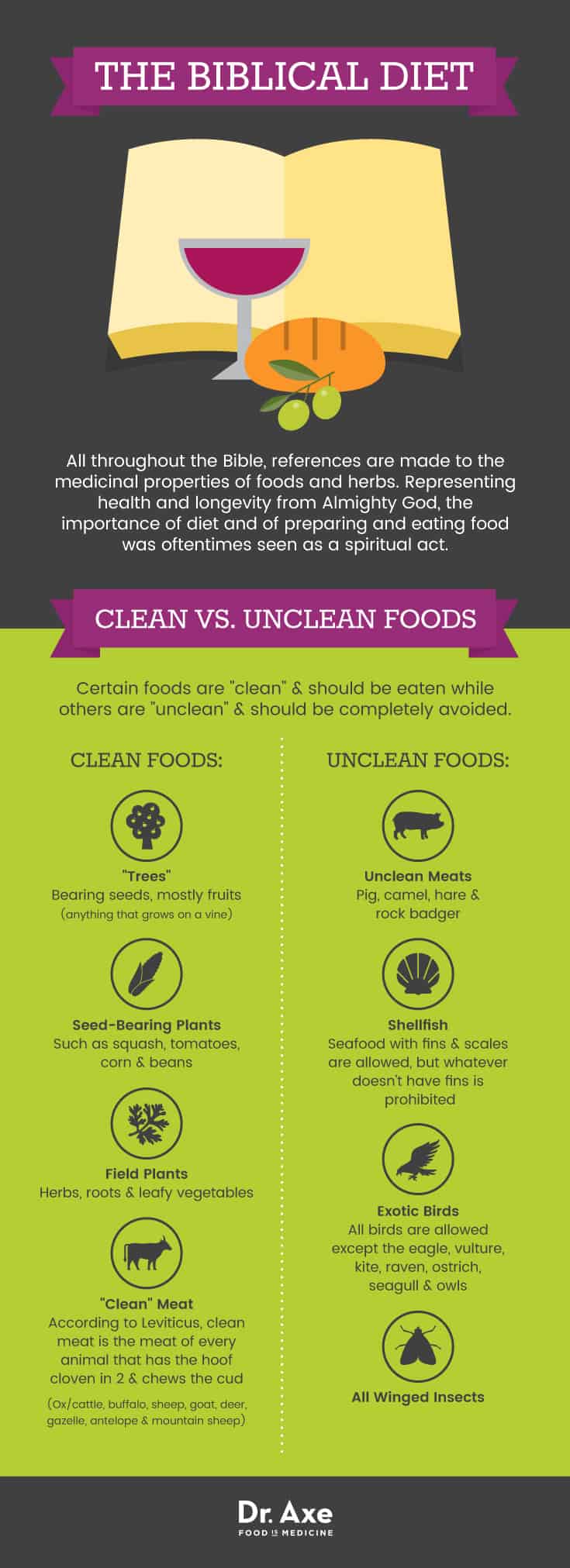
When you go on the Bible diet, there are only certain kinds of food that you can eat. Certain foods are “clean” and should be eaten while others are “unclean” and should be completely avoided.

Acceptable Biblical foods:
Trees whose edible yield is bearing seeds or is seed — To put it simply, this kind of food is mostly fruits. All fruits are acceptable in the Biblical diet, just as long as they come from seeds. Fruits from fruit trees are okay to eat, as well as anything that grows on a vine, a shrub or anything with a woody bark tissue. (1
Plants whose edible yield is bearing seeds or is seeds — This classification refers to anything that may grow on plants that are not necessarily trees. Examples of seed-bearing plants include squash, tomatoes, corn and beans. (2
Field plants — Field plants or “plants of the field” are the next thing on the list, which can consist of herbs, roots and green, leafy vegetables. (3
Clean meat — Now this one’s a little detailed because the definition of clean meat is pretty complex. According to Leviticus, clean meat is defined as the meat of every animal that has the hoof cloven in two and chews the cud. (4) Examples of clean meat include the ox (cattle), buffalo, sheep, goat, deer, gazelle, antelope and mountain sheep, just to name a few. Examples of unclean meat include pig, camel, hare and rock badger. The Bible also instructs us not to eat the blood of animals or to eat any meat that has been sacrificed to idols. (5)
As for seafood, everything with fins and scales are allowed, but whatever doesn’t have fins such as shellfish is prohibited. For birds, everything is allowed except eagles, vultures, kites, ravens, ostriches, seagulls and owls. It is also noted that all winged insects are considered unclean. (6)
Top 10 Bible Foods with Healing Properties

1. Olives and Olive Oil — Then it shall come about when the Lord your God brings you into the land which He swore to your fathers, Abraham, Isaac and Jacob, to give you, great and splendid cities which you did not build, and houses full of all good things which you did not fill, and hewn cisterns which you did not dig, vineyards and olive trees which you did not plant, and you eat and are satisfied. (Deuteronomy 6:10-11)

The Jews were the elite olive merchants of their day. During antiquity, this precious commodity was used for its healing capabilities, for cooking, to light lamps, for soaps, for cosmetics and even for currency. Olive oil was considered so sacred to ancient culture that it was even used to anoint kings and priests. Hence, the Hebrew for Messiah, Moshiach, meaning “anointed one!”

Research has been conducted that proves regular consumption of olives and olive oil contributes to heart, brain, skin and joint health. They have even been linked to cancer and diabetes prevention. (7) Needless to say, this sacred foodstuff has lived up to its ancient reputation!

2. Pomegranate — For the Lord your God is bringing you into a good land, a land of brooks of water, of fountains and springs, flowing forth in valleys and hills; a land of wheat and barley, of vines and fig trees and pomegranates, a land of olive oil and honey. (Deuteronomy 8:7-8)

Tasty, messy and just recently gaining ground in the American market these past few years, several research studies have shown that pomegranates contain strong anti-inflammatory, anti-oxidant, anti-obesity and anti-tumor properties. According to researchers, “Many beneficial effects are related to the presence of ellagic acid, flavonoids, anthocyanins, and flavones, which seem to be its most therapeutically beneficial components.” Subsequently, pomegranates are being considered valid treatment options for chronic diseases such as cancer, insulin resistance, intestinal inflammation and obesity. (8)

3. Fermented Grapes — May he kiss me with the kisses of his mouth! For your love is better than wine. (Song of Solomon 1:2)

I can’t make a list of top Bible foods without including grapes. Several epidemiological studies have shown that moderate alcohol intake, particularly drinking red wine, may lower the risk of cardiac mortality due to atherosclerosis. (9) The general recommendation is no more than one (five ounces) of red wine per day except for men under the age of 65 who may be able to have two drinks per day. (10)

When grape juice is fermented, natural anti-oxidant and flavonoid properties are exemplified through a substance called resveratrol. Consequently, researchers have focused much of their attention on evaluating the health benefits of resveratrol in recent years, which has been linked to chronic disease prevention and treatment including diabetes and obesity. (11)

4. Flax — An excellent wife, who can find? For her worth is far above jewels … She looks for wool and flax and works with her hands in delight. (Proverbs 31:10,13)

One of the most important plant fibers in the Bible, flax has been used to make linen for as long as recorded history. Although it has been widely replaced by cotton in recent years, flax remains one of the most important fiber plants in the world and one of the top Bible foods.

Having a rich history of medicinal use dating back to Babylon in 3000 B.C., flax seeds have been wholeheartedly embraced by natural health and medical circles alike because it provides a natural, vegan source of omega-3 essential fatty acids, lignans and fiber. Subsequently, research show that flax seeds may be able to help fight against cancer, lung disease and heart disease. (12)

5. Sprouted Grain Bread — Take wheat and barley, beans and lentils, millet and spelt; put them in a storage jar and use them to make bread for yourself. (Ezekiel 4:9).

In the Book of Ezekiel, God gave the prophet Ezekiel a recipe for what has proven to be the perfect bread as science has recently shown us that it creates the “complete protein,” one that contains all essential amino acids. The main reason that Ezekiel bread is healthier than other breads is because the grains and legumes are soaked and sprouted, which makes them easier to digest — and as a result, is the only bread to make this list of top Bible foods.

Harvesting “sprouted grains” happens right after the seed has started to sprout, but before it has developed into a full-grown plant. During this critical growth state, the young shoot digests a portion of the starch to fuel its growth. Subsequently, because the grain’s starch has been utilized, the level of vital nutrients — including proteins, vitamins and minerals — are enhanced. Additionally, research studies have suggested that iron and zinc actually become more “bioavailable,” (i.e. more easily absorbed) after sprouting. (13)


6. Raw Goat Milk — The lambs will be for your clothing and the goats will bring the price of a field. There will be goats’ milk enough for your food, for the food of your household, and sustenance for your maidens. (Proverbs 27:26-27)

Raw milk is filled with the vitamins and minerals that contribute to a healthy dental fluid flow and help maintain strong teeth. Loaded with calcium, vitamin K2, magnesium, phosphorus and fat-soluble vitamins, researchers have carried out a comparative study on the properties of cows’ milk compared to those of goats’ milk and have discovered that goats’ milk may be even more beneficial.

Unlike cows’ milk, scientists from the University of Granada has revealed that data concerning goats’ milk suggests that it could prevent diseases such as anemia and bone demineralization. Additionally, goats’ milk has properties that help with the digestive and metabolic utilization of minerals such as iron, calcium, phosphorus and magnesium. (14)

7. Lamb — Now you shall eat it [the unblemished lamb] in this manner: with your loins girded, your sandals on your feet, and your staff in your hand; and you shall eat it in haste — it is the Lord’s Passover. (Exodus 12:11)

Due to the significance of the Passover Lamb and equating that role to Christ, lambs are the most revered animal in history, and the most honored food in the Bible (and the only meat earning a spot in the top 10 Bible foods). Lamb is the meat of young sheep that are generally one year old or younger. Due to slaughtering the animal at such a young age, the marble fat content is considerably lower than older varieties of meat, which contributes to heart health and helps prevent again obesity. Rich in protein, vitamin B12, vitamin B6, niacin, zinc and other vital nutrients, it is arguably the healthiest red meat on the planet. (15)

On a side note, make sure to purchase local, organic, grass-fed varieties when possible. Grain-fed factory farmed animals are loaded with genetically modified corn feed, countless additives and are simply not worth the risk.

8. Bitter Herbs* (coriander and parsley) — They shall eat the flesh that same night, roasted with fire, and they shall eat it with unleavened bread and bitter herbs. (Exodus 12:8)

Scholars are not in complete agreement which plants the authors of Bible were referring to when writing about “bitter herbs,” but coriander and parsley generally make the list.

Coriander is the seed of the powerful anti-oxidant and natural cleansing agent cilantro. Traditional medicine has long used and labeled coriander as an anti-diabetic plant and scientific research confirms its helpful effects on blood sugar. Coriander also appears to be helpful for high blood pressure and heavy metal detoxification amongst other positive health effects. (16)

Parsley is another health-promoting herb and a rich source of several crucial vitamins, including vitamin A, vitamin C and potassium. (17)

9. Vegetables — Please test your servants for ten days, and let us be given some vegetables to eat and water to drink. (Daniel 1:12)

Instead of eating the tasty dainties of the Babylonians, Daniel and his friends requested to live on a vegetarian diet. When it was time for them to be presented to the king, Nebuchadnezzar and all of the leaders were astounded to see that the four young Jewish friends were more fit and looked better than the other young men who ate the Babylonian fare. Often referred to as the Daniel diet or the Daniel fast, history and biblical text actually support that Daniel continued his vegetarian lifestyle throughout his entire life.

Of all the food groups, vegetables are arguably the most nutrient-dense and safest to eat. There’s relatively no risk in consuming too many of them; whereas, if you eat fruit all day, you run the risk of spiking your blood sugar or developing dental caries because of the excess sugar.

Vegetables are so effective at healing that, according to the National Cancer Institute, cruciferous veggies (broccoli, cabbage, collards, kale, radish etc.) can help prevent cancer because they are rich in glucosinolates – a large group of sulfur-containing glucosides. Known to break down during chewing and digestion, these powerhouse chemicals can slow down and even reverse cancer cells growth. Additionally, it has also been reported that glucosinolates can treat the following health concerns: (18)
  • Inflammation
  • Bacterial and viral infections
  • Carcinogenic toxicity
  • Tumor angiogenesis (blood vessel formation)
  • Tumor metastasis (tumor migration)
10. Raw Honey — Have you found honey? Eat only what you need that you not have it in excess and vomit it. (Proverbs 25:16)

It’s no wonder raw honey is referred to as “liquid gold.” The medicinal applications to the skin and internal body seem limitless. First of all, raw honey is loaded with key nutrients. Research has also shown that honey contains the disease-fighting antioxidant flavonoids like pinostrobin, pinocembrin and chrysin. (19)

In addition to being a fantastic replacement to energy drinks for athletes and people needing a little boost, raw honey also supports the growth of probiotics in gastrointestinal tract including (Bifidobacteria). (20) Another fascinating quality of honey is its ability to improve allergy symptoms. (21) However, be sure to purchase the local variety, as it will contain indigenous pollen species unlike generic store-bought brands.

Recommendations and Benefits of a Biblical Diet

Is it possible to lose weight by following the Bible’s teachings on food and eating? Founder of the Bible Diet, author of The Maker’s Diet and motivational speaker Jordan S. Rubin believes so! According to him, the Bible Diet is heavily influenced based on the teachings from the books of Leviticus and Deuteronomy and the only food considered acceptable or clean is the only kind that should be eaten.

Recommendations from The Makers Diet

The four classifications of food (trees that yield seed, plants that yield seed, field plants, clean meat) is the foundation of a Biblical diet. There are also other important things you should consider when starting or following a Biblical diet:
Water, sunshine and exercise. These three are absolutely key to good health. You should always remember to drink lots of water, get lots of exercise and go outside. I recommend one quart water daily for every 50 pounds of weight. Also, it’s important to drink high quality water
Eat safe, clean meat. This means abstaining from certain kinds of meat and seafood such as pork, lobster, clams and mussels, shrimp and catfish. 
Eat foods that are in season. The Bible states that everything has a season. This should also be our attitude when it comes to picking out the things we eat. Lean towards eating fruits, vegetables and herbs that are in season, as they’re fresher and better for your health. 
Eating raw. Eating uncooked raw food is very much encouraged. Some vegetables may need to be cooked, but a majority of them can be enjoyed raw. 
Unprocessed real whole foods. What you eat should ideally be consumed in the way that it was found in nature. This means that we should stay away from preservatives, processed foods, or those produced with lots of contact with hormones, fertilizers and pesticides.
Benefits of Following a Biblical Diet

All these food restrictions may seem like a whole lot of sacrifice, but what about the rewards. According to Rubin, those who go on the Biblical diets and eat Bible foods can look forward to the following benefits:

Weight loss

A diet high in unprocessed food, fruit and vegetables is ideal for weight loss. Natural and raw fruits and vegetables carry fewer calories and are easier to digest then other processed foods.

A longer lifespan 

Rubin claims that some of our ancestors that went on the Biblical diet went on to live for 120+ years. Although we may not reach that age, studies show that a diet high in fruits and vegetables lead to little or no health complications, thus indicating a longer lifespan.

Energy and improved mood 

When our bodies are in a state of imbalance due to poor dietary habits, we immediately feel it. We can feel sickly, sluggish and depressed. Eating right can increase energy, balance hormones and improve our mood.

Final Thoughts

Who would have thought that you could get nutritional advice in the Bible, huh? At the end of the day, if it were good enough for people back then to eat, I think it’s probably good for us today. So much of what the Bible lays out so clearly for how we should eat also makes a lot of sense when you look at scientific research. A Biblical diet is filled with healing foods that promote a well-rounded diet and so many awesome health benefits.


_____________________________________________________________________________

*Hyssop, not commonly used today, is also referred to in the Bible as a bitter herb. [It's very, very bitter, and when my brothers and I were babies, my mom had extreme ulcerative colitis, something doctors said was incurable at the time. We were babies, and she knew she had to overcome her problem for our sake, so she went to a health food store (Harvest Health in Grand Rapids, MI) and someone there recommended she drink hyssop tea. She did, every day and throughout the day, and ate the blandest diet, e.g. boiled green beans, boiled potatoes with no butter or salt. After a year she was able to gradually add foods, and eventually because of the tea and her bland diet, she could overcome her problem! A careful, thoughtful diet does cure! Praise God!] - CM

Friday, March 15, 2019

Herbal Tea Guide

If you are like most people, reaching for that hot cup to sip in the morning is a top priority to getting the day started. While most drinks like coffee and black teas are popular for the morning jumpstart, switching out the caffeinated beverages with an herbal tea can be soothing and comforting, while also providing your body with antioxidants and other medicinal properties that promote health. The simple aroma from a freshly brewed cup of herbal tea invokes in us a calm and warmth, and helps provide a feeling of peace and relaxation. Aside from the pleasure herbal teas provide, they also offer healing properties, and because they are naturally caffeine-free, they are suitable for drinking any time of the day. 

One of the easiest and most nutritious ways to drink herbal teas is by infusing the herbs in hot water for at least 10 minutes, and up to 8 hours maximum. Studies have shown that it takes at least four hours for a significant amount of minerals to extract into the water, releasing the medicinal constituents. These long herbal infusions draw out the most significant amounts of vitamins, enzymes and essential oils. Depending on how much time and preparation needed, at least 10 minutes of steeping is necessary to extract any medicinal properties, and allowing the herb to steep at least 8 hours will extract the most nutrients.
Picture borrowed from Everyday Health, The Best Teas for Your Health
There are many beneficial herbs that provide medicinal properties for different ailments and different herbs are better suited for steeping for longer periods of time. 

If you are looking for a quick and easy herbal tea, the following herbs are simple and effective with at least 10 minutes of steeping time: 
  • Peppermint: improves digestion, prevents nausea and vomiting, boosts immunity 
  • Ginger: supports digestions, eases pain, increases weight loss, enhances immunity 
  • Echinacea: boosts the immune system, reduces redness and swelling, promotes cell health 
  • Rooibos: lowers blood pressure, improves bone & heart health, balances blood sugar 
  • Chamomile: induces sleep, antispasmodic & anti-inflammatory, relieves stress & anxiety 
When you start steeping the herbs for four hours or longer, the medicinal constituents (phytochemicals) become primarily nutritive rather than stimulating/sedating. This also gives these nourishing long infusions their characteristic tastes: bland, sweet or earthy. These types of herbal infusions can be used on a regular basis. The following herbs are popular to use for long herbal infusions: 
  • Oatstraw: relieves insomnia, anxiety and ADHD; helps combat obesity, varicose veins and irritations to the digestive tract 
  • Nettle: treats arthritis and joint pain, antihistamine and anti-inflammatory qualities, used to treat bladder infections 
  • Comfrey: strengthens and heals bones, reduces pain, anti-inflammatory, boosts immune system 
  • Red Clover: eases anxiety, relieves muscle and joint pain, prevents osteoporosis and strokes 
These are just a few of the more popular herbs that are used to make herbal teas and infusions and by experimenting and trying new ones, you are sure to find a few favorites that you enjoy. Tea drinking has been around for thousands of years and is not only used for its medicinal properties, but is valued for everyday pleasure and refreshment. Incorporating a time in your day to savor a cup of herbal tea is a great way to improve your overall health and wellbeing. This daily ritual will help you feel rooted in mindfulness, respect and living in the moment while also reducing stress. 

Article by Andrea Nison


Tuesday, February 13, 2018

80% Alkaline + 20% Acid = Balance

The Rule of 80/20: The body needs a balance of alkaline-forming and acid-forming natural vegetarian food. The following rule has evolved as a consequence of many years of research and clinical findings vis-a-vis the use of nutrition to heal disease.

To replenish and sustain your proper alkaline and acid reserves, eat 80% of your foods from the alkaline-forming list and 20% from the acid-forming list.

The following is an outline of the major vegetarian food groups and their chemical reaction tendencies in the body. All of the food items should be raw and organically grown (this collection of data from Hippocrates Health Institute).


source
ALKALINE-FORMING
  • sprouts of small seeds, beans and most grains
  • leafy and root vegetables
  • vine-ripened fruits/vegetables (cucumbers, squash, tomatoes, bell peppers, etc)
  • sea vegetables (dulse, nori, wakame)
  • fresh food herbs
  • cayenne pepper
  • garlic and onions
  • tree-ripened fruits
  • small grains (amaranth, millet, quinoa, teff, etc)
  • fresh beans
  • fresh sweet corn
  • sesame seeds (soaked 3 hours)
  • nuts (soaked 12-24 hours) (most are acid-forming but exception to the rule -- almonds, fresh coconut with jelly, pine nuts
  • freshly-squeezed green vegetable juices, consumed on an empty stomach
ACID-FORMING (recommended)
  • fruits (most are alkaline-forming, exception to the rule) -- blueberries, cranberries, plums, prunes
  • grains (soaked 8-12 hours) most are not recommended, but buckwheat (slightly acid) and rye ok
  • dry beans (soaked 12-16 hours)
  • nuts (soaked 12-16 hours) filberts/hazelnuts, pecans, walnuts
  • seeds (soaked 5-8 hours) pumpkin, sunflower
Not recommended (listed for reference)
  • large grains -- barley, rice (basmati, brown, white), oats, wheat (slightly acid)
  • refined sugar
  • salt (all types)
  • alcoholic beverages
  • coffee
  • tobacco
  • vinegar
  • refined condiments (ketchup, mustard, mayonnaise, etc)
BEWARE -- the following are not only acid-forming in the cell but also cause excessive mucous in the body:
  • meat
  • dairy products
  • wheat flour
  • eggs
  • salt
  •  refined sugars
  • alcohol
  • tobacco
ALKALINE-FORMING ACTIVITES

Physical:
  • moderate sunshine
  • proper food combining
  • rest--sleep
  • deep breathing of fresh air
  • fasting and eating less
  • relaxation
  • soothing music
  • moderate exercise
  • adequate water intake
Emotional and Mental
  • laughter
  • releasing processes
  • self-esteem
ACID-FORMING ACTIVITIES

Physical:
  • cooking and processing food
  • improper food combining
  • lack of rest -- lack of sleep
  • lack of oxygen
  • overeating (too much or too often)
  • stress
  • noise
  • excessive or no excercise
  • dehydration
Emotional and Mental
  • anger
  • denial
  • confusion
  • fear

Tuesday, May 12, 2015

Shrinking Ovarian Cysts

Many people with candida, particularly women and that is who typically is struck hardest with candida, have menstruation difficulties and extreme hormonal imbalances. Many of these people also develop cysts on their ovaries, and I have one which causes discomfort at times. Looking at the following article giving tips on how naturally to eliminate an ovarian cyst makes me think that the carefully followed candida diet is a key to eradicating, eliminating or at least controlling the growth of the cyst; however, some other tips such as careful use of laundry detergents and herbs help too. I liked the tips, particularly comments on herbs for helping to regulate the hormones, as I've had issues for years, long before I developed full-blown candida, so I am reposting the article from Healthy Holistic Living: 

8 Easy Ways to Shrink Your Ovarian Cysts Naturally

Before taking medication or doing surgery, consider these healthier alternatives to curing ovarian cysts. A natural option can not only reduce your cyst, but it can also prevent your cyst from coming back.
When an ovarian cyst is identified in your body, your physician will take the “watch and wait” approach to see if the ovarian cyst goes away on its own. Most of them do. Medications for pain are prescribed in the meantime, with surgery being the final step.

Befoian cysts. A natural option can not only reduce your cyst, but it can also prevent your cyst from coming back.
When an ovarian cyst is identified in your body, your physician will take the “watch and wait” approach to see if the ovarian cyst goes away on its own. Most of them do. Medications for pain are prescribed in the meantime, with surgery being the final step.
Luckily, while your physician is monitoring your situation, you can take a safe, proactive approach to getting rid of your cyst that, if successful, can prevent you from ever reaching the surgery step. Plus it saves you a lot of money. Skip the medical bills and see how you can take control of your health and well being.

Natural Prevention and Remedies

The key to getting rid of an ovarian cyst is to equalize your hormones and diminish factors that contribute to your cyst. Too much exposure to estrogen and xenoestrogen, (estrogen imitators,) can disrupt ovulation and lead to the formation of cysts.

Avoid:

Soy products:

They contains compounds that mimic estrogen, creating a hormonal imbalance.

Heating foods in plastic or storing hot foods in plastic:

There are xenoestrogen chemicals in this material that get released into your food when heated. Use glass containers instead.

Plastic water bottles:

For the same reasons you’d avoid plastic containers.

Parabens in skin care products:

They are found in many healthy foods at low levels and your metabolic system makes them less strongly estrogenic, but applying parabens directly on your skin allows the body to absorb parabens while skipping the metabolic process. 

Try to:

Eat only organic meats and dairy:

To avoid additives in these products that can raise estrogen levels and promote the growth of cysts.

Use natural detergents:

Many laundry detergents contain xenoestrogen chemicals that can seep through your skin while you’re wearing your clothes.

Use herbal remedies:

These herbs can support a proper menstrual cycle, reduce ovarian pain, increase circulation to the reproductive organs and support healthy liver function. Our livers help to rid us of toxins and excess hormones.
  • Maca root: helps the body produce progesterone. Take 2,000-3,000mg daily.
  • Black cohosh root: helps to regulate menstrual cycle and relieves ovarian pain
  • Milk thistle seed: supports hormonal balance and liver health
  • Tribulus: normalizes ovulation
  • Vitex (tree berry): regulates hormonal balance, promotes ovulation, and improves timing of menstrual cycle
  • Yarrow: relieves pelvic congestion and improves timing of menstrual cycle
Do not use herbal remedies if you are pregnant or breastfeeding.

Use a castor oil pack:

A castor oil pack is a cloth soaked in castor oil and placed on the skin to enhance reproductive circulation and promote the healing of bodily tissues and organs. You can make your own at home, just visit here.
Note: Castor oil should not be consumed or applied to broken skin. Also, avoid using this if you are pregnant, breastfeeding or menstruating.

Sources:

http://www.justnaturallyhealthy.com/fb-articles/293-taking-the-natural-route-to-curing-ovarian-cysts?c=nsfb
http://natural-fertility-info.com/ovarian-cyst-remedy
http://davidsuzuki.org/issues/health/science/toxics/chemicals-in-your-cosmetics—parabens/
http://natural-fertility-info.com/castor-oil-therapy

Thursday, July 24, 2014

Toxic Chemicals Found in Teas

I came across this article and find it very meaningful for people with candida who have to be ultra careful of what they put in their intestinal tract. For me, I've had reactions to some brands of teas which I've often attributed to dusty tea leaves or something in the tea bags. Couldn't be much else as the only tea I have pretty much purchased in tea bag form is peppermint ... and I've tried a number of different brands, based on price and accessibility: Bigelow (individually wrapped and good for traveling), Celestial Seasonings (taste fresher and more potent than many other brands), Meijers (often very pepperminty and fresh too, as well as being much cheaper than Bigelow and Celestial Seasonings), and then a few other less known brands.

For people with candida, there aren't too many kinds of teas we can have because of the "sugar factor" that must be considered in teas with flowers and the huge array of additives, particularly citric acid, including as an ingredient. Maybe some people don't have that concern but I've had to eliminate ALL sugars, sweeteners and additives to control the candida fungus, which has raged and still easily gets activated especially in the thyroid and lung regions of my GI tract. If I have a little sugar or dustiness, those regions are the first to react  tightness, phlegm, a dry cough — basically, no fun.

Dry loose leaf herbs aren't the best option either as many herbs sold in US markets have been irradiated to give them longer shelf life. Ugh! Anyway, teas that I enjoy in dry leaf form are of course peppermint, rosemary, fennel (a bit like licorice), and then of course freshly grated ginger for a powerful shot of vigor! Licorice root also ground into powder is very good too but should not be drunk for more than a week at a time as it raises blood pressure, and people with high blood pressure probably should limit their intake to the seldom cup. That said though, licorice root tea is excellent for soothing a raging sore throat and calming down active candida in the mouth and throat region!!! The link (herb-info.com) where the article below comes from is filled with more resources of herbs and their selection.

Warning: Shocking Toxic Chemicals Found in Teas

Warning - Shocking Toxic Chemicals Found In Tea BrandsUPDATE: Many people wanted to see “which brands”: We linked to the Glaucus Research report that tears Teavana a new one, we linked (end of the article) to Food Babe’s article which includes a complete chart of which brands she investigated, and we followed up with a lot of our own additional research into the substances in the teabag material and so on. To sum it up: Numi, Rishi and Traditional Medicinals came out smelling of roses; most of the others, not so – including Lipton, Allegro, Celestial Seasonings, Tazo, Teavana, Bigelow, Republic of Tea, Twinings, Yogi, Tea Forte, Mighty Leaf, Trader Joe’s, Tetley. All the links are in the article (which is worth reading).
Well folks, this news was a bit of a downer to be honest, but it’s important stuff and people need to know: We recently discovered an amazing article (link at the end) which gives a very detailed exposé of chemicals and other additives that have been found by lab testing in numerous common brands of tea. We also did some further investigation, which appears below.
Now I’m a tea fanatic so I was understandably upset by finding out that my favorite brew is loaded with surprisingly high quantities of pesticides and other dubious chemicals. The types of suspect ingredients found in common tea brands can be broken down into four main categories:
1) PESTICIDES. Most teas are not washed before being dried – and therefore non-organic teas almost certainly contain pesticide residues. Some tea brands (even those claimed organic or pesticide free!) have recently been found to contain pesticides that are known carcinogens – in quantities above the US and EU limits! This is completely outrageous. I dug further and found new scientific reports which are pretty scathing – not to mention scary from the consumer’s point of view. Here’s an in-depth report from Glaucus Research that illustrates what appear to be outright criminal practices. It’s essential reading and a real education into what goes on in the modern world.
2) SUBSTANCES IN THE TEABAG MATERIAL. Teabags are often made from plastics (which may leach molecules into the boiling water), corn-based biodegradable bags (probably GMO), or with paper which was treated with wet strength agents such as polymerized epichlorohydrin. Epicholorohydrin (unpolymerized) is also used as an insect fumigant and considered a potential carcinogen – and although levels present in paper products such as tea bags and coffee filters are low, they are still present. (source)
The effects of leaching from teabag material to the tea are of course avoidable if you use loose leaf tea. If you are concerned about this but still want your favorite brand, you could also try this “hack”: Empty the contents of the teabag(s) into a teapot and brew tea the traditional way with a tea strainer! (You get style points also for that – and let us know if you notice a difference in flavor from the deduction of anything that should not have been in your tea!)
3) “NATURAL FLAVORS”. Now this vague terminology is a “blanket term” which conceals the truth of these ingredients. The term “Natural Flavors” essentially means flavorings “which have their origin in nature”. In other words, it could be made from any animal or plant source and processed in many ways.
Not only do you have no true idea what the source actually was (you might be allergic to it!), nor how much processing was done to it – but some of the items that are used as natural flavors are completely disgusting in their own right. Like for example http://en.wikipedia.org/wiki/castoreum. Yes, anything that says “natural flavors” on the label could contain castoreum, and you would never know…
4) ARTIFICIAL FLAVORS. Now if in the back of your mind you are asking yourself “why does tea need flavoring added at all?” then congratulate yourself because that is a VERY good question. The answer is that the poor plants/herbs used in its manufacture have been mercilessly subjected to the techniques of modern agriculture, to the extent that the end product is sufficiently bland-tasting that flavoring is “required” in order to make it taste the way it should! Tea should be tea! It should not need flavorings, natural or artificial! So please be sure to look at the label and watch out for the word “flavorings” or “flavors”.
Remember, the companies making this stuff are generally just interested in creating marketable products – and decisions are made for reasons of cutting costs and increasing profits. You are just part of the equation and so all the while you continue to swill down whatever, the companies will keep on manufacturing whatever… because it works! However, if sufficient numbers of people demand quality ingredients and transparency at every step of the chain, then the companies will be forced to comply by the laws of supply and demand! So you are in the driving seat! Learn as much as you can about food quality. Ask questions and make conscious, informed choices. Do your research and support independent study. Don’t let them get away with it. Every time you do this, you add to the push for positive change.
We’ve just scratched the surface here, please check out Food Babe’s full report for more detailed information and a chart of which teas came out with their reputations intact – and please share with your tea-loving friends!

http://foodbabe.com/2013/08/21/do-you-know-whats-really-in-your-tea/

Saturday, May 17, 2014

The High Protein Concentration of Sprouts

Sprouts Have the Highest Concentration of Nutrition Per Calorie of Any Food

Sprouts are rich sources of vitamins, minerals, trace minerals, enzymes, antioxidants, chlorophyll and protein. They are low calorie and contain little or no fat. The fat they do contain is the healthy fat that your body needs. As some of the most nutritious foods that exist, they make a great addition to any healthy eating plan. Use in salads, on sandwiches, added to soups or stir fried with vegetables. Enjoy these nutrient-packed delicacies as a snack all by themselves or added as a garnish to a main dish. Eat them raw or cooked. Of course, as with all food, the nutritional value is greater when they are eaten raw. But eating them cooked is better than not eating them at all.

Sprouting magnifies the nutritional value of the seed. It boosts the B-vitamin content, triples the amount of vitamin A and increases vitamin C by a factor of 5 to 6 times. Starches are converted to simple sugars, making sprouts very easily digestible. You can have them fresh all year round, even when fresh vegetables are hard to find. It's easier than planting a garden outside and they're ready much quicker. You can even grow them when the ground outside is frozen solid. And the best part is that you can grow the freshest, tastiest sprouts right in the comfort of your own kitchen. It takes less than 2 minutes a day and they are ready in 3 to 7 days, depending on the variety.

You can sprout seeds, beans, grains and nuts. Some of the most popular varieties are alfalfa, broccoli, red clover, radish, mung beans, lentils, garbanzo beans and peas.

Alfalfa sprouts are what people typically think of when you mention sprouts. They are the ones you commonly see at a salad bar. Rich in phytochemicals, they protect against cancer, heart disease, osteoporosis and fibrocystic breast disease. They stimulate natural killer cell activity, which strengthens the immune system. What's more, they are beneficial in reducing symptoms of PMS and menopause, including hot flashes. Furthermore, they contain high concentrations of antioxidants, the body's defense against the destruction of DNA which is the cause of aging. Alfalfa sprouts are abundant sources of vitamins A, B, C, E and K, the minerals calcium, iron, magnesium, phosphorus, potassium and zinc. Also carotene, chlorophyll, amino acids and trace elements. They contain 35% protein. One pound of alfalfa seed produces 10-14 pounds of sprouts.

Broccoli sprouts have just recently become popular after it was discovered that they abound with the amazing cancer-fighting phytochemical, sulforaphane. Research studies have shown that they contain 50 times more sulforpohane than fresh broccoli. What's more, they contain glucosinolates and isothiocyanates, substances that protect cells from becoming malignant, at 10-100 times greater levels than in fresh broccoli. In addition, they are sources of plant estrogens, similar to human estrogen, and so are helpful in cases of PMS, menopause, hot flashes and fibrocystic disease. Nutrient dense, they are rich sources of vitamins A, B, C, E and K, anti-oxidants, the minerals calcium, iron, magnesium, phosphorus, potassium and zinc. Also carotene, chlorophyll, amino acids, trace elements and antioxidants. Broccoli sprouts contain as much as 35% protein.

Garbanzo beans, also known as chickpeas, can be sprouted to make delightfully delicious hummus. It is much richer in nutrients than hummus typically made from cooked chickpeas. They can also be used in salads, soups or stir fried or steamed with other bean sprouts and vegetables. These sprouts are plentiful sources of vitamins A, C and E, the minerals iron, calcium, magnesium and amino acids. They contain 20% protein.

Pea sprouts are delicious raw or cooked. They can be sprinkled on salads and added to soups. In addition, they can be steamed or stir fried with other bean sprouts and vegetables. They are rich sources of vitamins A, B, C and E, all the essential amino acids, the minerals calcium, iron and phosphorus. They contain 26% protein.

Lentil sprouts, like pea sprouts, are very tasty and can be eaten raw or cooked. Add them to salads, soups, casseroles or steam or stir fry them with other vegetables. Rich in vitamins A, B, C and E, the minerals iron, calcium and phosphorus. They contain 26% protein.

Mung bean sprouts are the ones you typically see in Oriental cooking. Mung beans should be sprouted in the dark to avoid a bitter flavor. They are ready when they are 1.5 to 2 inches long. Abundant in vitamins A, B, C and E, the minerals iron, potassium, calcium and magnesium, and amino acids, they contain 20% protein.

Radish sprouts taste just like radishes. They are great on sandwiches or in salads. Their high concentrations of phytochemicals help protect against disease. And because of their naturally occurring plant estrogens, similar to human estrogen, they are helpful with PMS, menopause, hot flashes and fibrocystic disease. These baby green vegetables are rich sources of vitamins A, B, C, E and K, the minerals potassium, calcium, iron, phosphorus, magnesium and zinc. In addition, they also contain carotene, chlorophyll, amino acids, trace elements, and antioxidants. They have a 26% protein content.

Red clover sprouts look like alfalfa sprouts and have a mild, sweet flavor. Rich in phytochemicals, in particular genistein, which is known to prevent the formation of new blood vessels inside a tumor, in essence starving the tumor, it is protective against diseases like cancer. Red clover contains naturally occurring plant estrogens, similar to human estrogen, so they are helpful with PMS, menopause, hot flashes and fibrocystic disease. They are contraindicated with tamoxifen treatment. Please consult your physician if you are receiving this treatment before using sprouts. They contain vitamins A, B, C, E and K, the minerals calcium, magnesium, potassium, iron, phosphorus and zinc, trace minerals, carotene, chlorophyll and amino acids. They contain 26% protein.

Saturday, March 23, 2013

Agave, Not a Healthy Choice

From all the rap in the media and health documents about artificial sugar being more harmful than sugar itself, I questioned the sudden appearance of agave syrup (not that I can eat a sweetener yet) and its viability as a "healthy" sugar replacement. So far, there just hasn’t been a healthy replacement. Well, John Kohler did some pretty heavy research and his findings corroborate what I've found ... that agave is NOT good for the body. With its high fructose, it stresses the pancreas, one of my key problems as I can't handle hardly any kind of sugar in my body, not even carrots. Systemic candida and those sugar-hungry bacteria really have done a number on me. But really, each generation ingests w-a-y more sugar than the previous generation, so no wonder so many people are getting sick. Why do we need a sugar replacement for something that is not essential for our lives, just our benumbed taste buds? We actually don't. We are just addicted to sweetness and the sugar high, and to stay high we need more and more sugar. People really need to reconsider their diet content, eliminate some of that "unnecessary" and go back to whole foods which are full of their own flavors, flavors that are rich and natural and come with the added bonus of vitamins, minerals and enzymes.
Following is the research article written by John Kohler pasted here in its entirety. I really agree with the content, and wow, does he ever that a lot of it, much more than I found when doing my research. Very impressive!


by John Kohler
A relatively recent trend in raw food preparation is the use of agave syrup (also called agave nectar) as sweetener called for in raw recipes. I am often asked about my views on this sweetener.
When I first switched to a raw food diet in 1995, agave syrup was unknown and was NOT USED IN RAW FOODS!I first learned about agave syrup back in 1999 or 2000 at a trade show for the health food industry, which I attend regularly to keep up with the latest in the health and nutrition field. I asked several questions, got some samples, and inquired on how the company processed the agave syrup. At that time, I learned that it was processed at roughly 140 to 160 degrees Fahrenheit11, so I certainly didn’t consider it a raw food by any means. Just like agave, some people consider maple syrup a raw food, but all maple syrup is heat-treated and is therefore not raw at all.
Unfortunately, there are no “raw labeling laws.” Anyone, anywhere, at any time can put “RAW” on their label and to them it can be supposedly raw since it is made from a “raw” material or simply not roasted. Just because it says “RAW” doesn’t necessarily mean that it was processed at a temperature under 118 degrees and still has all its enzymes, nutrients, and “life force” intact. For example, when you notice the difference between raw carob powder and roasted carob powder in the store, it is my understanding that the “raw” carob powder has been heated to about 250 degrees, whereas the “roasted” carob powder has been heated to about 450 degrees. The additional heat applied to the “roasted” carob powder causes the carob to “carmelize,” thus making it darker in appearance and different in taste as compared to the “raw” carob powder. Some stores sell “truly raw” carob powder, it has a chalkier texture than supposedly “raw” carob powder. Jaffe Bros in Valley Center, California is a source of the “truly raw” carob powder. There are several raw food snack bars that say “RAW” but have ingredients such as cooked cocoa powder (that can’t be raw) and cashew nuts (most of which are not truly raw).
An excerpt on how agave is processed
...Agave plants are crushed, and the sap collected into tanks. The sap is then heated to about 140°F for about 36 hours not only to concentrate the liquid into a syrup, but to develop the sweetness. The main carbohydrates in the agave sap are complex forms of fructose called fructosans, one of which is inulin, a straight-chain fructose polymer about ten eight to 10 fructose sugar units long. In this state, the sap is not very sweet. When the agave sap is heated, the complex fructosans are hydrolyzed, or broken into their constituent fructose units. The fructose-rich solution is then filtered to obtain the desired products that range from dark syrup with a characteristic vanilla aroma, to a light amber liquid with more neutral characteristics. Excerpt from: FoodProcessing.com
So agave needs to be hydrolyzed so that the complex fructosans are "broken down" into fructose units or it won't be sweet!! Great! Now I'm eating hydrolyzed raw agave syrup!
Let’s suppose for arguments sake, and to give agave the benefit of the doubt, that even with “new” technology companies are somehow able to process agave syrup below 118 degrees so it could be considered actually “raw”. We still need to ask the question, is it good for us? Some foods, even if they truthfully are raw, may not actually be HEALTHY. Based on what I have learned about agave syrup, I believe it to be one of these foods.
My answer to the question “Is agave nectar good for us?” would be “NO” based on my research. Here is a sample of my findings:
1.     Agave syrup is not a “whole” food. It is a fractionated and processed food. Manufacturers take the liquid portion of the agave plant and “boil” it down, thus concentrating the sugar to make it sweet. This is similar to how maple “sap” that comes directly from a tree is heated and concentrated to make maple “syrup.” Agave syrup is missing many of the nutrients that the original plant had to begin with.
2.     Agave syrup was originally used to make tequila. When agave syrup ferments, it literally turns into tequila. The enzymatic activity therefore MUST be stopped so that the syrup will not turn into tequila in your cupboard. Raw or not, if there is no enzymatic activity, it is certainly not a “live” food. As Raw Foodists, we want the enzymes intact.
3.     According to my research, there are three major producers of agave syrup. Some of these companies also have other divisions that make Tequila. For the most part, agave syrup is produced in the Guadalajara region in Mexico. There are those within the industry who I have spoken to at various trade shows who say that some of the agave syrup is “watered down” with corn syrup in Mexico before it is exported to the USA. Why is this done? Most likely because agave syrup is expensive, and corn syrup is cheap.
4.     Agave syrup is advertised as “low glycemic” and marketed towards diabetics. It is true, that agave itself is low glycemic. However, we have to consider why agave syrup is “low glycemic.” It is due to the unusually high concentration of fructose (90%) compared to the small amount of glucose (10%).Nowhere in nature does this ratio of fructose to glucose occur naturally. One of the next closest foods that contain almost this concentration of glucose to fructose is high fructose corn syrup used in making soda (HFCS 55), which only contains 55% fructose. Even though fructose is low on the glycemic index, there are numerous problems associated with the consumption of fructose in such high concentrations as found in concentrated sweeteners:
A. Fructose appears to interfere with copper metabolism. This causes collagen and elastin being unable to form. Collagen and elastin are connective tissue which essentially hold the body together.1 A deficiency in copper can also lead to bone fragility, anemia, defects of the arteries and bone, infertility, high cholesterol levels, heart attacks and ironically enough an inability to control blood sugar levels.2
B. Research suggests that fructose actually promotes disease more readily than glucose. This is because glucose is metabolized by every cell in the body, and fructose must be metabolized by the liver.3 Tests on animals show that the livers of animals fed large amounts of fructose develop fatty deposits and cirrhosis of the liver. This is similar to the livers of alcoholics.
C. “Pure” isolated fructose contains no enzymes, vitamins or minerals and may rob the body of these nutrients in order to assimilate itself for physiological use.4
D. Fructose may contribute to diabetic conditions. It reduces the sensitivity of insulin receptors. Insulin receptors are the way glucose enters a cell to be metabolized. As a result, the body needs to make more insulin to handle the same amount of glucose.5
E. Consumption of fructose has been shown to cause a significant increase in uric acid. An increase in uric acid can be an indicator of heart diease.6
F. Fructose consumption has been shown to increase blood lactic acid, especially for people with conditions such as diabetes. Extreme elevations may cause metabolic acidosis.7
G. Consumption of fructose leads to mineral losses, especially excretions of iron, magnesium, calcium and zinc compared to subjects fed sucrose.8
H. Fructose may cause accelerated aging through oxidative damage. Scientists found that rats given fructose had more cross-linking changes in the collagen of their skin than other groups fed glucose. These changes are thought to be markers for aging.9
I. Fructose can make you fat! It is metabolized by the liver and converts to fat more easily than any other sugar. Fructose also raises serum triglycerides (blood fats) significantly.10
5.     Agave syrup and other concentrated sweeteners are addictive, so you end up trading a cooked addiction (eating candy bars or cookies)for a “raw” addiction which is not much better. Eating concentrated sweeteners makes it harder to enjoy the sweet foods we should be eating – whole fresh fruit – since they don’t seem as sweet by comparison.
6.     Long-time raw foodist and Medical Doctor, Dr. Gabriel Cousens, M.D. says that agave nectar raises blood sugar just like any other sugar. Dr. Cousens wrote a book, "There Is a Cure for Diabetes".
Whole fruits generally contain a much smaller amount of fructose compared to sucrose and glucose. In addition, fruits contain vitamins, minerals, phytonutrients, fiber, and other nutrients. Our bodies are designed to digest a complete “package” of nutrition that appears in whole, fresh, ripe fruits. Could nature be wrong? For example, it’s always better to eat fruits whole or blend them rather than juice them. When you juice fruits, you remove the fiber which helps to slow down the absorption of the sugars. Concentrated sweeteners also contain no fiber and have much greater concentrations of simple sugars than are found in fresh fruit or even juices.
Now that you have a better understanding about agave syrup, hopefully the companies selling “raw” agave won’t dupe you. They are out to make a buck, which in this case is unfortunately at the expense of your health. If you are making a “raw” recipe and it does require a concentrated sweetener, I have some recommendations for some better options to use instead of agave (listed in order of preference):
1.     Use ripe fresh fruits. Ripe fruits contain nutrients, fiber and water, a complete package, as nature intended. I find that ripe and organic fruits are usually sweetest.
2.     Use fresh whole stevia leaves. Stevia is an herb that actually tastes sweet but contains no sugar. This herb can be very hard to find fresh, so I personally grow my own.If fresh leaves are not available, get the whole dried leaves or the whole leaf powder. Avoid the white stevia powder and the stevia liquid drops as they have been highly processed.
3.     Use dried fruits .If you need a “syrup” consistency, just soak the dried fruits in some water and blend them up with the same soak water. Dates, figs, and prunes are some of the sweetest dried fruits that tend to work well in recipes. Try wet Barhi dates blended with a little water for an amazing maple syrup substitute. Please note: Since there are no raw labeling standards, some dried fruit may be dried at higher than 118 degrees, and thus, not really raw. If you want to ensure you are eating really raw dried fruit, it is best to dehydrate it yourself.
4.     Raw honey is a concentrated sweetener, and although not recommended, in my opinion it is better than agave syrup because it is a whole food and occurs naturally in nature. Of course, honey is not vegan and that may be a concern for some. I recommend purchasing local honey from a beekeeper.
Other “concentrated sweeteners” that are often seen in raw food recipes include:
1)     Maple Syrup which is not raw and is heat processed. If it is not organic, it may also contain formaldehyde and other toxic chemicals.
2)     Sucanat or evaporated cane juice is pure dried sugar cane juice. Unfortunately, this is processed at a temperature above 118 degrees and therefore can’t be considered raw.
3)     Yacon Syrup is a syrup from the root of the yacon plant in South America. It is once again, a concentrated sweetener, processed at a temperature of up to 140 degrees Fahrenheit.
The moral of this article: Eat whole fresh fruits and vegetables, they are always best. And, always question processed and concentrated foods that are not found in nature, even if “raw”.
References:
1.   Fields, M, Proceedings of the Society of Experimental Biology and Medicine, 1984, 175:530-537.
2.   Klevay, Leslie, Acting Director of the U.S. Agriculture Department’s Human Nutrition Research Center, Grand Forks, N.D.
3.   American Journal of Clinical Nutrition, November 2002 Vol. 76, No. 5, 911-922.
4.   Appleton, Nancy Ph.D., Fructose is No Answer for a Sweetener, http://www.mercola.com/2002/jan/5/fructose.htm.
5.   H. Hallfrisch, et al., The Effects of Fructose on Blood Lipid Levels, American Journal of Clinical Nutrition, 37: 5, 1983, 740-748.
6.  J. MacDonald, Anne Keyser, and Deborah Pacy, Some Effects, in Man, of Varying the Load of Glucose, Sucrose, Fructose, or Sorbitol on Various Metabolites in Blood, American Journal of Clinical Nutrition 31 (August 1978)): 1305-1311.
7.   Hallfrisch, Judith, Metabolic Effects of Dietary Fructose, FASEB Journal 4 (June 1990): 2652-2660.
8.   A. E. Bergstra, A. G. Lemmens, and A. C. Beynens, Dietary Fructose vs. Glucose Stimulates Nephrocalcinogenesis in Female Rats, Journal of Nutrition123, no. 7 (July 1993): 1320-1327.
9.   Roger B. Mc Donald, Influence of Dietary Sucrose on Biological Aging, American Journal of Clinical Nutrition 62 (suppl), (1995): 284s-293s.
10. H. Hallfrisch, et al., The Effects of Fructose on Blood Lipid Levels, American Journal of Clinical Nutrition, 37: 5, 1983, 740-748.
About the author, John Kohler has been on the living and raw foods diet for nearly a decade; he turned to living foods for healing from a life threatening-illness (spinal meningitis) and has enjoyed dynamic health ever since. One of John's goals is to educate the world about the power of living and raw foods. He is the founder and webmaster of the largest living and raw food website on the internet, www.living-foods.com, and www.rawfoodsupport.com. John is also the number one expert on raw foods appliances and gadgets in the world. He is widely sought out and regularly speaks and instructs at many raw food festivals and events. His area of expertise include recipe demos with 5-7 ingredients or less, young coconut recipes, traveling while raw, raw food appliances, successful transition to the raw foods diet, and the importance of a fresh organic whole foods diet. He believes that by using fresh, organic, and whole ingredients, that simple, healthy, and delicious recipes can be made with few ingredients and without the use of salt, oil, spices, refined sweeteners or chemical additives. He is known for his pragmatic approach to raw foods and has coached and helped thousands of people to incorporate more fresh raw fruits and vegetables into their diet. John is also available to individual raw food coaching.