Showing posts with label rheumatoid arthritis. Show all posts

Wednesday, February 15, 2017

What Is Osteoporosis


Osteoporosis is characterized by an increase in porosity of the bones and a corresponding decreased bone mass, resulting in an increased risk of fractures of the bones. Osteopenia is a term used to denote bone loss that is not as severe as osteoporosis. Risk factors for osteoporosis include sedentary lifestyle, cigarette smoking, excessive alcohol intake, family history of the disease, and various medical conditions such as: rheumatoid arthritis, celiac disease, hyper thyroidism, diabetes, chronic lung disease, Cushing’s syndrome, and hyper para-thyroidism.


According to the International Osteoporosis Foundation:
  • Worldwide, osteoporosis causes more than 8.9 million fractures annually, resulting in an osteoporotic fracture every three seconds [1].
  • Osteoporosis is estimated to affect 200 million women worldwide – approximately one-tenth of women aged 60, one-fifth of women aged 70, two-fifths of women aged 80, and two-thirds of women aged 90 and above [2].
  • Osteoporosis affects an estimated 75 million people just in Europe, USA, and Japan [3].
  • Worldwide, one-in-three women over age 50 will experience osteoporotic fractures, as will one-in-five men aged over 50 [4],[5],[6].
  • Nearly 75% percent of hip, spine, and forearm fractures occur among patients 65 years old or over [6].
  • By 2050, the worldwide incidence of hip fracture in men is projected to increase by 310 percent and 240 percent in women, compared to rates in 1990 [7].
  • Osteoporosis takes a huge personal and economic toll. In Europe, the disability due to osteoporosis is greater than that caused by cancers (with the exception of lung cancer) and is comparable or greater than that lost to a variety of chronic noncommunicable diseases, such as rheumatoid arthritis, asthma and high blood pressure related heart disease [8].
Dietary factors that affect osteoporosis:

Refined sugar. Hamsters fed a high-sucrose diet (56% of calories) developed osteoporosis [9]. In young rats, the replacement of starch by sucrose in the diet interfered with bone development [10]. In an observational study, consumption of large amounts of candy was associated with low bone mineral density (BMD) in both men and women [11].

There are many possible ways in which consuming refined sugars could lead to bone loss. Since refined sugars are essentially devoid of micronutrients, eating refined sugar decreases the intake of various vitamins and minerals that are important for bone health. Sugar is acidic to the body and the body will use calcium from bone and teeth to reduce acidity in the body, thus weakening the bones.

Cola beverages. In observational studies, higher intake of cola drinks was associated with lower bone mineral density in women and a higher incidence of fractures in adolescent girls [12],[13]. The apparent adverse effect of colas on bone health could be due in part to their content of phosphoric acid, which may cause calcium to be released from bone in order to buffer the acidity. The caffeine in cola drinks may also be a factor.

Caffeine. Ingestion of a single dose of caffeine transiently increased urinary calcium excretion in both men and women in a dose-dependent manner [14],[15],[16]. Many [17],[18],[19] observational studies found that a higher intake of caffeine was associated with lower bone mineral density, more rapid bone loss, or increased risk of hip fracture.

Sodium. In a short-term study, high intake of sodium chloride increased urinary calcium excretion in healthy postmenopausal women in a dose-dependent manner [20]. High salt intake has also been associated with increased urinary excretion of hydroxyproline, which is indicative of increased bone resorption [21]. In a study with rats, the addition of 1.8 percent sodium chloride to the drinking water significantly decreased bone mineral density [22]. An observational study found that higher sodium intake was associated with more rapid bone loss especially in postmenopausal women [23].

Carbonated beverages. Excessive phosphorous reacts with the calcium to form an insoluble compound and inhibiting absorption of calcium from the digestive system, phosphorus causes bone loss. It also causes calcium losses from bone by metabolizing to phosphoric acid, which has to be neutralized with calcium. Excessive phosphorous is contained in soft drinks, cheese and chocolate drinks.

Milk. Milk is widely promoted as a food that is good for our bones. However, a 12-year prospective study of 77,761 female health professionals found that the incidence of hip fractures was higher by 45 percent in women who consumed two or more glasses of milk per day than in those who consumed one glass or less per week [24].

Nutrients to support strong bones:

Calcium. Calcium is a major component of bone tissue. Adequate calcium intake is important both early in life for achieving optimal peak bone mass and later in life for slowing bone loss. Green juice, leafy greens, sesame seeds, seaweeds (kelp) and broccoli sprouts are great sources of calcium.

Magnesium. It is impossible to build bone without magnesium. Magnesium is necessary for numerous bone-related reactions including the conversion of vitamin D to its bioactive form, which is necessary for calcium absorption. Several studies have shown that about 80 percent of the American population get only two-thirds of the recommended daily allowance (RDA) of the required magnesium. Additionally, the (RDA) for magnesium is known to be too low. Kelp, almonds and legumes are great sources of magnesium.

Vitamin D. Vitamin D enhances the intestinal absorption of calcium and phosphorus, promotes bone mineralization, and is involved in regulating serum calcium and phosphorus levels. Vitamin D deficiency in adults causes osteomalacia, which is characterized by softening of bones, bone pain, and muscle weakness. A lot of older people do not get enough vitamin D because they tend to stay out of the sun. Fenugreek sprouts, shiitake mushrooms, sunflower sprouts and the sun are great sources of vitamin D.

Manganese. Manganese is required for bone mineralization and for synthesis of the organic matrix on which calcification takes place. A study reported in Science News found that osteoporotic women had serum manganese levels of only 25 percent of that of the control group. Spinach, pumpkin seeds and hazelnuts are great sources of manganese.

Vitamin K. A study in Clinical Endocrinology found that vitamin K supplementation reduced urinary calcium losses in osteoporosis patients by 18 to 50 percent. Green leafy vegetables, spring onions, asparagus and olive oil are great sources of vitamin K.

Vitamin C, strontium, silicon, folic acid, boron, and other nutrients also play important roles. Calcium metabolism is very complex and requires adequate amounts of many nutrients. To prevent and support the healing of osteoporosis you first have to reduce calcium losses by drastically reducing your intake of sugar, salt, phosphorous, and caffeine. Secondly, you have to consume the right amounts of nutrients that support formation of new bone such as calcium, magnesium, manganese, boron, vitamin D, and other key nutrients.

Exercise to strengthen bones:

Weight-bearing exercise, in addition to slowing or reversing bone loss, may increase strength and balance, thereby reducing the risk of falls. Exercise, especially weight bearing exercise, will actually increase bone mass and reverse bone loss. A three-year study of older women at the University of Wisconsin showed that a control group of sedentary women lost three percent of bone density while the group that exercised gained two percent.

The best way to achieve strong bones is to eat a plant-based diet consisting of a variety of fresh, unprocessed, organic vegetables, whole grains and sprouts. Take high quality, whole-food nutritional supplements which contain the essential bone-forming nutrients. Get regular exercise, including an essential weight-bearing program.

_____________________________________________________________

[1] Johnell O and Kanis JA (2006) An estimate of the worldwide prevalence and disability associated with osteoporotic fractures. Osteoporos Int 17:1726.
[2] Kanis JA (2007) WHO Technical Report, University of Sheffield, UK: 66.
[3] EFFO and NOF (1997) Who are candidates for prevention and treatment for osteoporosis? Osteoporos Int 7:1.
[4] Melton LJ, 3rd, Atkinson EJ, O’Connor MK, et al. (1998) Bone density and fracture risk in men. J Bone Miner Res 13:1915.
[5] Melton LJ, 3rd, Chrischilles EA, Cooper C, et al. (1992) Perspective. How many women have osteoporosis? J Bone Miner Res 7:1005.
[6] Melton LJ, 3rd, Crowson CS, O’Fallon WM (1999) Fracture incidence in Olmsted County, Minnesota:
comparison of urban with rural rates and changes in urban rates over time. Osteoporos Int 9:29.
[7] Gullberg B, Johnell O, Kanis JA (1997) World-wide projections for hip fracture. Osteoporos Int 7:407.
[8] Johnell O and Kanis JA (2006) An estimate of the worldwide prevalence and disability associated with osteoporotic fractures. Osteoporos Int 17:1726.
[9] Saffar JL, Sagroun B, De Tessieres C, Makris G. Osteoporotic effect of a high-carbohydrate diet (Keyes 2000) in golden hamsters. Arch Oral Biol 1981;26:393–397.
[10] Tjaderhane L, Larmas M. A high sucrose diet decreases the mechanical strength of bones in growing rats. J Nutr 1998;128:1807–1810.
[11] Tucker KL, Chen H, Hannan MT, et al. Bone mineral density and dietary patterns in older adults: the Framingham Osteoporosis Study. Am J Clin Nutr 2002;76:245–252.
[12] Tucker KL, Morita K, Qiao N, et al. Colas, but not other carbonated beverages, are associated with low bone mineral density in older women: The Framingham Osteoporosis Study. Am J Clin Nutr 2006;84:936–942.
[13] Wyshak G, Frisch RE. Carbonated beverages, dietary calcium, the dietary calcium/phosphorus ratio, and bone fractures in girls and boys. J Adolesc Health 1994;15:210–215.
[14] Hollingbery PW, Bergman EA, Massey LK. Effect of dietary caffeine and aspirin on urinary calcium and hydroxyproline excretion in pre- and postmenopausal women. Fed Proc 1985; 44:1149.
[15] Massey LK, Berg T. Effect of dietary caffeine on urinary mineral excretion in healthy males. Fed Proc 1985; 44:1149.
[16] Bergman EA, Massey LK. Effect of dietary caffeine on urinary calcium in estrogen replete and estrogen depleted women. Fed Proc 1986; 45:373.
[17] Barrett-Connor E, Chang JC, Edelstein SL. Coffee-associated osteoporosis offset by milk consumption. JAMA 1994; 271:280–283.
[18] Rapuri PB, Gallagher JC, Kinyamu HK, Ryschon KL. Caffeine intake increases the rate of bone loss in elderly women and interacts with vitamin D receptor genotypes. Am J Clin Nutr 2001; 74:694–700.
[19] Hernandez-Avila M, Colditz GA, Stampfer MJ, et al. Caffeine, moderate alcohol intake, and risk of fractures of the hip and forearm in middle-aged women. Am J Clin Nutr 1991; 54:157–163.
[20] Zarkadas M, Gougeon-Reyburn R, Marliss EB, et al. Sodium chloride supplementation and urinary calcium excretion in postmenopausal women. Am J Clin Nutr 1989; 50:1088–1094.
[21] Antonios TFT, MacGregor GA. Deleterious effects of salt intake other than effects on blood pressure. Clin Exp Pharmacol Physiol 1995; 22:180–184.
[22] Chan AYS, Poon P, Chan ELP, et al. The effect of high sodium intake on bone mineral content in rats fed a normal calcium or a low calcium diet. Osteoporosis Int 1993; 3:341–344
[23] Devine A, Criddle RA, Dick IM, et al. A longitudinal study of the effect of sodium and calcium intakes on regional bone density in postmenopausal women. Am J Clin Nutr 1995; 62:740–745.

[24] Feskanich D, Willett WC, Stampfer MJ, Colditz GA. Milk, dietary calcium, and bone fractures in women: a 12-year prospective study. Am J Public Health 1997; 87:992–997.

Article by Tom Fisher RN, BA, Nurse Supervisor at Hippocrates Health Institute

Thursday, April 11, 2013

Raw Food Restaurant Menu II

Another restaurant that caters to raw foodists in West Palm Beach is Christopher's Kitchen. The menu has cooked items on it, but with its interesting and appetizing raw food selection on the menu with clear description of the ingredients, it is not so surprisingly that it is frequented by people working at and guests from Hippocrates Health Institute. Although I didn't go there, menus were passed out to all guests at HHI to let them know that in reality there are some places that do in fact cater to people choosing the raw food diet. 


(click on the pictures for a larger view)

Christopher's Kitchen : The Lunch Menu
Christopher's Kitchen : The Dinner Menu

An aside:  Christopher's Kitchen also has a whole page of wines to be served with the raw (or otherwise) food dishes, but as wines aren't raw food and, because of the sugars and fermentation processes, they certainly aren't for people with candida  (or cancer or a bunch of other autoimmune diseases needing to be controlled). So I didn't include the listing.

While the average concept of a raw foodist is someone who eats more than 50% of their food raw (like myself), people at HHI don't regard someone as a raw foodist unless they are 80% or more. That is their recommendation for people who can't manage the full raw food diet. 

raw tacos at Christopher's Kitchen
For the people who are at HHI for 2-3 weeks, there is a counseling session which individuals can sign up for and one counselor-lecturer-assistant will do a detailed web search on where the guest lives and the types of restaurants and stores back in the home area where the raw food lifestyle can be portmanteau-ed out of HHI. 

HHI is all about lifestyle change, and so in addition to the one-on-one counseling session, we were given menus for Christopher's Kitchen in order to get menu planning ideas for ourselves once we're away from the HHI lifestyle center. Although we might not live near a raw food restaurant like Christopher's Kitchen, we can still get a very varied listing of food ideas to package for work, take on picnics, for hosting parties, etc. and not feel so overwhelmed by suddenly not having 'anything' to eat. 

Here are some menu items from Christopher's Kitchen that I found on Yelp:


and of course a dessert item ... if you can have it!
Even for people on the healthy raw food diet, not everything is "healthy" for each individual. Food selection is still based on one's own health concerns. For instance, people with rheumatoid arthritis or chronic inflammation should avoid veggies in the nightshade family (tomatoes, potatoes, peppers and eggplants are the most common ones). When I was so sick at first,  I avoided these. Finally after 6-9 months when my inflammation was pretty much under control I started carefully adding a couple of cherry tomatoes to my salad. Wow! They tasted soooo sweet! As for eggplants, well, I like eggplant with soy sauce, and since I can't have soy sauce I don't often eat the veggie. Peppers I just recently added but I fix them in moderation, but there's nothing like a stuffed raw pepper for as a "sandwich" for lunch or when traveling!

Anyway, just because the food is raw and raw food is healthy it doesn't mean that everyone can eat everything. The people at HHI were taught what foods to avoid for their specific problem(s). People with candida and cancer (roughly the same diet) had some of the biggest restrictions. I have a ridiculous time eating out, but I could easily find something at Christopher's Kitchen. The biggest limitations there, I'm sure, would be the dressings as most have agave (a sweetener), sesame seed oil (a bit bothersome on the throat), soy sauce or liquid amino acids (fermented), or a vegetable oil (I use only olive and coconut). It's definitely the (candida-naughty) sauces on the tacos or the sushi rolls that make the food so amazing.

Thursday, January 24, 2013

Know What's in Your Food

This eye-opening article needs to be posted and shared with others. Meat, no matter the country, is being contaminated, sometimes willfully, sometimes neglectfully, and sometimes by ardent carelessness or governmental or economic design. I was really surprised by the comparison between Korean beef and American beef as there's been so much rap in the media since the Beef Riots in 2008 here in Seoul about American beef being contaminated, American beef taken from downer cows, American beef fed corn for fattening the cows but not flavoring them ... and Korea beef is trophied as being highly surperior, which is empirically believed in South Korea. Well, another myth has been busted, and in today's lethal drug-infested world, it's just better to be a happy vegetarian than a beefy antibiotic eater.

"Know What’s in Your Food"

By Lee Seung-hee

South Korea is one of the most health-conscious countries in the world. A TV show here, ``Vitamin," which aims to provide nutrition and disease related information, has gained popularity since 2003 and influenced the general population to be more concerned about nutrition and aware of chronic diseases deriving from diet.

``What to eat and what not to eat" is a common interest in everyday Korean life. Once a specific food or a nutrient gains the reputation for being healthy, it really gains in popularity. For example, ox tail soup is known to alleviate arthritis and beef blood soup is good for soothing menstrual cramps.

If a specific food or nutrient gains a negative reputation, it gets stigmatized. For example, it is known that salt is blamed for elevated blood pressure and animal fat for developing plaque in blood vessels.

However, do we know what's in our food besides the nutrients? Did you know that antibiotics are fed to livestock? Korean livestock farmers used 0.91 kilograms of antibiotics for every ton of livestock in 2002 compared to the United States' 0.14 kilograms, according to a report from the Korean Animal Welfare Association (KAWA). Livestock farmers in Korea spend more money than anyone else in the world on feeding antibiotics to their pigs and cows.

Wait. Antibiotics? Are we eating sick animals that have been treated by antibiotics? No. It's a precautionary measure, just in case they get sick. But if they are not sick, why are they being fed with the exact same antibiotics that are used for clinical purposes? It's because it is almost impossible for animals to survive in a crowded farm environment without the antibiotics.

KAWA reported that the unsanitary, enclosed and artificial environment requires farmers to administer various medicines. Therefore, farmers administer antibiotics regularly even when livestock are not ill to prevent animals from getting diseases, because if one pig gets sick it can easily spread to others in the farm, and eventually farmers will lose money. It is much more economical to use antibiotics than to deal with sick or dying farm animals.

Although this model is beneficial for farmers, is it beneficial for people who are eating meat that's been tainted with antibiotics? Farmers administer antibiotics in order to improve the immune system of the animals and to ensure their survival, but the overuse of antibiotics leads to humans' development of resistance to certain diseases.

One solution seems obvious ― could we just keep the animals in a clean, un-crowded environment? In 2000, the article ``Nutrition transition of South Korea," published in the American Journal of Clinical Nutrition by Popkin, B. et al. showed the total daily meat consumption of Koreans has increased from 6.6grams per person in 1969 to 67g in 1995, while daily consumption of cereal and grain products has decreased from 558.8g to 308.9g during the same period. Such a demand has prompted farmers to grow more livestock. Due to limited land for raising livestock, overcrowding animal farms has become a common and accepted practice.

Fortunately, the Korean FDA announced a ban on the seven most frequently-used antibiotics in animal feed. The swift action was spurred by worrisome results in 2008 showing that steady use of antibiotic feed can develop into antibiotic resistance. In addition, the Ministry of Agriculture and Forestry is planning on providing subsidies to environmentally-friendly farmers that don't use antibiotics. Selected farmers will be given cash over a period of three to five years in order to support their environmentally-friendly facilities.

This is a very progressive and advanced decision made by the Korean government at a time when the U.S. continues to struggle with its antibiotic usage in meat production. Such change is desirable, and we do see many antibiotic free meats in U.S. grocery stores.

Unfortunately, in 2008, major Korean grocery stores carried some eggs and chicken that were advertised to be antibiotic free but were found to contain the antibiotic Enrofloxacin. On top of this problem, these ``antibiotic-free" products are sold at 1.5 times the price of regular eggs and chicken. Such a discrepancy results in distrusting consumers, which may damage farmers who really do practice antibiotic free farming.

Even I was cynical about purchasing antibiotic free, organic and environmentally-friendly produce while I was in Korea because I was so skeptical from various news stories that showed untrustworthy, mostly corporate farmers breaking regulations. However, when I buy organic, free range, antibiotic free produce in America, I am confident that it is organic. This is mainly because I know the USDA has a strict certification process and ensures quality through vigorous follow-ups with certified farms.

Therefore, in order to set our tables with reliable and trustworthy foods, we the consumers should be more aware of such consequences and demand more structured and strict regulation among certified antibiotic-free farms.

``Knowing is not enough, we must apply. Willing is not enough, we must do," is a famous and appropriate quote by Johann Wolfgang van Goethe. Now that we know antibiotic usage in livestock can cause harm to humans, the government has ``applied" a ban on the use of some antibiotics in livestock farming and is ``willing" to protect people from potential antibiotic resistance. It is our turn to take another step to ensure these antibiotic-free farms and products meet regulations. Purchase meat from local antibiotic free farms near you, support trustworthy farmers and increase the demand of such products. Don't eat with fear but eat with philosophy ― just know what you're eating and what's in your food.

The writer is a nutritionist and a second-year doctoral student at Johns Hopkins Bloomberg School of Public Health studying Human Nutrition. Her research interest focuses on promoting healthy eating among the low-income urban population in U.S. She can be reached at seulee@jhsph.edu.

Saturday, December 1, 2012

Minerals List & Their Food Sources

Natural Health Treatment (NHT) highly recommends an "all round mineral" supplement, Vemma’s New Vision brand Ionic Minerals. The brand has (1) trace minerals (2) in their ionic form (3) which taste good but (4) have a sugar-free option for diabetics, and (5) are free from heavy metals.

I'm not advocating this but think it worth posting on as minerals are frequently lacking in our present-day food that is grown in mineral-depleted soil. But following is a listing of minerals that the body needs every day and followed by foods which are rich in the respective minerals. Eating right for one's health is SO MUCH BETTER than popping a pill for two main reasons - (1) the vitamins and minerals in food function synergetically with one another, something that can't happen effectively in chemically formed supplements, and (2) chemically formed supplements, although they are "natural", are still held together by talc and binders that are yes, chemically processed and therefore are in some small or great way toxic to the body. My suggestion, eat your way to good health.

____________________________________________________________________________

Common mineral deficiencies and foods for replenishing them:

Word of caution: Eating raw foods to replenish nutrients is the best bet as overdosing and throwing off the body's balance is easy with mineral supplements, but not with food.

Source - click to enlarge

Boron (B): apples, carrots, grapes, other raw fruits (except citrus), nuts, legumes, vegetables in general. Most often used for: arthritis

Calcium (Ca): blackstrap molasses, salmon, green leafy vegetables, almonds, sesame seeds, cheese, yogurt and other dairy products, broccoli, nettles, burdock root, parsley, raspberry leaves, yarrow, marshmallow root and yellow dock. Most often used for: osteoporosis, muscle cramps, heart palpitations, arthritis, brittle nails, pregnancy support, eczema, and high blood pressure. Note: Many types of calcium supplements are on the market, but choosing the correct one is essential as excess can cause high blood pressure, arteriosclerosis, arthritis, and kidney stones.

Chromium (Cr): New Vision Ionic Minerals, blackstrap molasses, beef and other meats/poultry/fish, brown rice, fresh fruits and vegetables, eggs, dulse (seaweed), and  mushrooms. Most often used for: anxiety and nervousness and other serious mental challenges, ADD, depression, type II diabetes, hypoglycemia, heart diseases associated with coronary artery problems and infertility

Copper (Cu): blackstrap molasses, parsley, New Vision Ionic Minerals, Standard Process Labs brand Chezyn, almonds, broccoli, carrots, mushrooms, oats and other whole grains and legumes, nuts, seafood, sunflower oil and whole wheat. Most often used for: anemia, baldness, joint problems, improper cholesterol ratios, aneurysms, and retinal degeneration

Germanium (Ge): New Vision Ionic Minerals, mushrooms, seeds, vegetables (especially garlic and onions) and bran. Most often used for: cancer, asthma, arthritis, high blood pressure and osteoporosis

Iron (Fe): blackstrap molasses (maximum 2 teaspoons/day), parsley, leafy green vegetables, sea vegetables such as dulse, kelp and nori wrappers, prunes, black cherries, meat and seafood, nuts, whole grains and legumes, burdock, yellow dock, nettles and raspberry leaves. Most often used for: iron deficient anemia, decreased stamina and energy, weak immune system, digestive disorders (Crohn’s, Celiac, difficulty swallowing) and irritable nerves. Note: Two signs you may need natural iron supplements are ice chewing and a tan chin and cheek area when the rest of the face is a lighter complexion. Parasites can cause anemia.

Iodine (I): sea vegetables (kelp, dulse, nori wrappers), sesame seeds, raw spinach, zucchini, asparagus, Celtic sea salt, soy and soy products, garlic. Most often used for: thyroid problems, fatigue, and weight issues. Note: Some foods block the update of iodine into the thyroid gland when eaten raw and in large amounts. Iodine blocking foods include: Brussels sprouts, cabbage, cauliflower, kale, peaches, pears, cooked spinach and turnips. For an underactive thyroid, limit the intake of these substances to 4 cups/week.

Magnesium (Mg): blackstrap molasses (max of 2 teaspoons/day), dark green vegetables, potatoes (especially the skin), beans and other legumes, whole grains, almonds and other nuts, meat and fish, soy products, apricots, bananas, coconut (the organic unsulfited kind), dates, figs and avocados. Most often used for: constipation, hyperexcitability, nervousness, asthma, chronic fatigue, glaucoma and retinal problems, high blood pressure, heart problems (congestive heart failure), valve problems, arrhythmias), insomnia, muscle cramping and multiple sclerosis. Note: Potatoes grown on magnesium deficient soils (like Washington) are susceptible to the Potato Scab Virus, the virus thought to be linked with the same virus that causes Multiple Sclerosis in humans. Avoid scabby skinned potatoes.

Manganese (Mn): definitely parsley (1-2 tablespoons/day chopped and raw), green leafy vegetables, oats, pineapple, nuts, spinach, peppermint, apples, apricots, blueberries, celery, egg yolk, and whole grains. Most often used for: tendon and ligament problems (very common problems), tinnitus, skin rashes, high cholesterol, high blood pressure, memory problems, diabetes, and breast problems

Molybdenum (Mo): beans and other legumes, dark green leafy vegetables, eggs, whole grains and wheat germ. Most often used for: asthma and gout

Oxygen (O): A diet with a minimum of 1 1/2 cups of raw fruits and 1 1/2 cups of raw vegetables daily will keep the body producing healthy red blood cells stocked with hemoglobin. Exercise or deep breathing exercises are essential to keep oxygenated. Self-test: Look at the little white moons at the base of your fingernails, all fingers except the little fingers should have moons. Without them, the body may not be getting enough oxygen to all the different organs. Oxygen fights off cancer because cancer can’t grow in oxygenated tissues.

Phosphorus (P): eggs, beans and other legumes, almonds, pumpkin seeds (great for prostate and normal hormone function in both males and females), sesame seeds (great for seasonal affective disorder and other forms of depression), bran and whole grains. Most often used for: bone pain, nosebleeds, and trembling.
Note: People who often drink soda pop (more than 4 per week), can easily imbalance the system resulting in too much phosphorus and not enough calcium and magnesium, a common cause of kidney stones and osteoporosis/osteopenia.

Potassium (K): Fresh fruits and vegetables of all kinds, blackstrap molasses, fish, dates, bananas, beans, sweet potatoes, white potatoes, brown rice, and nettles. Most often used for: heart disease, muscular fatigue and weakness, dry skin, depression, edema, insomnia, and counteracting acid bodies and replenishing the alkaline reserve

Selenium (Se): parsley, blackstrap molasses, mushrooms, nuts, salmon and other seafood, sesame seeds, vegetables, wheat germ, chicken, nettles, yarrow, raspberry leaf, garlic and whole grains. Most often used for: immune system stimulation, asthma, thyroid disease, heart disease, high cholesterol, macular degeneration (Standard Process brand Chezyn is an awesome product for this containing chelated zinc, copper and selenium in a natural food-based formula), abnormal pap smears, cancer and liver diseases

Silicon (Si): horsetail, radishes and other root vegetables, New Vision Ionic Minerals, whole grains, brown rice, soy and soy products and green peppers. Most often used for: weak nails that break and tear easily, healthy skin and hair, pliable blood vessels, Alzheimer’s disease, and osteoporosis

Sodium (Na): celery, kale, sesame seeds, Celtic sea salt, apples, carrots, and hot peppers are all good sources of organic sodium which replaces the inorganic molecules we get from salted and prepared foods. Most often used for: high blood pressure, glaucoma, dehydration, and brain dysfunctions such as memory, depression, confusion, hallucinations, seizures, and poor coordination. 

Sulfur (S): eggs, garlic, onions, dried beans, cruciforms (cabbage, cauliflower, Brussels sprouts, kale) and soy. Most often used for: arthritis, asthma, back and joint pain and skin disease

Vanadium (V): parsley, snap beans, mushrooms, radishes, soy and soy products, olives, whole grains, seafood, corn and gelatin. Most often used for: diabetes, bone and tooth development, and dental health

Zinc (Zn) (the most common mineral deficiency): pumpkin seeds and other nuts, oatmeal, eggs, parsley, wheat germ and Standard Process brand Chezyn.  Most often used for: Prostate health, healthy immune function, impotence, menopause and perimenopausal health, memory, skin disease, pancreas and thyroid health, macular degeneration and other eye disorders, and bowel dysfunction. Note: A significant amount of zinc is lost through perspiration.

Once mineral deficiencies are noted, checking the entire periodic chart to see if the body is harboring any excesses in heavy metals and gasses is necessary.


The information on this page comes from Natural Health Treatment, in a slightly condensed and more succinct form.

Wednesday, October 10, 2012

Basil Pesto

Basil pesto on pizza! On socca! Or just a small spoonful! Wow, better than tomato sauce which at times is still a bit inflammatory for me as tomatoes are a nightshade and excite inflammation, particularly for people with rheumatoid problems. I seem to fall in that category so by using basil or other pesto on pizza, I get a power flavor fix :) but then everyone in my family loves it! And it's great as a vegie topper!

Basil Pesto

2 cups parsley, packed
8 cups basil, packed
3/4 cup olive oil
3/8 cup lemon juice
7 cloves garlic
3/4 teaspoon sea salt
1 1/2 cup almond meal


To make, blend all ingredients in a BlendTec except almond oil. When ingredients become smooth and creamy, add almond meal and blend in. Surplus freezes well, and we stock our freezer for the winter with many cups of our prized pesto.


Basil pesto on socca - also pictured is a cabbage stir-fry

Monday, September 3, 2012

Adlay & Lentils

Adlay - so gluten-free and so loaded with nutrition. This large grain is known throughout the world, but as it is not mass produced, it's known in smaller circles ... as food mostly, but also in art circles for it's beadable shape. Other names of adlay around the world are:

Job's tears, according to Wikipedia, are known by many different names across the world:
They are sometimes also referred to as Coix Seeds.

For centuries in China and Korea, Adlay or Job's Tears has been used for medicinal purposes like for treating arthritis and small pox. Currently, scientific research shows that adlay may treat allergies, boost the immune system, help balance the endocrine system by more effectively relieving menstrual cramps than prescription medicine, inhibit gastric cancer cells, and possible help with reversing osteoporosis. It's also been tested and found helpful in achieving weight loss, which probably appeals to people as much as adlay's supposed ability to reduce levels of total cholesterol and harmful low-density lipoprotein. Sounds impressive, huh?! However, research does show that there might be an alarming side effect to adlay and that is in rats there was an alarming high rate of spontaneous abortions and some kind of poisoning to the embryos ... but my take on this latter is that in laboratory situations EVERYONE knows that in testing extremely high amounts of a substance are used in order to get some of kind of recordable results. I rather doubt that eating adlay a couple of times a week would result in markedly high numbers of abortions ... but now I'd like to see the chemical breakdown of adlay, and then I think I can make an informed decision to eat it or not. Until I see the breakdown, I will continue to enjoy my Adlay :)

I would eat adlay a lot more than I do, but it is very expensive in Korea. To extend my diet, I buy it and probably eat it 2-3 times a month. It tosses well in salads, in mock "chicken" salad, in stir-fries, blended into a breakfast gruel, served with side dishes. It is an incredibly versatile grain, and so wonderfully non-glutinous and a bit nutty in flavor :)


Haha - reminds me of the Yin and Yang symbol, rather appropriate for this Asian grain!

Adlay with spiced lentils flavored with home sun-dried tomatoes!

Wednesday, August 1, 2012

Fingernail Analysis

According to Natural Health Techniques, a good practitioner trained in fingernail analysis can look at a patient’s nails and be able to tell which organs are weak and which are healthy (not to be totally reliable).  Since the nails are the last to receive oxygen because they are the farthest from the heart, they are often the first to show signs of disease processes. Each finger reflects what is going on in specific organs.

What each finger and corresponding nail is attributed to:

  • Thumb: what is going on in the brain, excretory system and in the reproductive organs
  • Index Finger: what is going on in liver, gall bladder or nervous system
  • Middle Finger: what is going on in the heart and circulation
  • Ring Fingers: what is going on in the reproductive organs and the hormonal system
  • Little Finger: what is going on in the digestive system
To analyze, look for abnormalities in the lunulae, color, texture and markings, shape, and pliability.

Nail Fungus

fingernailCuticalYeast 218x300 Fingernail Analysis
Middle finger - nail cuticle showing yeast challenge
Easy to miss as most practitioners look at the fingernails and not the toenails where nail fungus is most common. If having nail fungus, the safest, cheapest and most effective treatment is to apply Vick’s Vapo Rub once a day on the entire nail. Do this every day until the entire nail grows out, about 2 1/2 - 3 months. Clip the nail and keep it as short as possible during this process. The Vick’s has a high concentration of camphor in it which penetrates the nail and oxygenates the area. Fungus can’t live with that extra oxygen. Many times nail fungus is a sign that the person has a deep-seated yeast infection and has had this for years. 

Yeast is also suspected when the cuticles look reddish or have hang nails or people pick at them. But it can also be that they have their hands in chemicals or agents that dry out the cuticles so a good history is necessary when looking at the nails and anything else really.

If yeast infection exists, the preferred treatment for Natural Health Techniques (NHT) is Myrrh gum powder capsules. Myrrh gum is an herb that works for the greater portion of the population. Before taking it, figuring out the dosage (usually 1-3 capsules/day) is needed, and it should be taken for several months to kill the yeast from the inside out. This way the nail fungus will be gone permanently. Myrrh is not a good choice for children, but for adults it is the most common treatment for adults at NHT.

The Lunulae

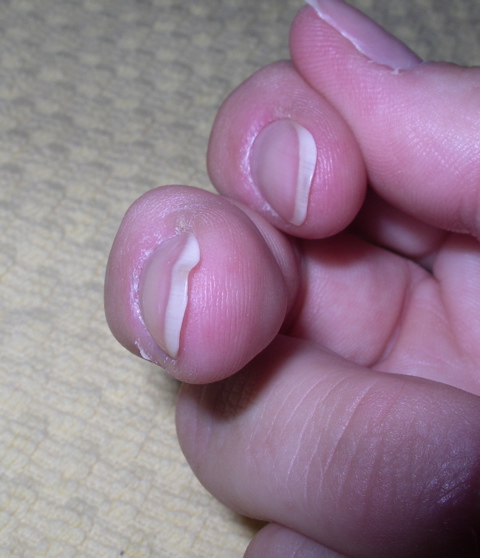
(Lunula, singular; lunulae, plural) The lunulae are those little white moon things at the base of the nail. There should be 8 of these. The lunulae on the little fingers should be missing according to Eastern Medicine Philosophy. The one on the thumb nail should be 25% or less than the total length of the nail from base to flesh line at the top.

If the thumb lunula is too large the heart and circulation is working overtime and eventually this overworks the heart. The person may be exhibiting high blood pressure. Other signs that the heart is working overtime would be the presence of “heart line” on the ear lobe (a line just above the lobe itself) and a pointed tongue. If the tongue is red at the tip, there is a more serious involvement of the heart.

Lunulae on the little fingers also is a sign that the circulation is working overtime (especially in the digestive area). High blood pressure may be the cause as well.

Fewer than 8 lunulae:  Many rule-outs here such as poor circulation, anemia, fatigue, not enough oxygenation or exercise, heart disease, imbalanced nervous system, numbness, protein deficiency, Vitamin A deficiency or being weak-spirited (low life force or “chi”). Yes, taking deep breaths is important, for more read the Basics of Breathing handout and/or practice some meditation.

Lunulae are red or blue or there is a reddish or bluish tinge just above the lunulae but not on the rest of the nail:  Heart disease, heavy metal poisoning or lung disease.

Shoot-like things emanating from the border of the lunulae: This not very good sign can mean thyroid problems or cancer; many men with this on their thumb nail have been diagnosed with prostate cancer or have had their prostate removed due to cancer. It is reversible with proper treatment. PSA (Prostate Specific Antigen) test and a Thyroid panel can be taken to verify any of these abnormalities.

An interesting note: You can tell often if a person is right-handed or left handed because the lunulae will be larger (or there may be more of them) on the hand that is used more often.

Nail Color

Nail color can be grouped into black, blue, brown/copper, green, blue-green, gray, yellow, pale, purple or red groups. Each color means something different and there are many rule-outs for each color.

Look for the color in general. Nails should be pink. When pressing down on the nail, the circulation should return within one second. This is called Capillary Refill Time. A change in nail color from trauma is not to greatly concerned about, but when nails without trauma look different, then some concern is in order.
  • Black:  anemia, B-12 deficiency, bacterial infection, chronic kidney disease, adrenal gland problems, liver disease, cancer or melanomas, silver deposits (heavy metals), trauma
  • Blue:  atherosclerosis, blood is too thick, liver disease, COPD (lung disease), copper or silver poisoning, decreased hemoglobin, drug reactions, gas poisoning, heart disease, hepatitis, high platelet counts, increased cholesterol, inflammation, kidneys with clogged arteries, lupus, prior strokes, rheumatoid arthritis, blood clots
  • Green:  allergies to cleaning agents, bacillus infection, localized fungal infection, serious emphysema 
  • Brown or Copper:  arsenic or copper poisoning, fungal infections.  
  • Grey:  arthritis, edema, malnutrition, post-operative effects, glaucoma, lung problems, emphysema, cardio-pulmonary disease
  • Yellow:  bleeding, diabetes, digestive problems, liver disease, hyperthyroidism, too much carrot juice, lymphatic problems, nail fungus, poor circulation, respiratory problems, vitamin E deficiency, fluid retention in the lymphatic system 
  • Pale or White:  anemia, candida (yeast), low life force, overall mineral deficiency, heart or lung problems, hemorrhage, hookworm infestation, kidney disease, liver disease, malnutrition, ulcers 
  • Purple: oxygen deprivation, circulatory problems, congenital problems 
  • Red: brain hemorrhage, heart disease, high blood pressure, lung disease, stroke, carbon monoxide poisoning
Nail Texture and Markings

The most common are vertical ridges and split nails, horizontal dips, red bands at the tips, yellow tips and white spots. There are others, however.

Vertical Ridges and Split Nails:  adrenal gland problems, arthritic tendencies, asthma, broken heart, bronchitis, calcium deficiency, chronic fatigue, chronic inflammation, chronic stress, depression, emotional trauma, excretory system conditions, hyperactivity or overexertion, iron deficiency, kidney problems, laryngitis, nervous problems, poor digestion/absorption in the small intestine, chemicals from food, dieting, protein deficiency, respiratory problems, unhappiness, vitamin A deficiency, yeast and other fungi, lupus, chemo or radiation side effect, drugs or prescription use
  
FingernailLiverLines 258x300 Fingernail Analysis
Fingernail red lines at the tips
If ridges appear on all the nails, the intestines are not effectively assimilating the foods. For these cases, at NHT ionic or colloidal minerals are prescribed right away. They are supposedly the best, most easily digested vitamins and minerals on the market. 

Horizontal Dips:  poor circulation, picking at the nail bed, heart disease, stress, lack of essential nutrients, trauma

Red Bands at the Tips:  allergies, liver overload, inflammation of the gastro-intestinal tract
 Yellow Tips: liver problems, melanoma, poor digestion, smoker

White Spots: kidney or hormone imbalances, zinc deficiency, calcium deficiency, Vitamin A deficiency, excessive chemical or drug use of drugs processed through the kidneys, prostate or impotence problems, genital diseases such as chlamydia or syphilis

Nail Shape

The most common problems seen at NHT are short small beds, wide clubbed beds (clubbed means that the nails curve downward), and clubbed nails.

Short Small Beds: heart disease - for this NHT recommends Standard Process Cardio-Plus (a protomorphogen) to rebuild the heart

Wide Clubbed Nails: asbestos exposure, emphysema, lung disease - NHT treats this with Pneumotrophin (a protomorphogen) for 1-2 years to rebuild the lung tissue

Clubbed: Heart disease, liver disease, lung disease

Nail Pliability

Brittle or cracked nails: Calcium deficiency, impaired kidney function, iron deficiency, malnutrition, protein deficiency, thyroid problems, Vitamin A deficiency, Vitamin D deficiency

Soft and Thin nails: adrenal gland problems, can be associated with leg cramps, poor nutrition, protein deficiency, Vitamin C deficiency


Information taken from Natural Health Techniques

Sunday, June 24, 2012

Anti-inflammatory Kimbap

Kimbap (Korean) or sushi (Japanese) - call it what you will, but this version has different oils and different ingredients for filling so it's not the "traditional" seaweed laver rolls found in Asia. Typically laver rolls are made with white rice - inflammatory as it's a processed starch that quickly converts to sugar in the body - and the rice is deliciously flavored with sesame seed oil, an inflammatory oil, at least for people with problems of inflammation, for instance, people with rheumatoid arthritis, SLE (lupus), MS and other related autoimmune diseases. Then the vegies inside are typically pickled - very inflammatory! Strips of highly processed meats are added - processed meats are loaded with sulfites! And then processed salts, which most often include MSG are then added. Yikes, but I react to it all! So I made my own version of kimbap, an anti-inflammatory version.

Anti-inflammatory Kimbap (almost raw)

1 sheet unoiled, unsalted seaweed laver
1/2 cup sticky brown rice, cooked
2 teaspoons lemon juice
2 teaspoons olive oil
1 clove garlic, minced
sea salt

1-2 mustard leaves
1-2 kales leaves
1/4 ripe avocado
2-3 cherry tomatoes
1 thin strip cucumber

Mix the cooked brown rice with the lemon juice, olive oil, minced garlic and a little sea salt. Then spread the mixture out on a sheet of seaweed laver. The oiled and salted seaweed laver of course tastes better BUT it has been oiled with corn oil (inflammatory) and salted with processed salts which likely include MSG and certainly contains chemicals from the processing. The unoiled, unsalted laver isn't as tasty but the good side is that it doesn't tear as easily when spreading the moist rice mixture AND my eyes won't burn afterwards as a reaction. Also when spreading the mixture, leave a 3/4-inch strip of laver free of rice. After rolling the laver roll this strip will adhere to the roll, making the roll retain its own shape.


After the rice has been spread out thinly and evenly, pile the vegies on the lower area of the riced section. Don't pile it too high or the roll will be too fat to role and will tear.


Next, role the vegies tightly to make a roll. A little moisture could be added if necessary to the strip of exposed laver at the end to make it seal.


With a very sharp, serrated knife, cut the laver roll into 1/2 - 3/4" rounds and lay them on a plate. Serve with a little extra garnish - tomato, wedge of avocado or even on a decorative bed of greens.


Unfortunately, because I have to watch my carb intake in order not to feed the evil bacteria in my system too much and gradually "starve" it, I can't eat more than one kimbap roll at a time. That's a bummer because they taste so good!

Tuesday, May 1, 2012

5 Stages of Candida

The Wellness Guru site analyzed candida in a way that few other wellness centers, sites or practitioners do. The Wellness Guru categorized candida in stages or categories based on how badly the yeast has affected the human body. This is a reason why when people with candida go online to find a diet to help them eliminate their problem they find diets that conflict with one another, e.g. one says don't eat meat and others say do; don't eat tomatoes, but other sites say eat them; many sites say don't eat peas or winter squash or potatoes while many others list those starchy items under vegetables to be eaten; and then the most conflicting one to me is the very few sites that say don't eat dairy or even yogurt because of the lactose (another form of sugar) and hormone content of milk and yet the vast majority of sites assert that yogurt is loaded with the good bacteria and will help build more good bacteria. Hmmm, in my case milk especially but all dairy immediately makes my twisted pinky joint swell and I get achy and my throat phlegmy. Maybe it's just me, but I think not. With all the conflicts over what is "good" for the body, and what isn't, no wonder people are confused.

Well, Wellness Guru has an eye-opening 5 category analysis of candida as a progressive disease. The analysis is certainly not comprehensive but it is thought-provoking. On their website after the 5 categories are analyzed, they also posted dietary recommendations and restrictions per each category. I would post those here also, but there are a few points in the listings I don't agree with and since I already posted a Strict Candida Diet once, I'm not going to post what I think is a more careful diet for each of the categories. Their diet recommendations, however, are certainly worth taking a look at. They might very much help someone decide when a food item should be assiduously avoided ... or added back in.

The 5 Categories of Candida (not comprehensive)

Category #1 - The individual is probably not experiencing any major discomforts or ailments but may once in a while not feel 100%. This person would benefit from a modified yeast free regime to prevent future problems and to fine tune the occasional imbalances; however, it is not essential.

Category #2 - The individual is beginning to experience small irritations and occasional discomforts such as digestive problems, PMS, food and environmental sensitivities and allergies, headaches, fatigue, sinus and bronchial problems, anxieties, canker sores in the mouth, thrush in the vagina or mouth, athlete’s foot, an itchy groin in men or women, vaginal discharge, mild skin irritations.

Category #3 - The individual is experiencing a number of problems on a weekly basis such as gastrointestinal problems, hormonal imbalances, food and environmental sensitivities and allergies, headaches, fatigue, sinus and bronchial problems, anxieties, occasional sleep disturbances, pain and discomfort in the joints and limbs, canker sores in the mouth, thrush in the vagina or mouth, athlete’s foot, an itchy groin in men or women, vaginal discharge, skin irritations or have had surgery on an organ.

Category #4 - The individual may be suffering sleep disorders including difficulty going to sleep and/or waking up during the night, depressions, constant fatigue, pain and discomfort in the joints and limbs, temperature fluctuations, eye-sight problems, chronic gastrointestinal problems such as constant constipation, presence of cysts, endometriosis, irritable bowel syndrome, colitis, ulcers, kidney stones, serious skin conditions, migraine headaches, nightmares, elevated sugar or cholesterol problems, high or low blood pressure, arthritis and rheumatism.

Category #5 - the individual has been diagnosed with a serious heart condition, HIV, AIDS, cancer, MS, Parkinson’s, or any other life threatening condition.

In my wide readings I found one other site that also categorized candida in 5 stages. I don't recall much about the stages except that stage #4 was when the candida yeast/mold had compromised a few or many organs in the body and they were starting to badly malfunction or shut down. Stage #3 was pretty extreme too, something like extreme insomnia, restlessness, racing heart and other problems that I had experienced at disease onset. I figure that when I was at my absolute worst and almost completely disfunctional that I probably was in stage #4 in this other candida classification heirarchy. I was eating only vegetables and forcing myself to walk in the freezing weather every day (when I could) and oh so slowly I started to get better. Thank goodness too, because I didn't diagnosis myself for many more months or come across that staging until even after that. Stage #5 on that web page was pretty scary, death. When the yeast/mold totally engulfs the organs, they can't function. For the Wellness Guru the stage #6 unspoken category would also be death. Very uncomfortable to think about.

Monday, April 23, 2012

Vitamin A Deficiency Affecting Diseases

Hurray, hurray, hurray! I've been fighting vitamin A deficiency for almost 2 years now, to no avail (discussed in Huge Vitamin A Deficiency). Candida destroys vitamin A, but then also many of the candida killers I was using (oregano oil, grapefruit seed extract and I strongly suspect Barlena's Olive Leaf extract) also destroy it. I tried taking large doses of vitamin A in oil gels and later in the dry form, but had no results. Then I bumped into a passage in the book Supplements Exposed that said that taking the supplement vitamin A will not boost vitamin A but will actually impair it. I had just gone through a lot of vitamin A gels and thought I'd test that theory, because I didn't know what else to do. So for the two months almost every day I gobbled up more high potency vitamin A capsules (the dry kind this time), retested, and yup, the outcome showed virtually no change. I know that vitamin A needs iron, oil and other nutrients in order to become assimilated well so there might be other underlying problems why I didn't absorb any of the nutrients. So, I decided I would do it solidly through a diet saturated in vitamin A-rich foods.

So for the past 2 1/2 months I have been taking large doses of Pure Hawaiian Spirulina Pacifica, rich in vitamin A among other large doses of immune building nutrients like vitamin K for the bones and heart, vitamin B12 which vegetarians and vegans especially need, iron which is so important for women, and 2 trace minerals, manganese and chromium. [On the Hawaiian spirulina label the suggested amount is 1 teaspoon up to 3 times a day. I took 1 heaping tablespoon once a day.]

Ah, synergy of vitamins in their natural state and working in correlation with one another rather than just the isolated vitamin A in supplement form! Almost every morning I ate 2 tablespoons of chia seeds [the packaging suggests 1 tablespoon a day and elsewhere I've read to not eat this daily beyond one month as side effects are unknown]. The chia seeds are said to be rich in vitamin A (I've never found out nutritionally how rich though, but hey, I can't eat the vitamin A-rich foods like carrots, winter squash, sweet potatoes and other highly glycemic foods so I just went with hearsay on this). Anyway, my wonderful vitamin A outcome just came back .... NORMAL!!!!

January 20, 2012 - my outcome at .18 (extremely low!)
April 3, 2012 - my outcome at .42 (.30~.70 is normal)

That's a whopping increase of .24 in just 2 1/2 months!!! The last 2 1/2 months I've really gobbled up tons of vitamin A-loaded asparagus too, tried to include a little oil in each of my green smoothies to help with vitamin A assimilation, and faithfully drank my spirulina and ate chia seed pudding. Yes! Finally!

And just a comment on that "normal" range above for vitamin A. I've been testing at the same clinic (a testing practice which assures a more standard reading of test outcomes) for the past 2 years, and until just a few months ago, the "normal range" for vitamin A listed on test results print-outs was .36~1.20. However, about 6 months ago that range got drastically shifted, and shockingly the "norm" for vitamin A was reduced! The "normal range" now reads .30~.70. I can understand why the range was lowered - there is great fear of vitamin A toxicity, and in fact, many of the symptoms for toxicity and for low vitamin A are the same. Go figure that one out! But for the range to actually be lowered indicates to me that the USDA/FDA/who? is becoming more accepting of the lower and lower numbers of vitamin A and is accommodating their figures to match the common, a.k.a. "normal", populace. A big study on this needs to take place.

Vitamin A Deficiency Affecting Diseases

Animal Pharm, a site dedicated to blogging about nutrition on global issues, detailed a list of diseases that low vitamin A plays an instrumental part in. But before I reintroduce the list, the site also presented that the marbling of meat - human abs, glutious maximus and biceps as well as beef - is a direct cause of insufficient vitamin A in the body. Now everybody wants to present tight shapely muscles, and yet people tend to go for the choice cuts of well-marbled meat. These two desires are in direct opposition of each other and reflect two opposing standards. Humans have the standard of desiring no marbling in their own muscles (and therefore, have the unknown desire to have adequate amounts of vitamin A) while they desire the appealing look of well-marbled meat, a grade A cut (which unfortunately could be an indication of a vitamin A deficiency in the meat, and therefore in actually a substandard cut!). This blog entry is a must read!

Now, for the diseases that result in vitamin A deficiency or possibly are a partial result of vitamin A deficiency...

Who might be vitamin A deficient?
..... vegans
..... those who eat 'low fat'
..... those who don't consume a lot of wild seafood/grassfed meat
..... children less than age 4 and women
..... those with cancer
..... chronically ill
..... those with infections or high CRP (chronic restrictive pulmonary)
..... those with Hashimoto's hypothyroidism
..... those with other autoimmune diseases: Grave's, RA (rheumatoid arthritis), SLE (systemic lupus erythematosus), Sjogrens, MS (multiple sclerosis), NASH (non-alcoholic steatohepatitis), primary biliary cirrhosis, CAD (coronary artery disease), etc
..... those with skin conditions (again, autoimmune origin and wheat-triggered): eczema, rosacea, skin cancer, poor wound healing, atopic dermatitis, psoriasis, dermatitis herpetiformis, porphyria cutaneous tarda
..... those with gluten enteropathy, (known vs. unknown) wheat/casein allergies, 'leaky gut' and a poor intestinal barrier which prevent absorption of fat and fat-soluble vitamins
..... those without a gallbladder who may not produce sufficient digestive enzymes to absorb fat and fat-soluble vitamins
..... those who take Orlistat/Xenical or OTC Alli (weight loss pills which block fat and thus fat-soluble vitamins A, D, E, K1, K2)
..... those on antiseizure drugs (valproic acid, carbamezepine, phenytoin which increase metabolism/elimination of vitamin A)
..... those who have had gastric bypass which unnaturally cuts out a great portion of our most important absorptive surface area for fat and nutrients, the duodenum
..... diabetic-induced rats fed vitamin A deficient lab chow
..... Inuit children with frequent lower respiratory tract infections and otitis media [the children are probably no longer consuming their traditional H-G-fish Paleo diets but the S.A.D. (standard American diet) grain-based one like Americans]
..... third world countries where night-vision blindness is prevalent