Wednesday, October 8, 2014

Mung Bean Sprout Stir-fry

3-4 T. coconut oil
5 cloves garlic, sliced
2"-3" piece of fresh ginger, minced
1 large onion, thinly sliced
4 cups mung bean sprouts
1/2 carrot, shredded
1 can lotus seed, bamboo shoots, or water chestnuts (optional)
2 cups fresh kale, in large shreds
1/2 t. sea salt
Saute the onion, garlic and ginger on low heat in the coconut oil. Add in the bean sprouts and shredded carrots and lightly sauté. When the bean sprouts and carrots are becoming tender (do not overcook), add in the fresh kale shreds and stir until the kale is a bright green. Serve immediately with brown rice and seaweed laver.

I used lotus seeds ... for the first time. While I love bamboo shoots and water chestnuts, I am not keen on lotus seeds. They are very dry and somewhat bland. But cool, I did try them and it's exciting to eat something different :)
The seaweed laver is particularly complimentary to brown rice and stir-fry.
I eat tons and tons of laver and since being in Korea, the white spots on my nails have disappeared ... but they return when I'm in the States for a few consecutive weeks. I have wondered for a long time if the seaweed has something to do with eliminating the white spots, which supposedly are caused by zinc or calcium (have heard both contribute).


Pretty good, but have to say that my body isn't ready for the starchiness of the lotus seeds. 

Thursday, September 11, 2014

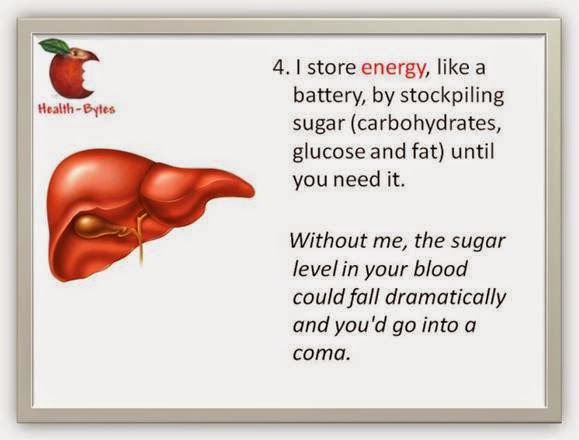
Care for Your Liver

Someone sent me these slides via email and I thought the message they contain is very centered on good health, especially for people like me who have systemic candida which can tax the liver with all the fungus in the body and the constant fight to purify the blood and clean out the fungus. Whoever put these slides together, kudos to you and thank you!

(unfortunately didn't receive slide #5)

Sunday, August 31, 2014

Dairy-free Veggie Primavera

Gluten-free pasta of your choice  
Veggies: 
2 carrots, sliced
1 large onion, sliced
1 zucchini, angle-sliced
1 yellow squash, angle-sliced
2 scallions, sliced
5-6 cloves garlic, sliced
olive oil

Primavera Sauce: 
3/4 - 1 cup cashews
1 small onion, chopped
2 t. turmeric powder
2-3 cloves garlic
handful of basic leaves, if desired
salt and pepper to taste 
prepare your veggies
first, lightly sauté the garlic and shallots in olive oil
then add in the remaining veggies, and add water to nearly cover them.
cooking at high temps kills enzymes really quickly so simmer, if time permits
When the veggies are tender, pour the sauce made in a high-speed blender over the veggies and cook another 10 or so minutes. Sauce will thicken on its own.
After the sauce and veggies are ready, mix them into the pasta.
I can't eat mushrooms or the marinade, but I made them for others at the table to have a fuller Italian-like meal. 
Homemade almond milk and my meal (minus the marinated mushroom)
I realize that cashews are NOT on my systemic candida diet; however, I was also feeding other people (hence, the marinated mushrooms) and since I've been very careful with my diet, eating cashews once in a low amount probably isn't going to hurt me. I did carefully choose cashews that didn't look discolored though so hopefully with minimal mold that they are known to have.

Thursday, August 14, 2014

Veggie Juice Pulp Crackers

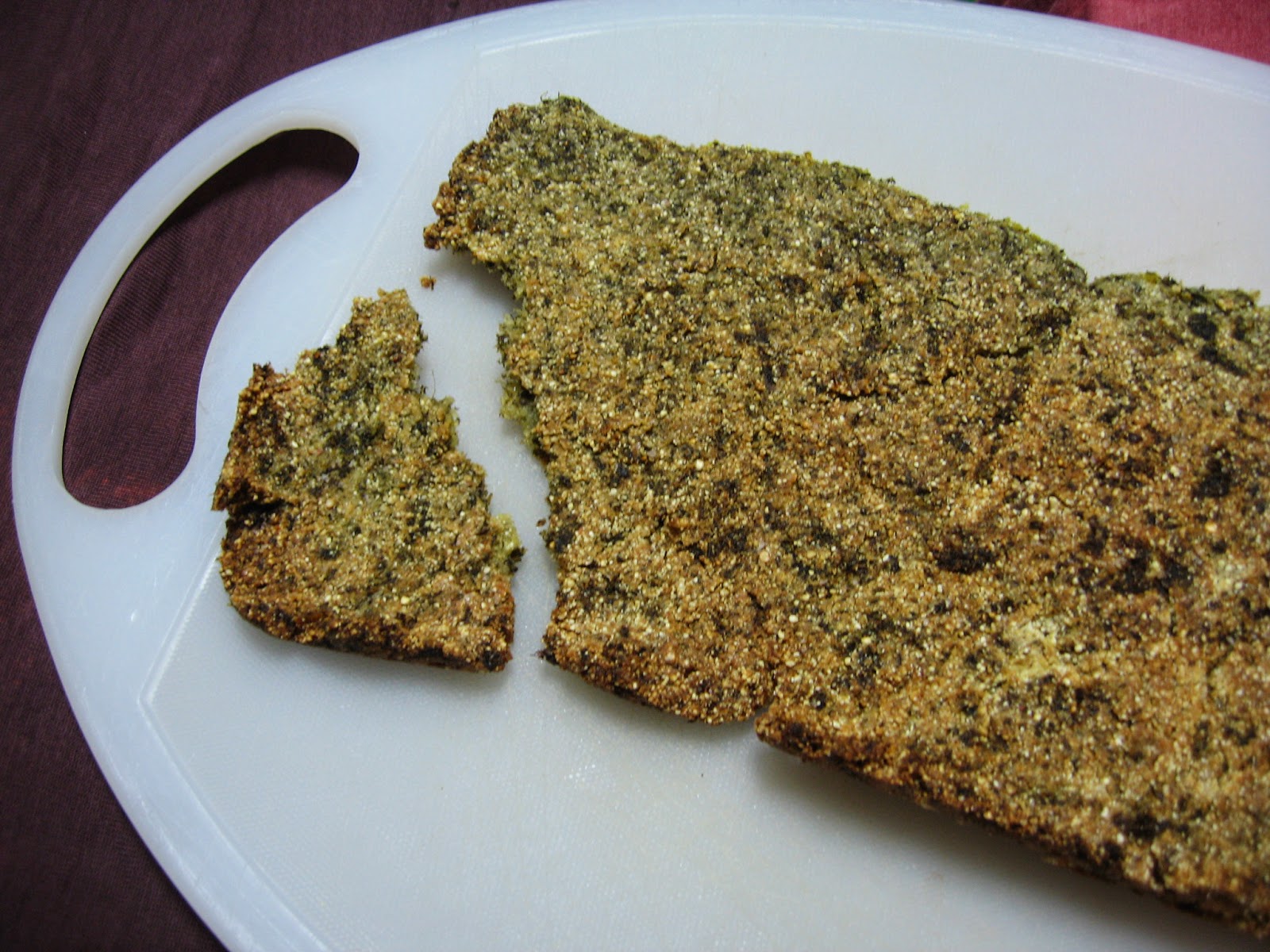
When making veggie juice with a juice extractor, the fiber of the plants has mostly been removed to expedite assimilation of vitamins and minerals of the straight juice, but there's no reason why the squeezed vegetable fibers, also rich in vitamins and minerals, need to be tossed. The bulky plant fibers can be added to other ingredients to make bread, crackers, crusts, pot pies, and to retain their full vitamin B count [heat kills vitamins B & C], they can remain in their raw state, so even raw foodists can utilize this veggie juice "waste".

I especially like making crackers with the juice pulp. Unfortunately, this time I didn't find any zesty sesame leaves in the market because they add a delightful zing to crackers, but the parsley works pretty well for added flavor. And btw, I juiced the cucumbers last to better flush out the juicer but, as I wasn't too sure about the cooked flavor of cucumbers, I refrained from using the cucumber pulp, not that there was much anyway as the cukes are high moisture.


After juicing all of the leafies and the cukes, I refrigerated the juice for the veggie juice cleanse. Throughout today and tomorrow I will alternate on a tall glass of water and a tall glass of fresh veggie juice. There are times when a person needs to clean out their intestinal tract, and I really need this as I've been bloating a lot, even after eating foods that I've previously eaten and digested really well. We'll see if this juice cleans flushes the GI tract some.
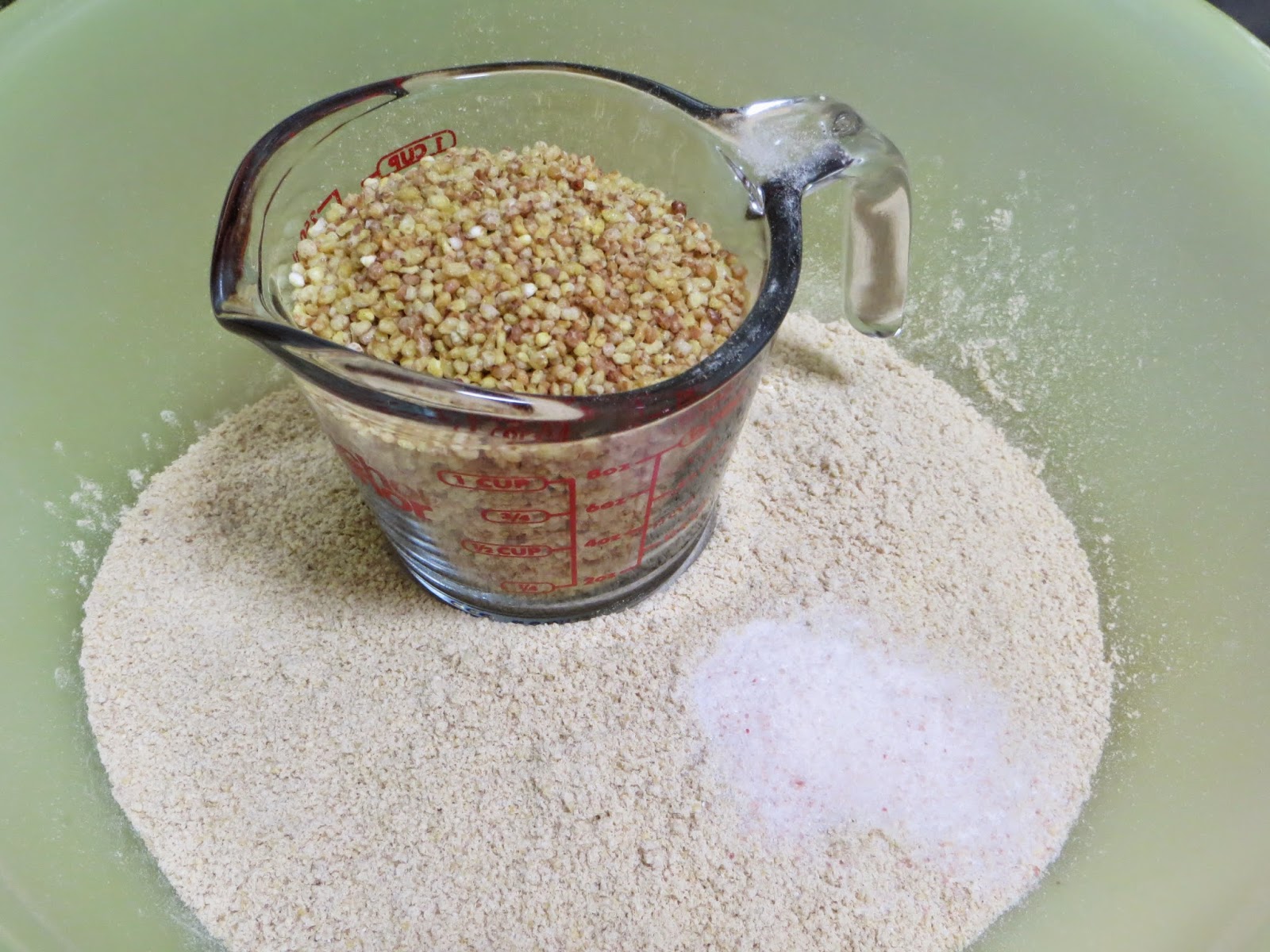
Veggie Juice Pulp Crackers 
2 1/2 cups millet & quinoa & flours mixed (made in Blendtec)
1 1/2 - 2 cups vegetable pulp
1 cup roasted buckwheat
1/2 - 2/3 cup olive oil
1/2 cup water
2 t. garlic powder1 1/2 - 2 t. sea salt (use some for dusting the tops of the unbaked crackers)
After pressing the cracker dough into a greased and flour-dusted pan, lightly dust the top of the pressed down dough with flour. Bake at 250F for 30-35 minutes.


And here are some crackers I previously made with dark green leafies which included a lot of sesame leaf pulp. Wow, were these ever tasty! Wish I wrote this recipe down, but the flours used were quinoa, millet and flaxseed. It was very similar to the one above, but something besides the zesty sesame seed leaves made it much better. 


Here's another pulp cracker using pumpkin seeds, millet and quinoa for the flours. I skimped a bit on the added salt because the packaged pumpkin seeds were incredibly salty. These crackers turned out pretty good, especially because the veggie pulp was loaded with sesame seed leaf refuse. It's obvious I used quite a lot of the pumpkin seeds for this recipe, but actually it was a bit much. It needs more flaxseed to hold it together better and to add a deeper flavor. I think the flax flavor is very complimentary to the zestiness of the dark green leaves, which, because of a lot of sesame seed leaf pulp, can be rather bitter.


Thursday, July 24, 2014

Toxic Chemicals Found in Teas

I came across this article and find it very meaningful for people with candida who have to be ultra careful of what they put in their intestinal tract. For me, I've had reactions to some brands of teas which I've often attributed to dusty tea leaves or something in the tea bags. Couldn't be much else as the only tea I have pretty much purchased in tea bag form is peppermint ... and I've tried a number of different brands, based on price and accessibility: Bigelow (individually wrapped and good for traveling), Celestial Seasonings (taste fresher and more potent than many other brands), Meijers (often very pepperminty and fresh too, as well as being much cheaper than Bigelow and Celestial Seasonings), and then a few other less known brands.

For people with candida, there aren't too many kinds of teas we can have because of the "sugar factor" that must be considered in teas with flowers and the huge array of additives, particularly citric acid, including as an ingredient. Maybe some people don't have that concern but I've had to eliminate ALL sugars, sweeteners and additives to control the candida fungus, which has raged and still easily gets activated especially in the thyroid and lung regions of my GI tract. If I have a little sugar or dustiness, those regions are the first to react  tightness, phlegm, a dry cough — basically, no fun.

Dry loose leaf herbs aren't the best option either as many herbs sold in US markets have been irradiated to give them longer shelf life. Ugh! Anyway, teas that I enjoy in dry leaf form are of course peppermint, rosemary, fennel (a bit like licorice), and then of course freshly grated ginger for a powerful shot of vigor! Licorice root also ground into powder is very good too but should not be drunk for more than a week at a time as it raises blood pressure, and people with high blood pressure probably should limit their intake to the seldom cup. That said though, licorice root tea is excellent for soothing a raging sore throat and calming down active candida in the mouth and throat region!!! The link (herb-info.com) where the article below comes from is filled with more resources of herbs and their selection.

Warning: Shocking Toxic Chemicals Found in Teas

Warning - Shocking Toxic Chemicals Found In Tea BrandsUPDATE: Many people wanted to see “which brands”: We linked to the Glaucus Research report that tears Teavana a new one, we linked (end of the article) to Food Babe’s article which includes a complete chart of which brands she investigated, and we followed up with a lot of our own additional research into the substances in the teabag material and so on. To sum it up: Numi, Rishi and Traditional Medicinals came out smelling of roses; most of the others, not so – including Lipton, Allegro, Celestial Seasonings, Tazo, Teavana, Bigelow, Republic of Tea, Twinings, Yogi, Tea Forte, Mighty Leaf, Trader Joe’s, Tetley. All the links are in the article (which is worth reading).
Well folks, this news was a bit of a downer to be honest, but it’s important stuff and people need to know: We recently discovered an amazing article (link at the end) which gives a very detailed exposé of chemicals and other additives that have been found by lab testing in numerous common brands of tea. We also did some further investigation, which appears below.
Now I’m a tea fanatic so I was understandably upset by finding out that my favorite brew is loaded with surprisingly high quantities of pesticides and other dubious chemicals. The types of suspect ingredients found in common tea brands can be broken down into four main categories:
1) PESTICIDES. Most teas are not washed before being dried – and therefore non-organic teas almost certainly contain pesticide residues. Some tea brands (even those claimed organic or pesticide free!) have recently been found to contain pesticides that are known carcinogens – in quantities above the US and EU limits! This is completely outrageous. I dug further and found new scientific reports which are pretty scathing – not to mention scary from the consumer’s point of view. Here’s an in-depth report from Glaucus Research that illustrates what appear to be outright criminal practices. It’s essential reading and a real education into what goes on in the modern world.
2) SUBSTANCES IN THE TEABAG MATERIAL. Teabags are often made from plastics (which may leach molecules into the boiling water), corn-based biodegradable bags (probably GMO), or with paper which was treated with wet strength agents such as polymerized epichlorohydrin. Epicholorohydrin (unpolymerized) is also used as an insect fumigant and considered a potential carcinogen – and although levels present in paper products such as tea bags and coffee filters are low, they are still present. (source)
The effects of leaching from teabag material to the tea are of course avoidable if you use loose leaf tea. If you are concerned about this but still want your favorite brand, you could also try this “hack”: Empty the contents of the teabag(s) into a teapot and brew tea the traditional way with a tea strainer! (You get style points also for that – and let us know if you notice a difference in flavor from the deduction of anything that should not have been in your tea!)
3) “NATURAL FLAVORS”. Now this vague terminology is a “blanket term” which conceals the truth of these ingredients. The term “Natural Flavors” essentially means flavorings “which have their origin in nature”. In other words, it could be made from any animal or plant source and processed in many ways.
Not only do you have no true idea what the source actually was (you might be allergic to it!), nor how much processing was done to it – but some of the items that are used as natural flavors are completely disgusting in their own right. Like for example http://en.wikipedia.org/wiki/castoreum. Yes, anything that says “natural flavors” on the label could contain castoreum, and you would never know…
4) ARTIFICIAL FLAVORS. Now if in the back of your mind you are asking yourself “why does tea need flavoring added at all?” then congratulate yourself because that is a VERY good question. The answer is that the poor plants/herbs used in its manufacture have been mercilessly subjected to the techniques of modern agriculture, to the extent that the end product is sufficiently bland-tasting that flavoring is “required” in order to make it taste the way it should! Tea should be tea! It should not need flavorings, natural or artificial! So please be sure to look at the label and watch out for the word “flavorings” or “flavors”.
Remember, the companies making this stuff are generally just interested in creating marketable products – and decisions are made for reasons of cutting costs and increasing profits. You are just part of the equation and so all the while you continue to swill down whatever, the companies will keep on manufacturing whatever… because it works! However, if sufficient numbers of people demand quality ingredients and transparency at every step of the chain, then the companies will be forced to comply by the laws of supply and demand! So you are in the driving seat! Learn as much as you can about food quality. Ask questions and make conscious, informed choices. Do your research and support independent study. Don’t let them get away with it. Every time you do this, you add to the push for positive change.
We’ve just scratched the surface here, please check out Food Babe’s full report for more detailed information and a chart of which teas came out with their reputations intact – and please share with your tea-loving friends!

http://foodbabe.com/2013/08/21/do-you-know-whats-really-in-your-tea/

Friday, June 13, 2014

Greenday Veggie Snacks: Okra, Onion, Pumpkin

I am a bit in love with my new little discovery at the international food mart in Itaewon, Seoul. The owner is from Pakistan and gets some of the oddest items mostly from the US, SE Asia, and the Middle East. Of course there's very little that I can eat because my diet is so limited, but my latest foray there unearthed some vegetable snack crackers imported from Thailand ... the brand, Greenday.

There were three flavors available: okra chips, onion chips, and pumpkin chips. With only two ingredients listed on the package (their respective vegetable and then 2% rice bran oil), I had to give them a try. Not sure if I'd label them as only 2% oil though as they left a greasy film on my fingers, but they certainly are a nice treat. The okra and onion chips are my favorites. I find them much more flavorful than the pumpkin chips, but then my tastebuds prefer salty and sour to sweet so that's no great surprise to me in the preference.


There's not much in a package (okra - 25g; onion - 15g; pumpkin - 30g) and they come off as a bit oily, but they certainly add a bit of interest to my rather strict diet. As a treat, might look these up again ... especially if I'm going on a picnic. Imagine the convenience of a picnic snack without me having to chop, chop, chop!!!

Saturday, May 17, 2014

The High Protein Concentration of Sprouts

Sprouts Have the Highest Concentration of Nutrition Per Calorie of Any Food

Sprouts are rich sources of vitamins, minerals, trace minerals, enzymes, antioxidants, chlorophyll and protein. They are low calorie and contain little or no fat. The fat they do contain is the healthy fat that your body needs. As some of the most nutritious foods that exist, they make a great addition to any healthy eating plan. Use in salads, on sandwiches, added to soups or stir fried with vegetables. Enjoy these nutrient-packed delicacies as a snack all by themselves or added as a garnish to a main dish. Eat them raw or cooked. Of course, as with all food, the nutritional value is greater when they are eaten raw. But eating them cooked is better than not eating them at all.

Sprouting magnifies the nutritional value of the seed. It boosts the B-vitamin content, triples the amount of vitamin A and increases vitamin C by a factor of 5 to 6 times. Starches are converted to simple sugars, making sprouts very easily digestible. You can have them fresh all year round, even when fresh vegetables are hard to find. It's easier than planting a garden outside and they're ready much quicker. You can even grow them when the ground outside is frozen solid. And the best part is that you can grow the freshest, tastiest sprouts right in the comfort of your own kitchen. It takes less than 2 minutes a day and they are ready in 3 to 7 days, depending on the variety.

You can sprout seeds, beans, grains and nuts. Some of the most popular varieties are alfalfa, broccoli, red clover, radish, mung beans, lentils, garbanzo beans and peas.

Alfalfa sprouts are what people typically think of when you mention sprouts. They are the ones you commonly see at a salad bar. Rich in phytochemicals, they protect against cancer, heart disease, osteoporosis and fibrocystic breast disease. They stimulate natural killer cell activity, which strengthens the immune system. What's more, they are beneficial in reducing symptoms of PMS and menopause, including hot flashes. Furthermore, they contain high concentrations of antioxidants, the body's defense against the destruction of DNA which is the cause of aging. Alfalfa sprouts are abundant sources of vitamins A, B, C, E and K, the minerals calcium, iron, magnesium, phosphorus, potassium and zinc. Also carotene, chlorophyll, amino acids and trace elements. They contain 35% protein. One pound of alfalfa seed produces 10-14 pounds of sprouts.

Broccoli sprouts have just recently become popular after it was discovered that they abound with the amazing cancer-fighting phytochemical, sulforaphane. Research studies have shown that they contain 50 times more sulforpohane than fresh broccoli. What's more, they contain glucosinolates and isothiocyanates, substances that protect cells from becoming malignant, at 10-100 times greater levels than in fresh broccoli. In addition, they are sources of plant estrogens, similar to human estrogen, and so are helpful in cases of PMS, menopause, hot flashes and fibrocystic disease. Nutrient dense, they are rich sources of vitamins A, B, C, E and K, anti-oxidants, the minerals calcium, iron, magnesium, phosphorus, potassium and zinc. Also carotene, chlorophyll, amino acids, trace elements and antioxidants. Broccoli sprouts contain as much as 35% protein.

Garbanzo beans, also known as chickpeas, can be sprouted to make delightfully delicious hummus. It is much richer in nutrients than hummus typically made from cooked chickpeas. They can also be used in salads, soups or stir fried or steamed with other bean sprouts and vegetables. These sprouts are plentiful sources of vitamins A, C and E, the minerals iron, calcium, magnesium and amino acids. They contain 20% protein.

Pea sprouts are delicious raw or cooked. They can be sprinkled on salads and added to soups. In addition, they can be steamed or stir fried with other bean sprouts and vegetables. They are rich sources of vitamins A, B, C and E, all the essential amino acids, the minerals calcium, iron and phosphorus. They contain 26% protein.

Lentil sprouts, like pea sprouts, are very tasty and can be eaten raw or cooked. Add them to salads, soups, casseroles or steam or stir fry them with other vegetables. Rich in vitamins A, B, C and E, the minerals iron, calcium and phosphorus. They contain 26% protein.

Mung bean sprouts are the ones you typically see in Oriental cooking. Mung beans should be sprouted in the dark to avoid a bitter flavor. They are ready when they are 1.5 to 2 inches long. Abundant in vitamins A, B, C and E, the minerals iron, potassium, calcium and magnesium, and amino acids, they contain 20% protein.

Radish sprouts taste just like radishes. They are great on sandwiches or in salads. Their high concentrations of phytochemicals help protect against disease. And because of their naturally occurring plant estrogens, similar to human estrogen, they are helpful with PMS, menopause, hot flashes and fibrocystic disease. These baby green vegetables are rich sources of vitamins A, B, C, E and K, the minerals potassium, calcium, iron, phosphorus, magnesium and zinc. In addition, they also contain carotene, chlorophyll, amino acids, trace elements, and antioxidants. They have a 26% protein content.
Red clover sprouts look like alfalfa sprouts and have a mild, sweet flavor. Rich in phytochemicals, in particular genistein, which is known to prevent the formation of new blood vessels inside a tumor, in essence starving the tumor, it is protective against diseases like cancer. Red clover contains naturally occurring plant estrogens, similar to human estrogen, so they are helpful with PMS, menopause, hot flashes and fibrocystic disease. They are contraindicated with tamoxifen treatment. Please consult your physician if you are receiving this treatment before using sprouts. They contain vitamins A, B, C, E and K, the minerals calcium, magnesium, potassium, iron, phosphorus and zinc, trace minerals, carotene, chlorophyll and amino acids. They contain 26% protein.